
Japanese tea ceremony: how a chakai unfolds, its gestures and its utensils

By the LBDT Sommelier · published on · 8 min read
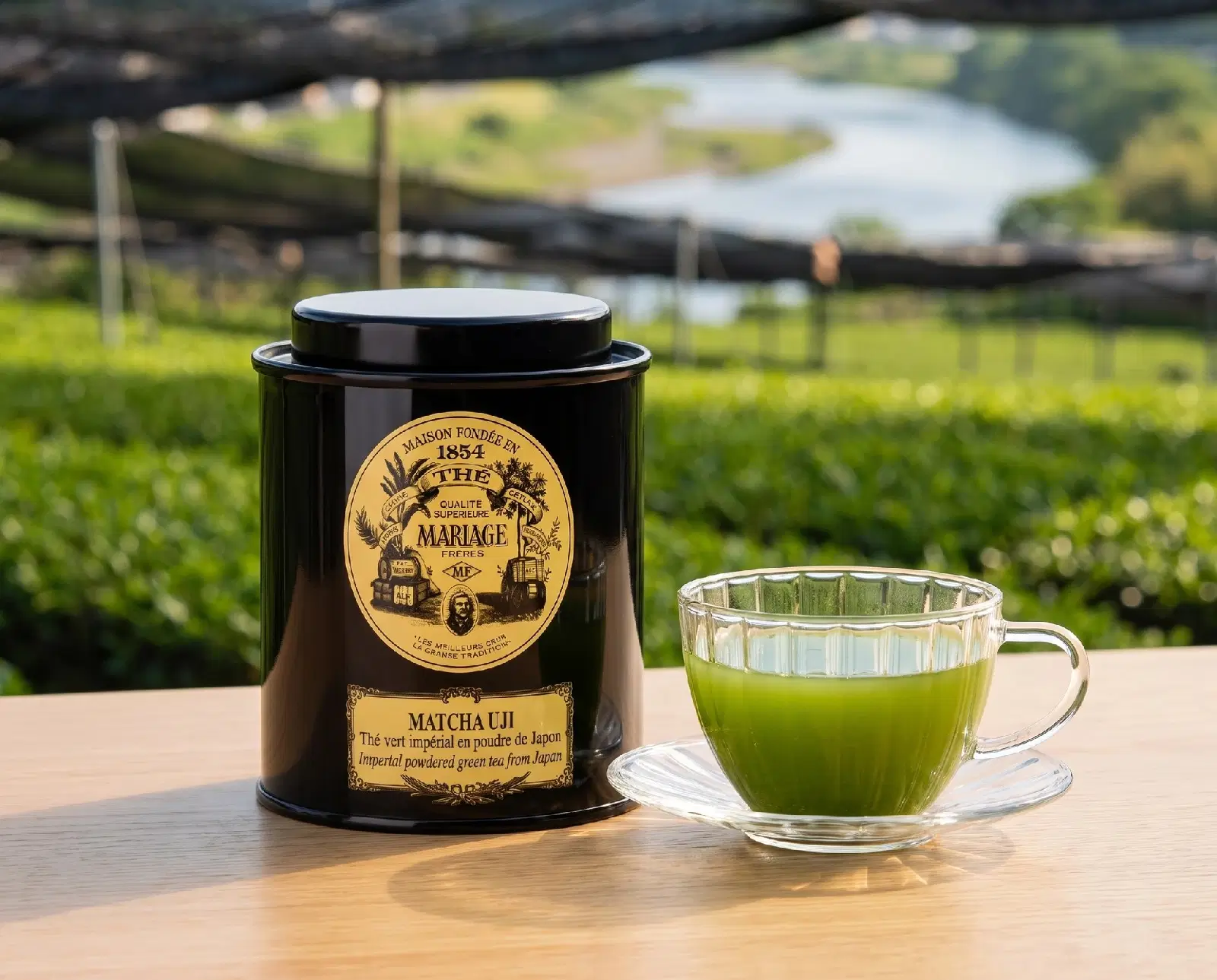
The tea ceremony, or chanoyu, is in Japan a gathering at which a host prepares, in front of the guests, a matcha whisked with a bamboo whisk, following codified gestures. Here are its historical landmarks, the difference between chakai and chaji, how a chakai unfolds step by step, the Japanese name of each utensil, and how to recapture its spirit at home.
What is the Japanese tea ceremony?
The Japanese tea ceremony is a codified gathering at which a host prepares and serves a few guests a matcha, a powdered green tea whisked with a bamboo whisk. The Japanese call it chanoyu, literally “hot water for tea”: simple words, with no idea of ceremony, which the West translated in its own way. It is also called chadō or sadō, “the way of tea”, for the whole set of its rules and the way of being that goes with them.
Chanoyu is not just about the drink. The place, the objects, the order of the gestures and the exchanges between the host and the guests matter as much as the bowl. Each gathering is prepared for its guests: the scroll and decorations in the alcove, the sweets and the utensils are chosen by the host for the occasion. The tea served is a matcha, like those in our matcha range.
Where does chanoyu come from? Some landmarks
Powdered tea arrived in Japan at the end of the 12th century with the monk Eisai, back from China, where he had studied Zen Buddhism. At first it remained tied to the monasteries, then spread to the warrior class. The first tea gatherings were held in reception halls, with exclusively Chinese objects: celadon or tenmoku ceramics, paintings and bronzes displayed in alcoves and on shelves.
Murata Jukō (1423-1502), a monk trained in Zen, took the opposite view to this luxury. He served tea in a small room, with less strict etiquette, and for the first time combined Japanese and Korean pieces with Chinese objects. He is regarded as the first craftsman of wabi-cha, the tea of restraint. Takeno Jōō continued along this path, and his pupil Sen no Rikyū (1522-1591) established the style on which today's practice is founded.
Tradition attributes four principles to Rikyū: wa, harmony; kei, respect; sei, purity; jaku, tranquillity. Their origin is debated, since Jukō already drew on very similar monastic precepts. The three main schools today, Omotesenke, Urasenke and Mushakōjisenke, were founded by Rikyū's great-grandchildren and all claim descent from his lineage.
Chakai or chaji: what forms does the ceremony take?
A tea gathering takes two forms. The chakai, “meeting over tea”, is the simplest: no full meal, a sweet and a bowl of tea, most often a thin tea. The chaji is the full gathering, for a small group of guests: a codified meal, kaiseki, then thick tea and thin tea. It is the most formal form, and the longest.
The chaji follows a precise order: greetings, laying the charcoal that will heat the water, the meal, then a pause in the garden. A gong calls the guests back into the room, where they first receive the thick tea, then the thin tea. The whole lasts up to about 4 hours. The chakai, shorter, keeps only the sweet and the bowl of tea, with no meal and no pause in the garden.
Usucha and koicha, the two teas of chanoyu
Usucha, the thin tea, is whisked until it forms a froth and served to each guest in their own bowl. Koicha, the thick tea, requires far more powder for very little water; it is shared from a single bowl that the guests pass to one another, a custom attributed to Rikyū. The measures for koicha are given in our complete guide to matcha, which also explains how to knead it with the whisk.
Hatsugama, the first gathering of the year
Hatsugama, the “first kettle”, opens the tea year: it is the first gathering held by the schools, in January, in Kyoto as in the rest of Japan. For new pupils, it also serves as a first initiation. The three schools of the Sen family, Urasenke, Omotesenke and Mushakōjisenke, all hold theirs at this time.
How does a chakai unfold, step by step?
The gestures vary from one school to another, but a chakai follows, from the guest's side, a thread found everywhere. Here are the stages the guest goes through, from arrival to the last look at the utensils, as described in the reference works.
- Waiting and garden. The guests wait in a shelter, then walk through the roji, the garden that leads to the tea house.
- Purification. Before entering, they purify themselves at a small stone basin, the tsukubai.
- Entrance. They enter through a small low door, the nijiriguchi, and look first at the tokonoma, the alcove where the scroll and decorations are displayed.
- Sweet. The host serves a wagashi, a Japanese sweet: soft (omogashi), or dry (higashi), the latter reserved for thin tea.
- Preparation. The host prepares the tea in front of the guests, following a codified sequence of gestures, the temae, specific to each school.
- Bowl. The guest receives the bowl, bows, turns it so as not to drink from its front, drinks, then wipes its rim.
- Utensils. At the end, the guests examine the utensils before taking leave of their host.
What are the utensils of the tea ceremony?
Each utensil of chanoyu has a Japanese name, which the schools use as it is. The table gives the main ones with their role; the last column shows those we offer for preparing matcha. The other pieces belong to the tea room itself.
| Japanese name | What it is | At our shop |
|---|---|---|
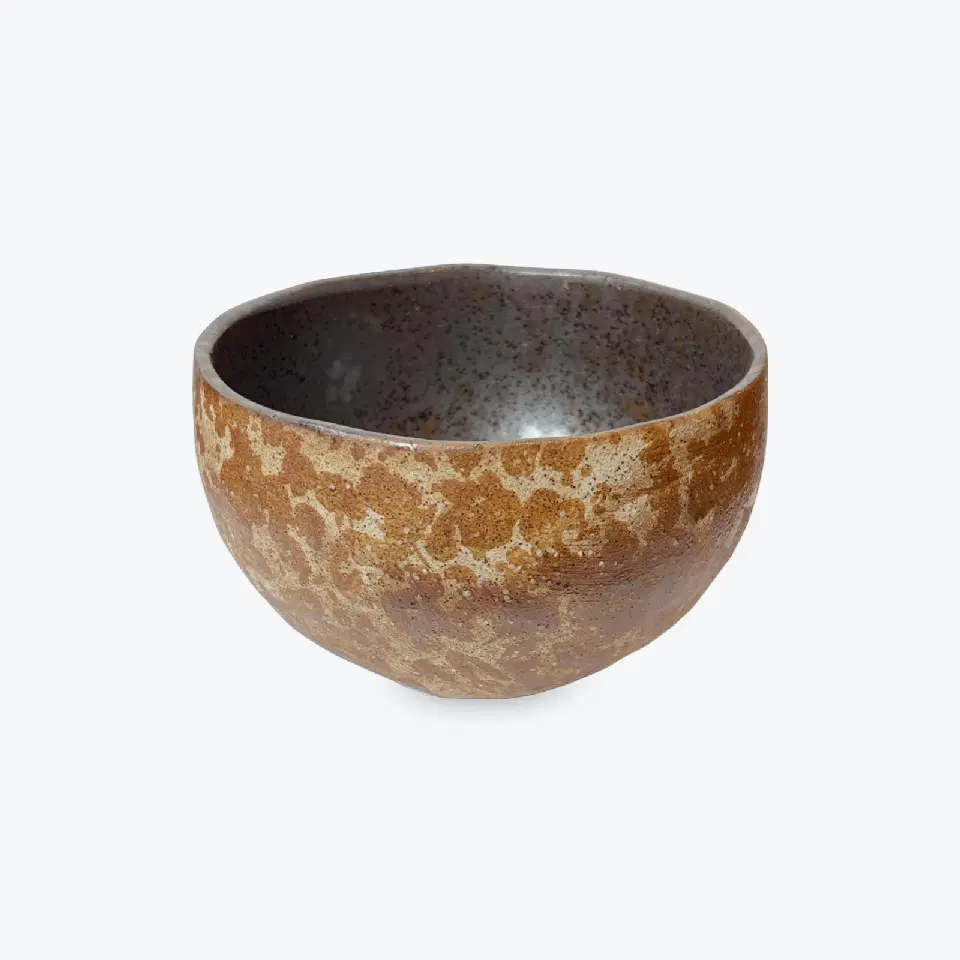
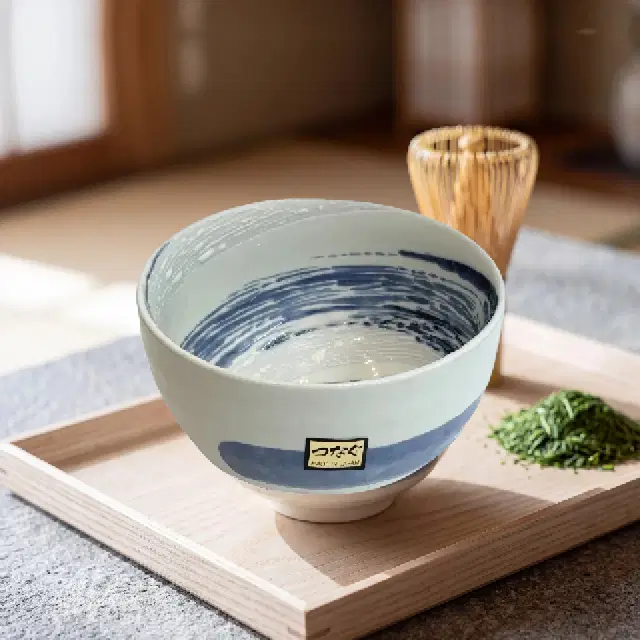
| Chawan | The bowl in which the tea is whisked and drunk | Bol à Matcha Japonais 'Madara' en Céramiques, Bol à Matcha Japonais 'Efude', 450 ml |
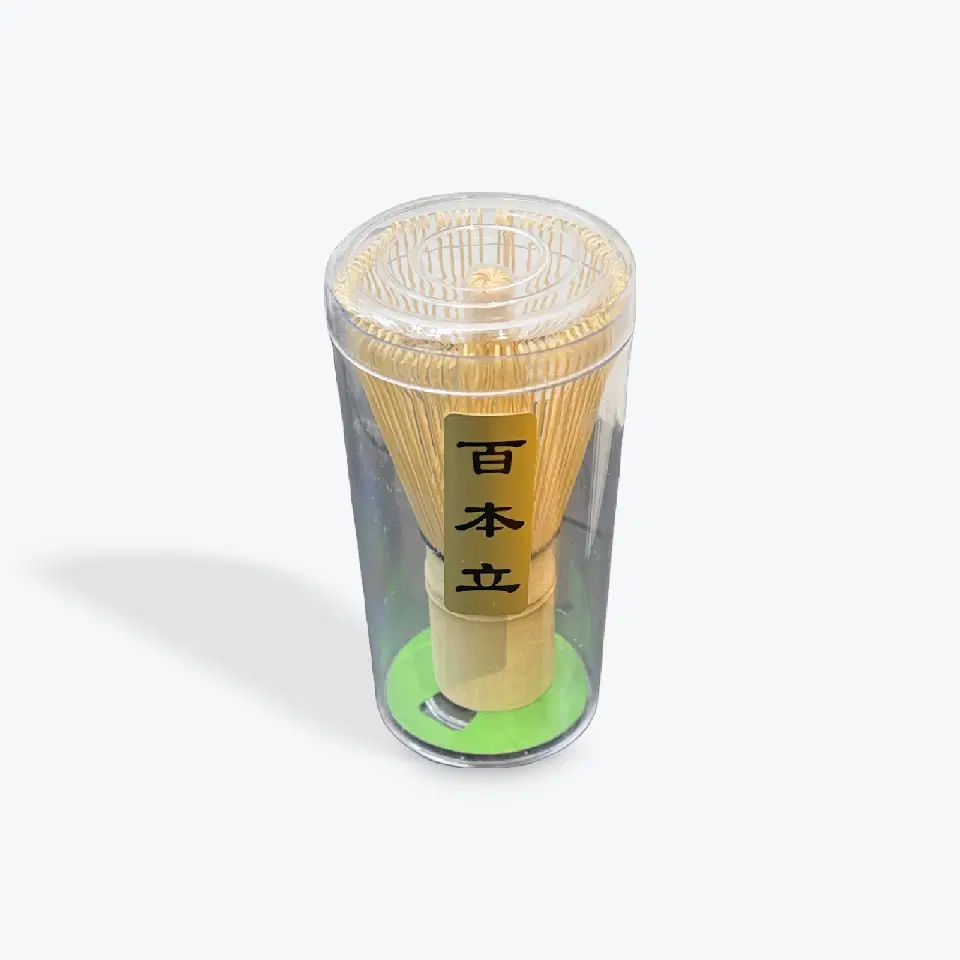
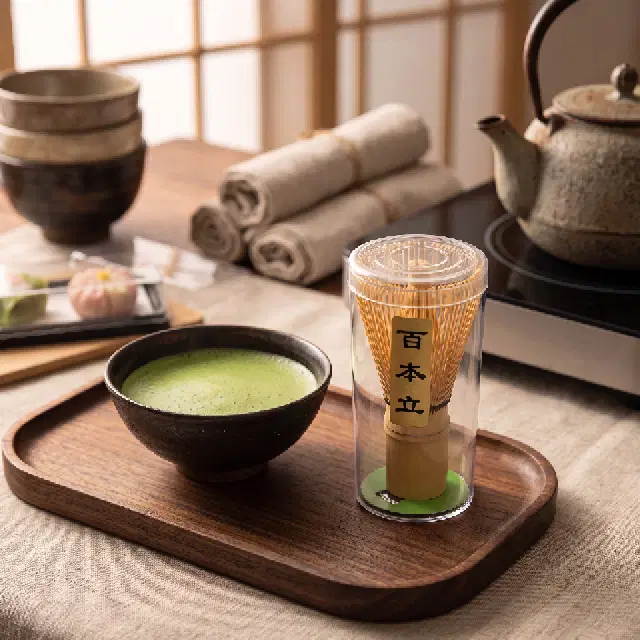
| Chasen | The whisk, carved from a single piece of bamboo | Chasen de Bambou pour Matcha |
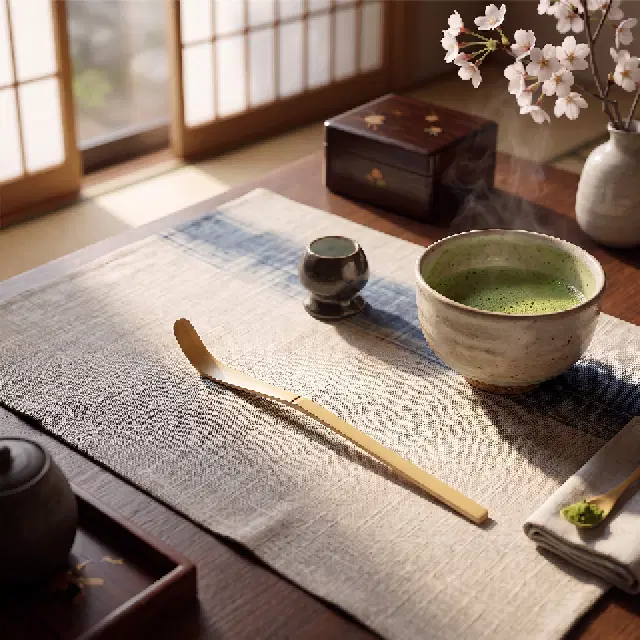
| Chashaku | The bamboo scoop that takes up the powder | Cuillère en Bambou Chashaku 180 mm |
| Natsume | The tea caddy for thin tea | Not offered |
| Chaire | The tea caddy for thick tea | Not offered |
| Kama | The iron kettle in which the water heats | Not offered |
| Hishaku | The bamboo ladle that draws the water | Not offered |
| Mizusashi | The fresh water jar | Not offered |
| Kensui | The vessel for rinsing water | Not offered |
| Futaoki | The rest for the kettle lid | Not offered |
| Fukusa | The silk square for the symbolic cleansing of the utensils | Not offered |
| Chakin | The linen or hemp cloth that wipes the bowl | Not offered |
For the chawan, the Bol à Matcha Japonais 'Madara' en Céramiques, generous in the hand, and the Bol à Matcha Japonais 'Efude', 450 ml, 120 mm in diameter, give the whisk room to work without the water spilling over. The Chasen de Bambou pour Matcha and the Cuillère en Bambou Chashaku 180 mm complete the trio. The choice of each piece is detailed in our guide to the matcha whisk and bowl, and our matcha accessories range brings them together.
How can you recapture the spirit of chanoyu at home?
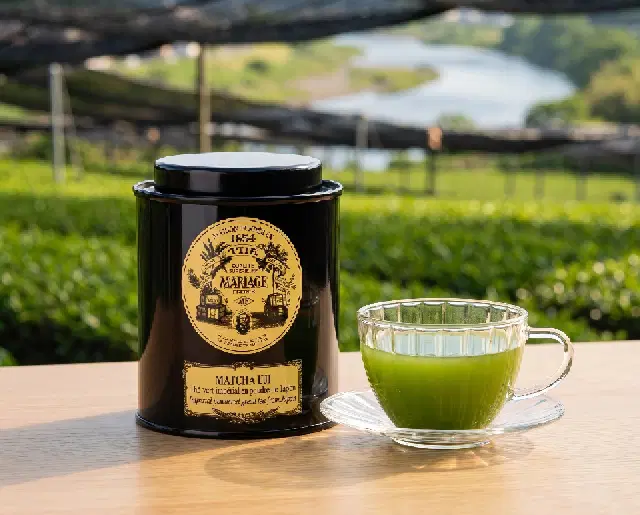
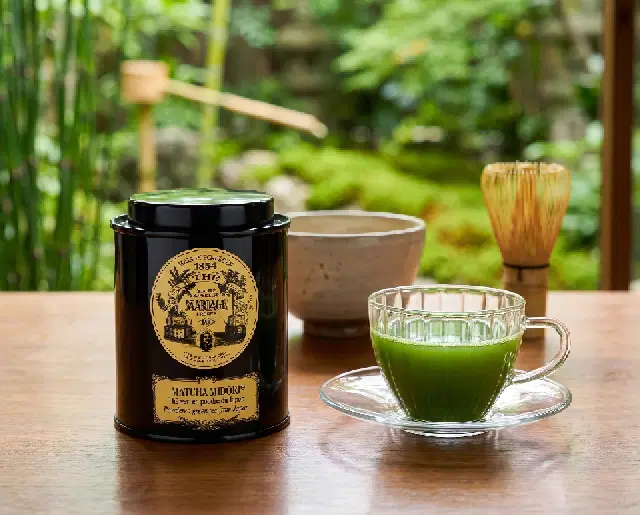
Chanoyu is learnt at a school, through numerous procedures studied in an established order. At home, you can keep its essence: a chosen moment, a bowl, a whisk, a scoop and a matcha prepared with care. Matcha Uji, which Mariage Frères presents as the powdered green tea of the Japanese ceremony, comes from Uji, near Kyoto; Matcha Midori, grown in Miyazaki, is described on its product page as the jade powder of cha no yu.
Their product pages give the same method, in 4 steps:
- Sift 1.5 g of matcha into the bowl with the Tamis Manche Bambou: the powder falls without lumps. With the Cuillère en Bambou Chashaku 180 mm, allow about 2 scoops per bowl.
- Pour in 40 ml of water at 80 °C.
- Whisk for 30 seconds with the Chasen de Bambou pour Matcha, with a quick M or W movement of the wrist, the tines above the bottom, until a fine froth forms.
- Then rinse the chasen in clean water and leave it to dry, tips upwards, on a whisk holder, such as the Matcha Porte-Balai en Bambou, in the Yuma or Yuri version.
To gather these pieces in one go, the Set de Matcha brings together 4 utensils, including the bowl and the whisk. Our matcha set guide explains how to choose one ready-made or put it together piece by piece, for yourself or as a gift, and our guide to Japanese green teas places matcha among the other teas of the archipelago.
The sommelier's selection

Frequently asked questions
What does chanoyu mean in Japanese?
Chanoyu literally means “hot water for tea”. The word refers to the practice itself: preparing and serving matcha to guests, in a place and with objects chosen for the occasion. Chadō or sadō, “the way of tea”, is also used for the whole set of rules and the way of being that go with it. The expression “tea ceremony” is a Western translation; the Japanese word, a very simple one, does not contain it.
How long does a tea ceremony last in Japan?
It all depends on its form. A chakai, a simple gathering at which a sweet and a bowl of tea, most often thin, are served, is the short form. A chaji, the full gathering, moves through greetings, laying the fire, a meal, a pause in the garden, thick tea and then thin tea: it lasts up to about 4 hours, for a small group of guests.
What is the difference between usucha and koicha?
Usucha is thin tea: the matcha is whisked until it forms a froth, and each guest receives their own bowl. Koicha is thick tea: much more powder for little water, a dense preparation that is not meant to froth, shared from a single bowl that the guests pass to one another. In a chaji, koicha is served first, usucha afterwards.
Which matcha should you choose for a tea ceremony?
A plain matcha, with nothing added, whisked in water. Mariage Frères' Matcha Uji, from the Uji terroir near Kyoto, is presented on its product page as the powdered green tea of the Japanese ceremony; Matcha Midori, grown in Miyazaki, as the jade powder of cha no yu. Their product pages give the same settings: 1.5 g for 40 ml of water at 80 °C, whisked for 30 seconds with a bamboo whisk.
To go further
Sources
How we write our guides
Our guides are prepared by La Boutique du Thé, Mariage Frères stockist in Bordeaux and Nice since 1999, drawing on our product sheets, the experience of our shops and the sources cited. Each text is checked and approved by the team before publication. The teas and accessories featured are on sale at the time you read the page. The LBDT Sommelier · A question? Write to us
More guides from the house
- Matcha set: give it ready-made or build it piece by pieceA matcha set brings together bowl, bamboo whisk, scoop and sieve: the role of each piece, our selection by budget and three gift options.Read the guide →
- Matcha whisk and bowl: choosing, using and caring for the chasen and chawanBamboo matcha whisk: how to use it, which matcha bowl to choose and how to care for your chasen so it keeps its shape, with our bowls.Read the guide →
- Matcha: the complete guide to Japanese powdered green teaShaded tencha, stone mill, ceremonial, premium and culinary matchas, whisking with the chasen: everything you need to understand matcha and choose it well, with our tea house.Read the guide →