
Jasmine tea: how the flowers scent the leaf, and which to choose

By the LBDT Sommelier · published on · 8 min read
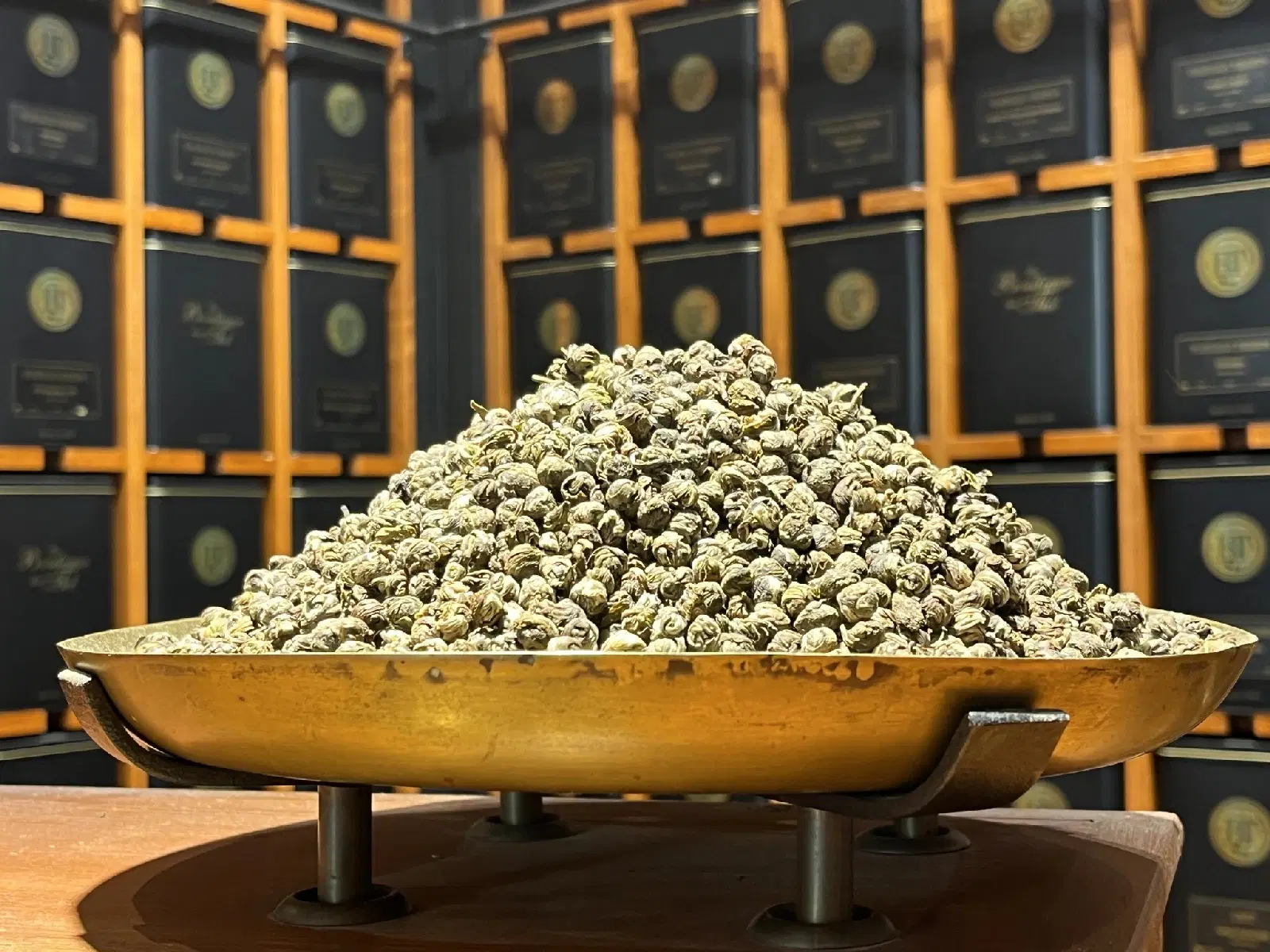
A jasmine tea is a tea, most often green, sometimes white, that has taken on the scent of fresh jasmine flowers mixed with the dry leaf and then removed, several times in succession. Here we explain this craft born in China, what the base changes in the cup, how to read an ingredients list, then we compare our Mariage Frères jasmine teas in stock, with the settings from their product pages.
How does jasmine scent tea?
Jasmine tea takes on its scent through simple contact: fresh flowers are mixed with the dry tea, which absorbs their fragrance, then removed. The base tea is picked in spring and waits for summer, the season when jasmine flowers, before being scented. The flowers, for their part, are picked as buds that are still closed, during the day, and kept cool until the evening.
In the evening, the buds begin to open and release their scent. They are then spread in alternate layers with the tea, which is left to rest for several hours. Once the flowers have wilted, they are separated from the tea, often by hand, and the tea is dried again to lose the moisture taken from the flowers.
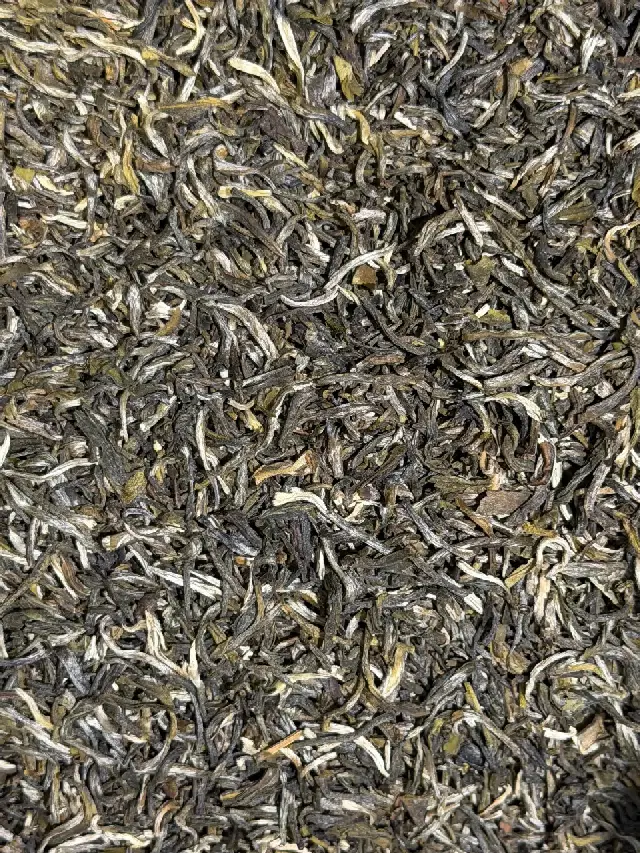
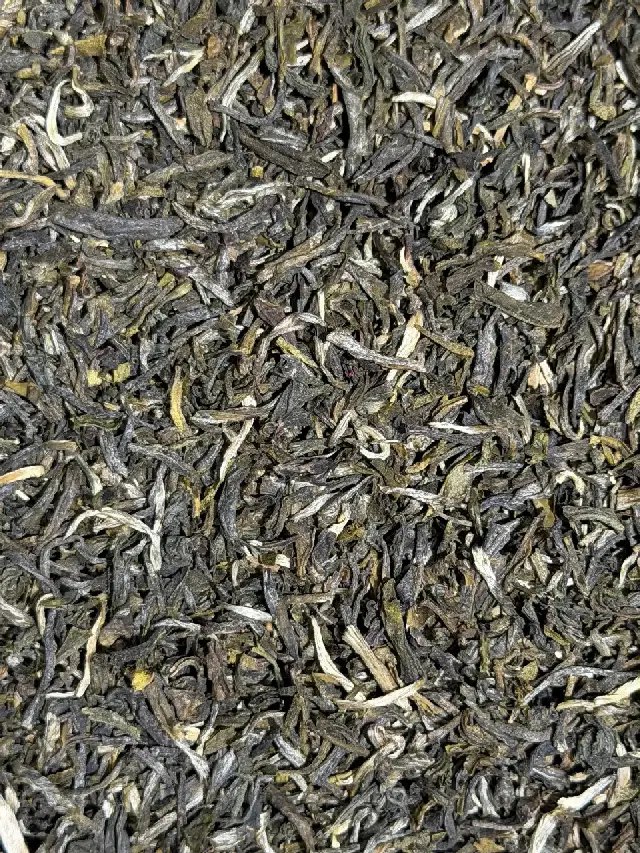
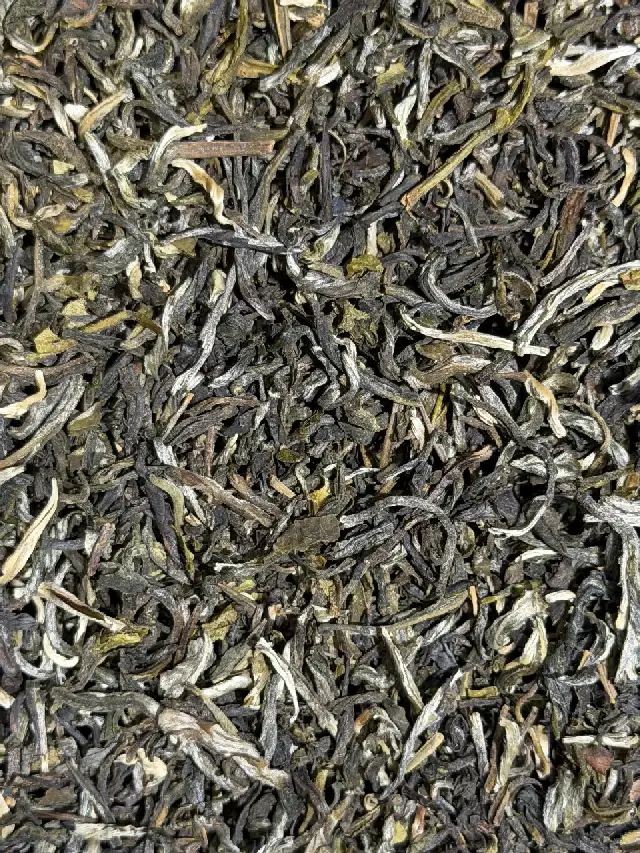
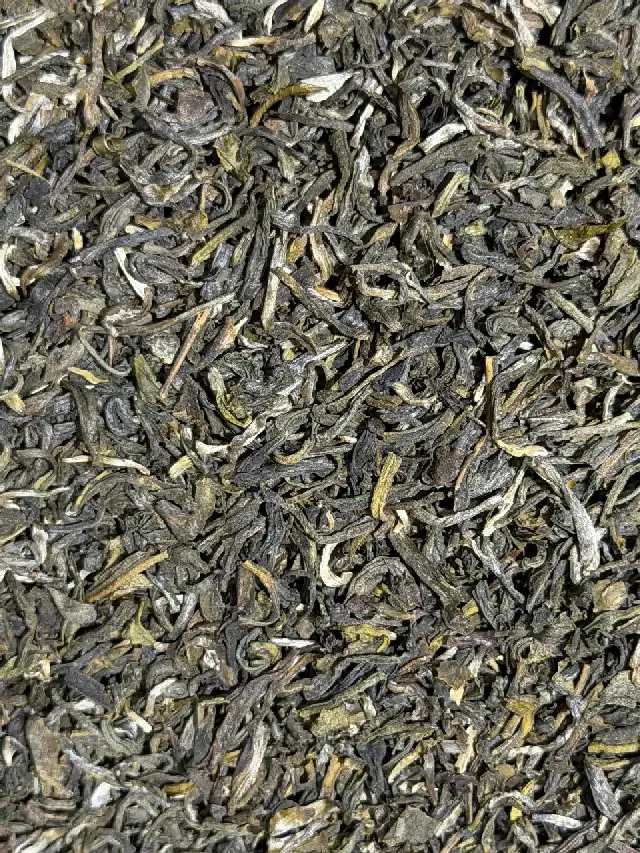
This cycle begins again with fresh flowers. For the finest jasmine teas, it can be repeated up to 6 or 7 times. This is what Mariage Frères' product pages describe for Jasmin Chung Feng or Jasmin Monkey King: successive layers of flowers, a tea dried again between two passes, spent flowers removed one by one. That is why these teas show few flowers in the dry leaf: their scent has stayed, they have gone.
Where does jasmine tea come from?
Jasmine tea comes from China, and first of all from Fujian, on the south-east coast. The texts place its beginnings under the Song dynasty, and it was in Fuzhou, the provincial capital, that the scenting tradition took root. The process was refined under the Ming, then jasmine tea spread widely under the Qing, both in China and for export.
Fuzhou remains attached to this craft: its scenting technique is listed as part of China's national intangible cultural heritage, and its jasmine and tea culture system is recognised by the FAO among the Globally Important Agricultural Heritage Systems. Other provinces produce it today, such as Guangxi. Our guide to the provinces of Chinese tea places Fujian among the other regions, and our teas from China range brings their teas together.
Jasmine green tea or jasmine white tea: what difference in the cup?
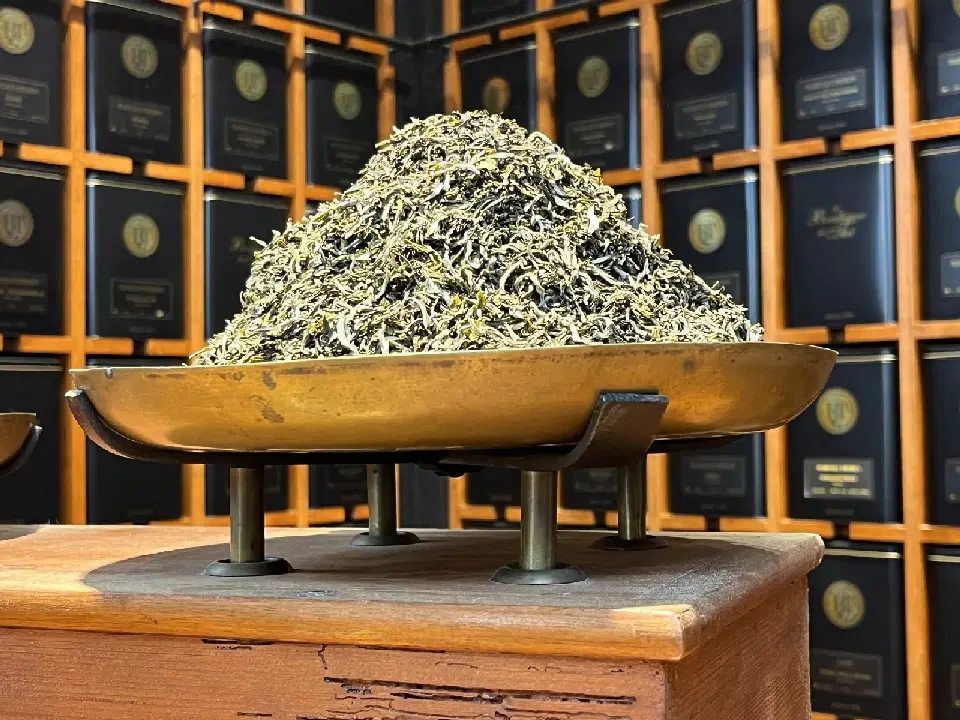
The base determines the character: green tea gives a fresh, clean jasmine, white tea a rounder, silkier jasmine. Most jasmine teas are based on a Chinese green tea, such as Jasmin Impérial, which Mariage Frères calls the king of jasmine teas, or Jasmin Chung Feng, with its pale liquor and long finish. Jasmin Monkey King, a rolled green tea from Hunan according to its product page, adds a vegetal sweetness.
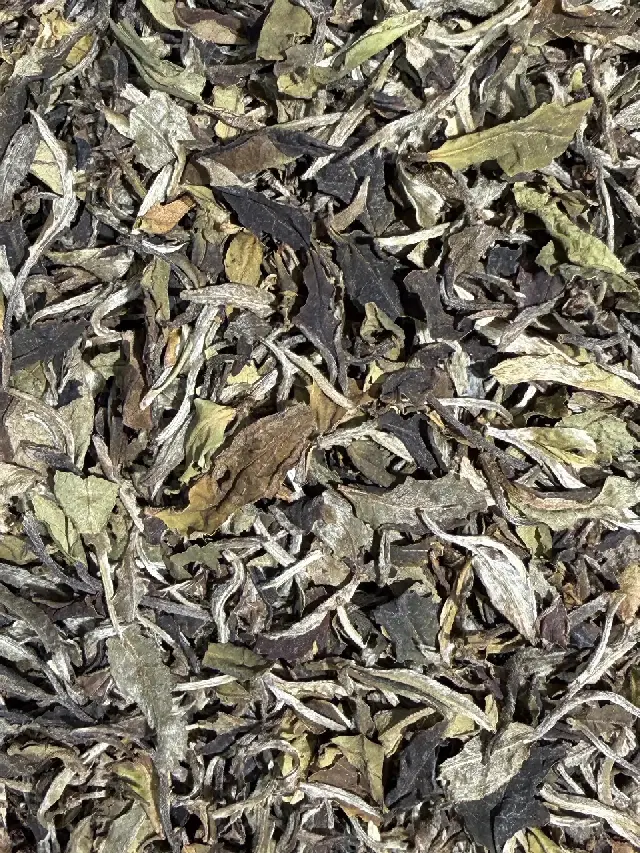
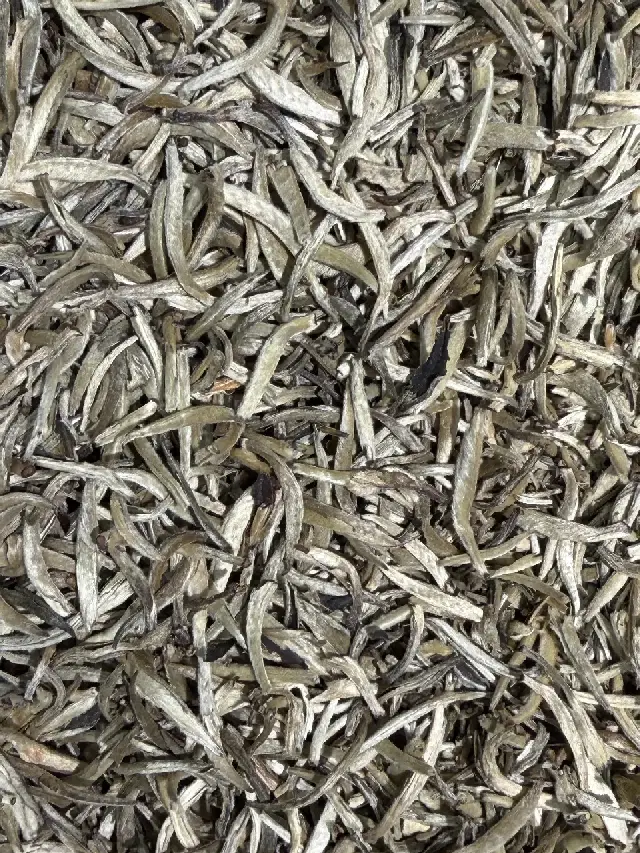
On white tea, the scent settles on buds that have barely been processed. Brume de Jasmin starts from a Pai Mu Tan from Fujian, mixing buds and young leaves: its product page describes a limpid liquor, a silky texture and a woody background. Thé des Mandarins Jasmin starts from a Yin Zhen, the silver needles made of buds alone, for an almost colourless, velvety liquor.
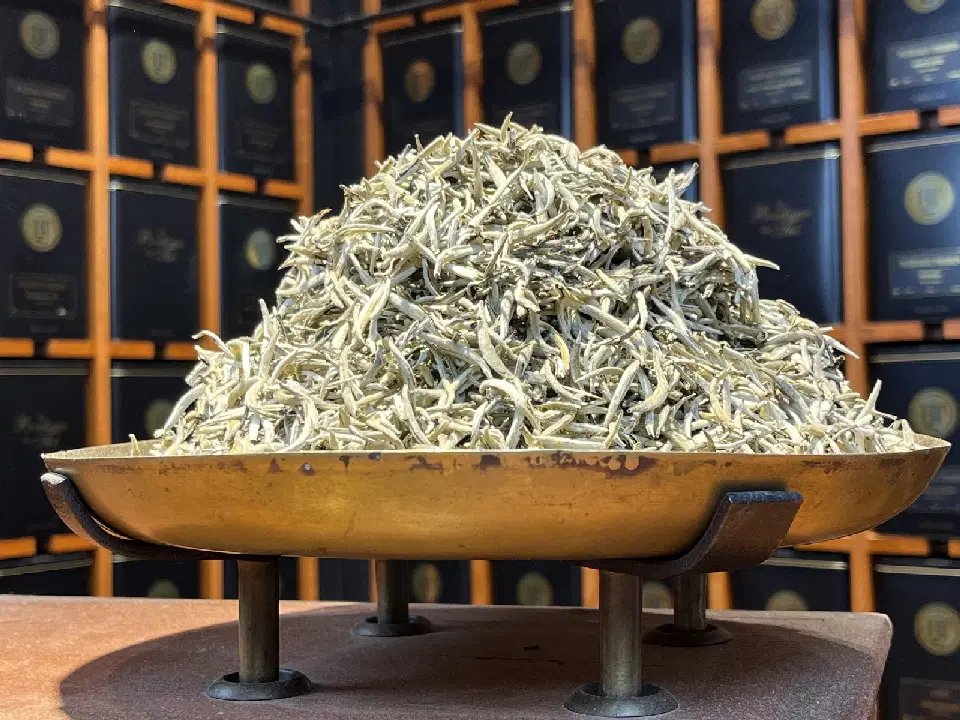
Our white tea guide explains what separates a Yin Zhen from a Pai Mu Tan, and recommends Brume de Jasmin as a first scented white tea. Our green teas range gathers the other Chinese green teas, plain or scented.
Which jasmine tea should you choose? Our teas compared
The eight jasmine teas below are in stock in our Nice shop. They all come from Mariage Frères, have a low caffeine content according to their product pages, and differ in their base, the shape of the leaf and their settings.
| Tea | Base | Form | Settings | In the cup |
|---|---|---|---|---|
| Jasmin Impérial | Chinese green tea | Loose leaf | 95 °C · 3 minutes · 2.5 g per 200 ml | An intense, silky jasmine |
| Jasmin Chung Feng | Chinese green tea | Leaves and buds | 95 °C · 3 minutes · 2.5 g per 200 ml | A gentle floral scent, long finish |
| Jasmin Monkey King | Green tea from Hunan | Rolled leaf | 95 °C · 3 minutes · 2.5 g per 200 ml | A generous jasmine, vegetal sweetness |
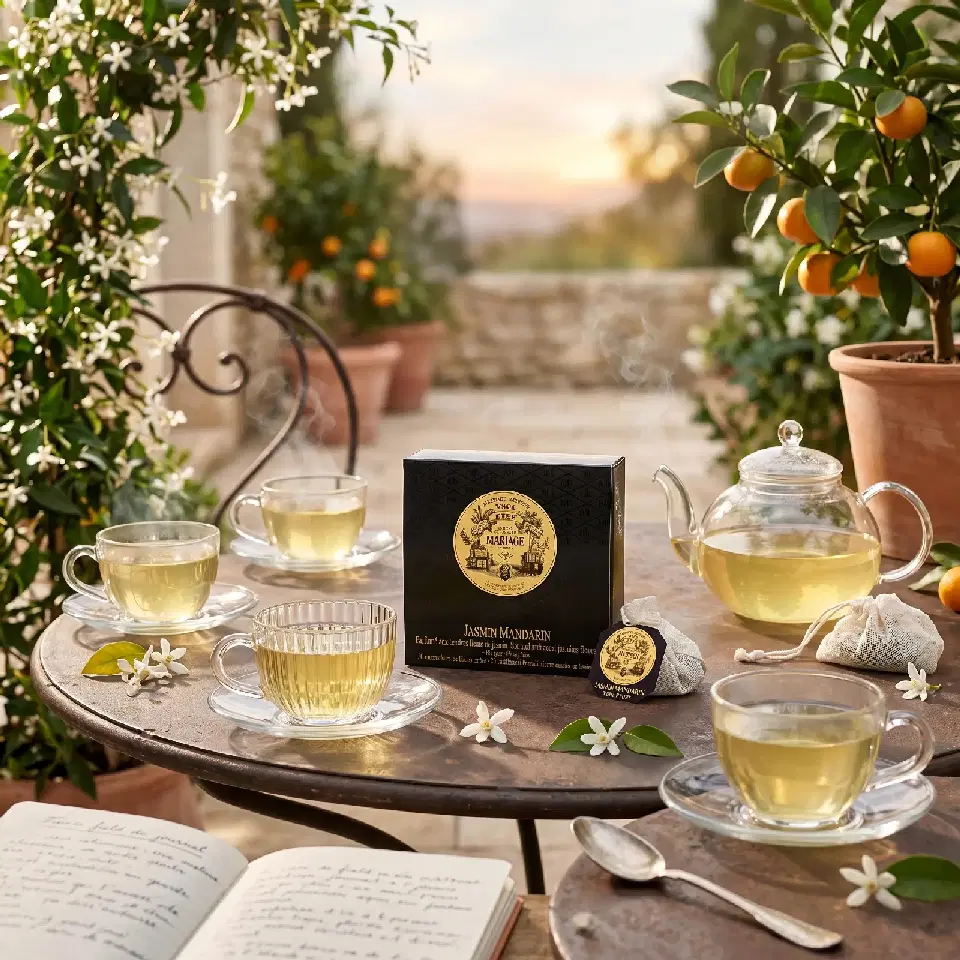
| Jasmin Mandarin | Chinese green tea | Loose leaf, cotton muslin sachets or tea tin | 95 °C · 3 minutes · 2.5 g or 1 cotton muslin sachet per 200 ml | A floral bouquet, citrus note |
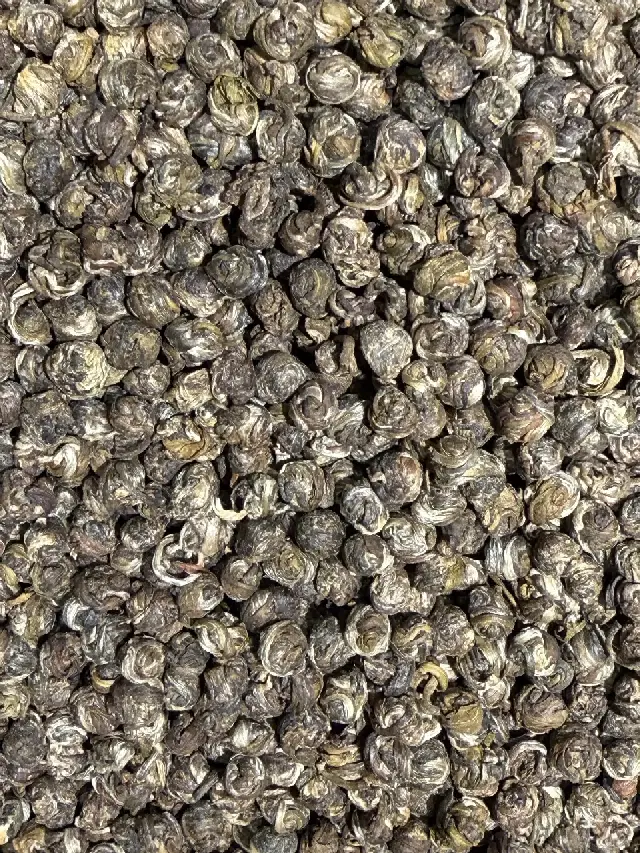
| Perle de Thé au Jasmin Suprême | Chinese green tea | Hand-rolled pearls | 85 °C · 3 minutes · 2.5 g per 200 ml | A pale, gentle cup, several infusions |
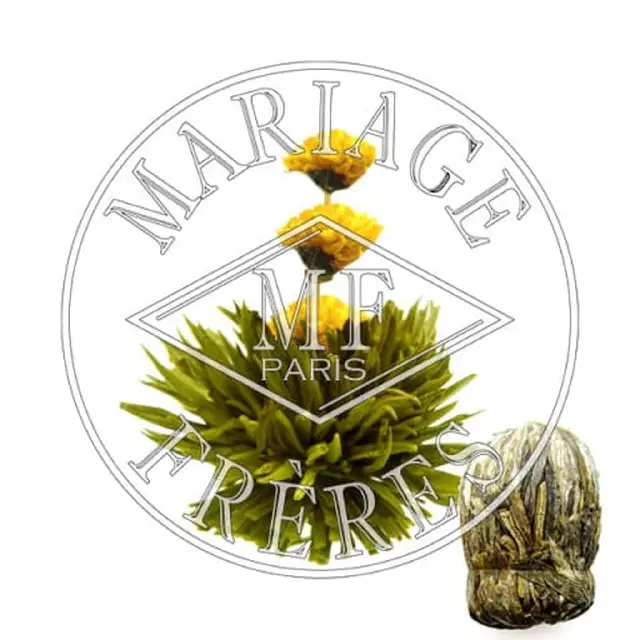
| Fleur de Bouddha | Green tea from Fujian | Hand-tied piece | 85 °C · 5 minutes · 1 piece | A flower that opens in the teapot |
| Brume de Jasmin | Pai Mu Tan white tea | Buds and leaves | 85 °C · 7 minutes · 2.5 g per 200 ml | A rounder jasmine, woody background |
| Thé des Mandarins Jasmin | Yin Zhen white tea | Buds alone | 85 °C · 7 minutes · 5 g per 200 ml | An almost colourless, velvety liquor |
Jasmin Chung Feng and Jasmin Mandarin give the classic style, on Chinese green tea; the latter also comes in cotton muslin sachets. To watch the leaf open in the teapot, choose Perle de Thé au Jasmin Suprême or Fleur de Bouddha tea. For a rounder cup, Brume de Jasmin is the better choice. Our floral teas range also presents teas with rose or orange blossom.
Jasmine pearls and hand-tied teas: why these shapes?
The shape serves the eye as much as the cup: rolled or tied by hand, the leaf opens slowly in hot water. Jasmine pearls, a renowned shape from Fujian, are young leaves rolled by hand into small balls. Those of Perle de Thé au Jasmin Suprême steep for 3 minutes in water at 85 °C, and its product page states that they can be steeped again 3 or 4 times.
Hand-tied teas go further: buds gathered and tied by hand form a piece that unfolds like a flower. Fleur de Bouddha tea is built around 3 marigold flowers, Fleur d'Orient tea is adorned with marigold and rosebuds. A glass teapot lets you follow their opening: our guide to the glass teapot helps you choose one.
How do you read the ingredients of a jasmine tea?
The ingredients list tells you where the scent comes from. When it is limited to tea and jasmine flowers, such as “green tea, jasmine flowers” for Jasmin Impérial or “Pai Mu Tan white tea scented with jasmine flowers” for Brume de Jasmin, the scent comes from the flowers, through the contact described above.
When a flavouring accompanies the jasmine, the list names it. Fleur de Bouddha tea thus declares “jasmine-scented green tea, marigold, flavouring”, and Fleur d'Orient tea adds rose. For Jasmin Mandarin, its product page specifies that the 100 g tin also mentions a flavouring. Outside tea, Ombelle's Rooibos Banane Fleur de Jasmin Bio, caffeine-free, likewise declares a natural jasmine flavouring. The ingredients, repeated on each product page, tell you where the scent of the tea you choose comes from.
How do you steep a jasmine tea?
Follow the tea's product page, as the settings change with the base. Mariage Frères' leaf jasmine green teas steep for 3 minutes in water at 95 °C, at 2.5 g per 200 ml, without going longer. Pearls and hand-tied pieces need water at 85 °C. Jasmine white teas steep for 7 minutes at 85 °C.
- Leaf green tea: 95 °C, 3 minutes, 2.5 g per 200 ml (Jasmin Chung Feng, Jasmin Monkey King, Jasmin Impérial).
- Pearls: 85 °C, 3 minutes, 2.5 g per 200 ml (Perle de Thé au Jasmin Suprême).
- Hand-tied tea: 85 °C, 5 minutes, 1 piece (Fleur de Bouddha).
- White tea: 85 °C, 7 minutes, 2.5 g per 200 ml for Brume de Jasmin, 5 g for Thé des Mandarins Jasmin.
Several of these teas can be steeped again: Jasmin Chung Feng accepts a second, slightly shorter infusion, and Jasmin Impérial keeps a great deal of scent on the second. Jasmin Monkey King, Jasmin Mandarin and Thé des Mandarins Jasmin can also be drunk iced, according to their product pages: our guide to homemade iced tea gives the method.
For the office, Jasmin Mandarin in 30 cotton muslin sachets steeps at one cotton muslin sachet per 200 ml, and Jasmine Rhapsody puts a jasmine white tea into cotton muslin sachets, 7 minutes at 85 °C. Once opened, a jasmine tea keeps in an airtight tin, away from light and odours: the Esprit Céladon tins are well suited, and our guide to storing tea details the rest.
The sommelier's selection
Frequently asked questions
How is jasmine tea made?
A tea that has already been made, most often a green tea, is placed in contact with fresh jasmine flowers just as they open, in the evening. The dry tea absorbs their scent for several hours, then the wilted flowers are removed and the tea is dried again. The cycle is repeated with fresh flowers, up to 6 or 7 times for the finest, which explains why there are so few flowers among the leaves.
How long should you steep a jasmine tea?
The time depends on the base tea. For our leaf jasmine green teas, the Mariage Frères product pages specify 3 minutes in water at 95 °C, and no longer. The pearls also make do with 3 minutes, but at 85 °C. Hand-tied teas need 5 minutes at 85 °C, and jasmine white teas 7 minutes at 85 °C, the long time that suits buds.
How do you prepare jasmine pearls?
For Perle de Thé au Jasmin Suprême, allow 2.5 g of pearls per 200 ml of water at 85 °C and 3 minutes' steeping, according to its product page. A glass teapot or a clear glass lets you watch the pearls unfurl. The same pearls can be steeped again 3 or 4 times: keep them in the teapot and pour fresh water for each cup.
Jasmine tea in sachets or loose leaf: which to choose?
Loose leaf offers the widest choice: our loose leaf jasmine teas are weighed to order, from the 5 g sample to the kilo. Cotton muslin tea sachets are handy at the office or when travelling: Jasmin Mandarin comes in a tin of 30 cotton muslin sachets, and Jasmine Rhapsody offers a jasmine white tea in the same format. One cotton muslin sachet makes one 200 ml cup.
To go further
Sources
How we write our guides
Our guides are prepared by La Boutique du Thé, Mariage Frères stockist in Bordeaux and Nice since 1999, drawing on our product sheets, the experience of our shops and the sources cited. Each text is checked and approved by the team before publication. The teas and accessories featured are on sale at the time you read the page. The LBDT Sommelier · A question? Write to us
More guides from the house
- White tea: the guide to silver needles and Pai Mu TanWhite tea, the least processed of all teas: silver needles, white peony, flavoured white teas, Rhapsody cotton muslin tea sachets. Temperature, time, 44 teas.Read the guide →
- Scented tea: how it is scented, and how to read its labelA scented tea owes its taste to flowers, smoke, spices or a flavouring. The processes, the label wording and eight teas compared.Read the guide →
- Tea types: the six families, from green tea to dark teaA tea family depends on how the leaf is processed, not on the plant: green, white, yellow, oolong, black, dark, with a table and a tea for each.Read the guide →