
Scented tea: how it is scented, and how to read its label

By the LBDT Sommelier · published on · 7 min read
Reviewed and approved by the La Boutique du Thé team
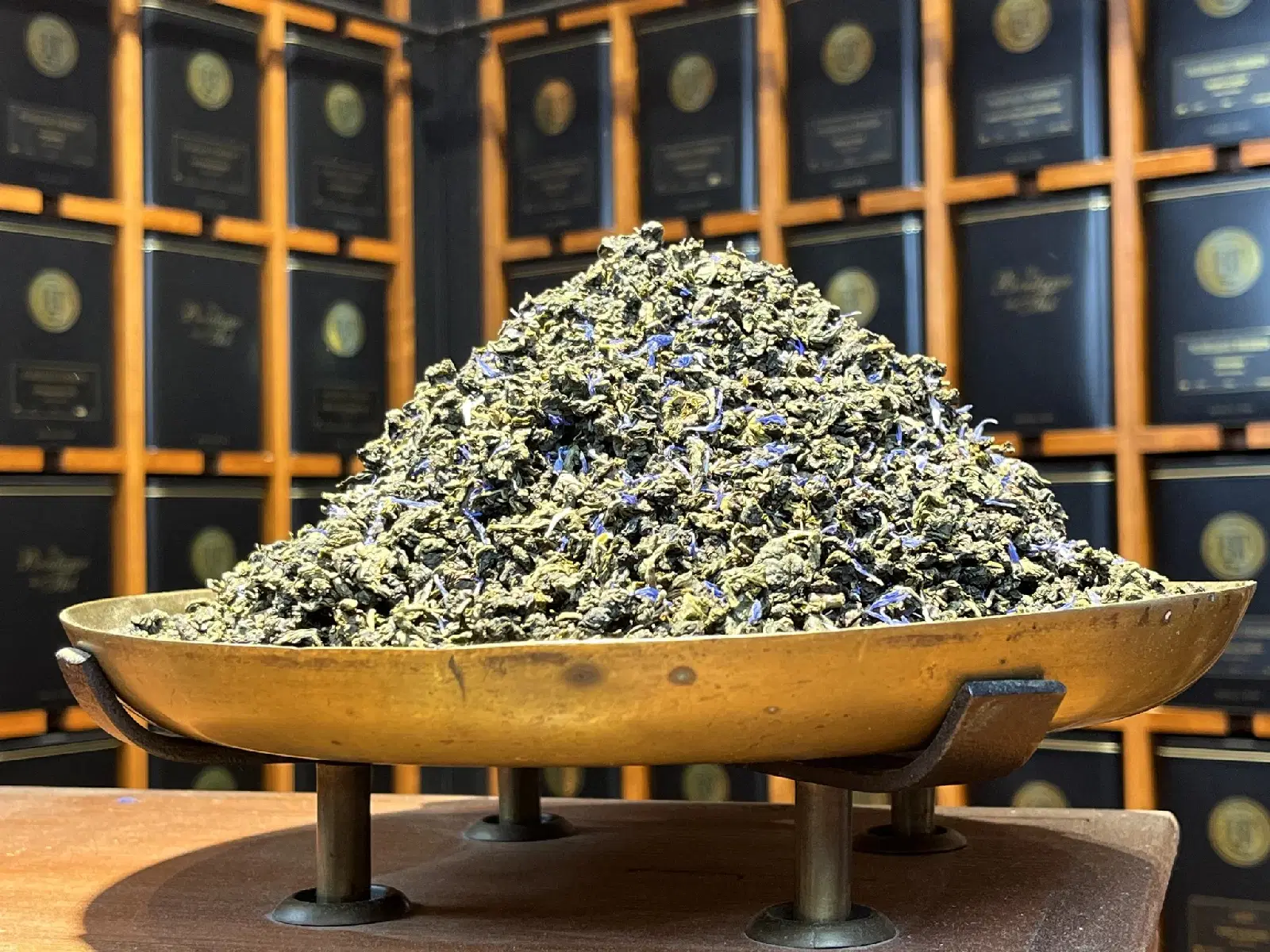
A scented tea is a tea that has been given the scent of flowers, fruit, spices or smoke, through contact, blending or a flavouring; “flavoured tea” means the same thing. Here are the four ways of scenting it, what the words “flavouring” and “natural flavouring” on the label guarantee, why the base matters, and how to prepare and store it.
What is a scented tea?
A scented tea is a tea whose aroma and taste do not come from the leaf alone: the scent of flowers, fruit, spices or smoke has been added to it, through contact, blending or a flavouring. In everyday use, “scented tea” and “flavoured tea” mean the same thing. Plain tea, by contrast, owes its taste solely to its plant, its terroir and the way it is made.
Marco Polo, which Mariage Frères presents as the most legendary of its scented teas, is a black tea with scents of fruit and flowers from China and Tibet, whose recipe remains secret. Its product page sums up the principle: a tea base, then a scent that completes it without making it disappear. The whole point of the label is to say where this scent comes from, and that is what the following sections teach you to read.
The ways of scenting a tea, from fresh flowers to flavouring
A tea is scented in four main ways: through contact with fresh flowers that are then removed, through smoke, by mixing into the tea petals, plants or spices that remain in the blend, or by adding a flavouring. Some teas combine two of them. The ingredients, on the product page or the packaging, tell you which one was used.
Enfleurage: the scent of the flowers, without the flowers
For Jasmin Chung Feng, jasmine flowers picked at dawn are laid in layers on the green tea leaves. The dry tea absorbs their fragrance, it is dried again, then the process begins again with fresh flowers, several times. The spent flowers are finally removed by hand. Its ingredients read simply “green tea, jasmine flowers”: no flavouring is added.
Smoking: a tea dried over a wood fire
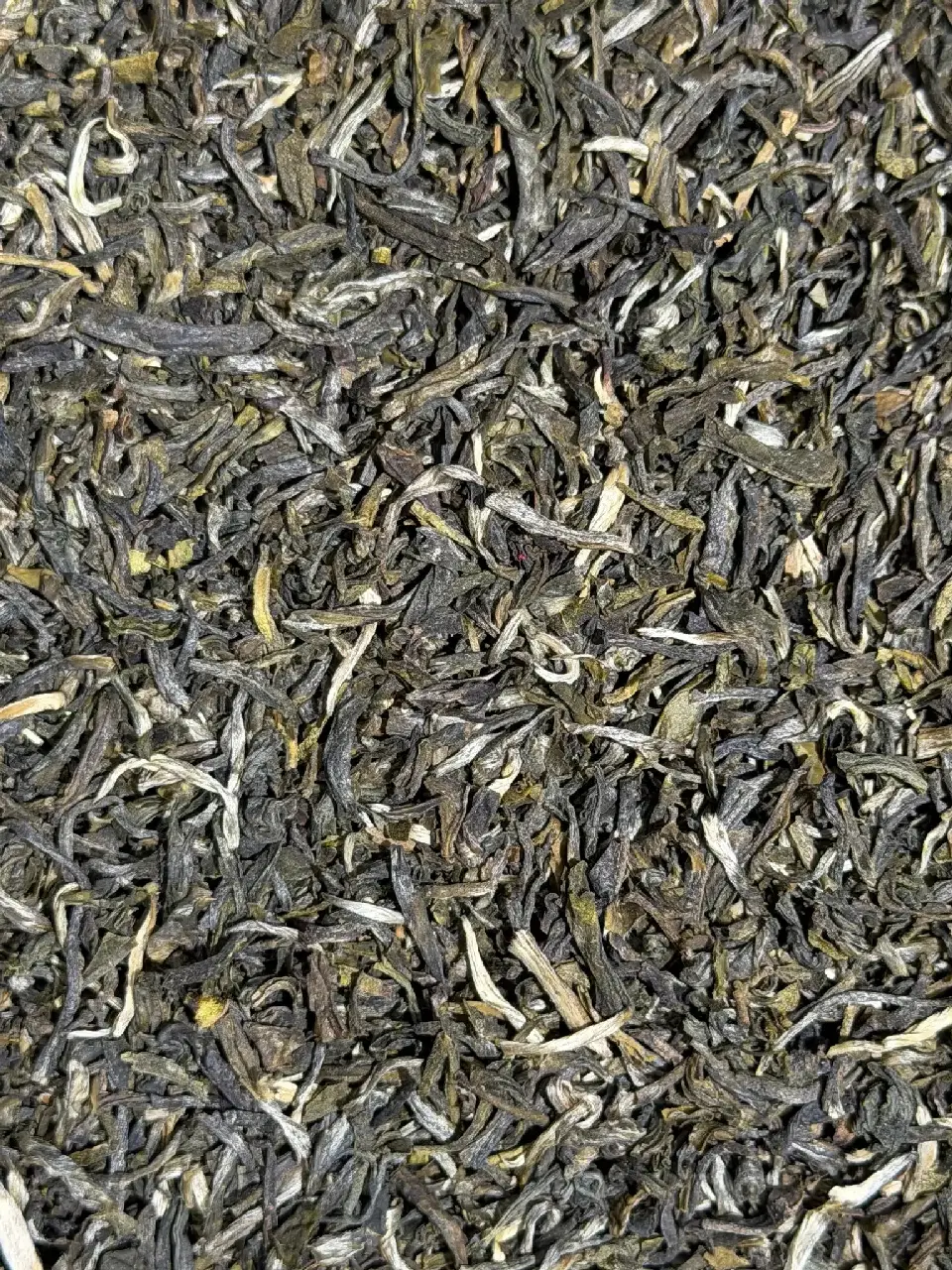
Lapsang Chinbara is a black tea from the Wuyi mountains, in Fujian, dried over a wood fire whose smoke permeates it. Its product page mentions only “smoked black tea”: the woody, resinous scent comes from the process, not from an ingredient. Our guide to smoked teas ranks them from the lightest to the most pronounced.
Petals, plants and spices: what stays in the tin
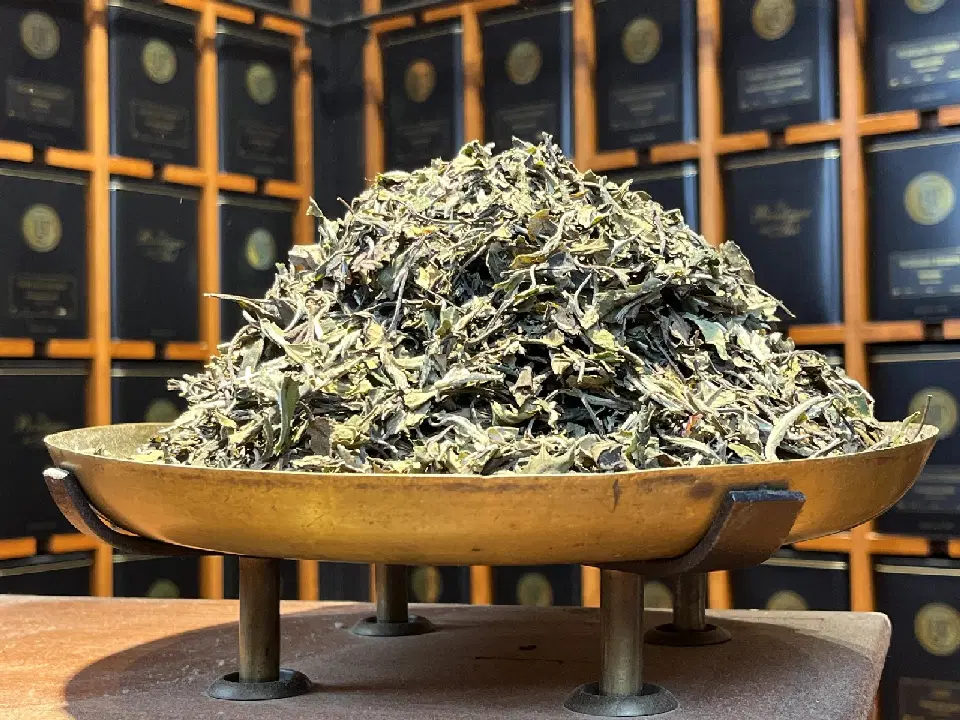
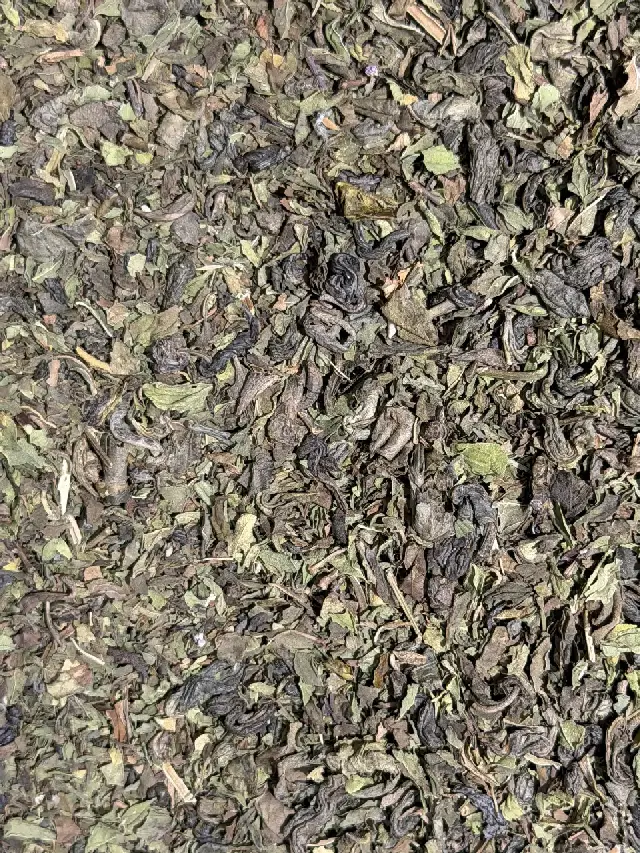
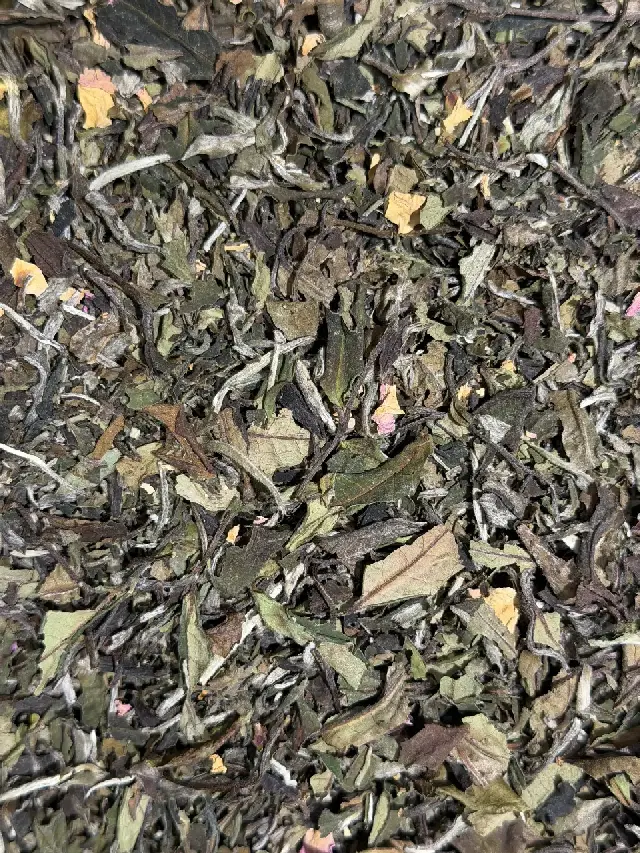
Other teas keep in their blend whatever scents them. The product page of Thé Vert à la Menthe Suprême states “green tea, mint”, with no flavouring. Brume de Rose combines a Pai Mu Tan white tea with rose petals and a flavouring: the petals can be seen among the leaves, the flavouring prolongs their note.
Flavouring: bergamot, vanilla, fruit
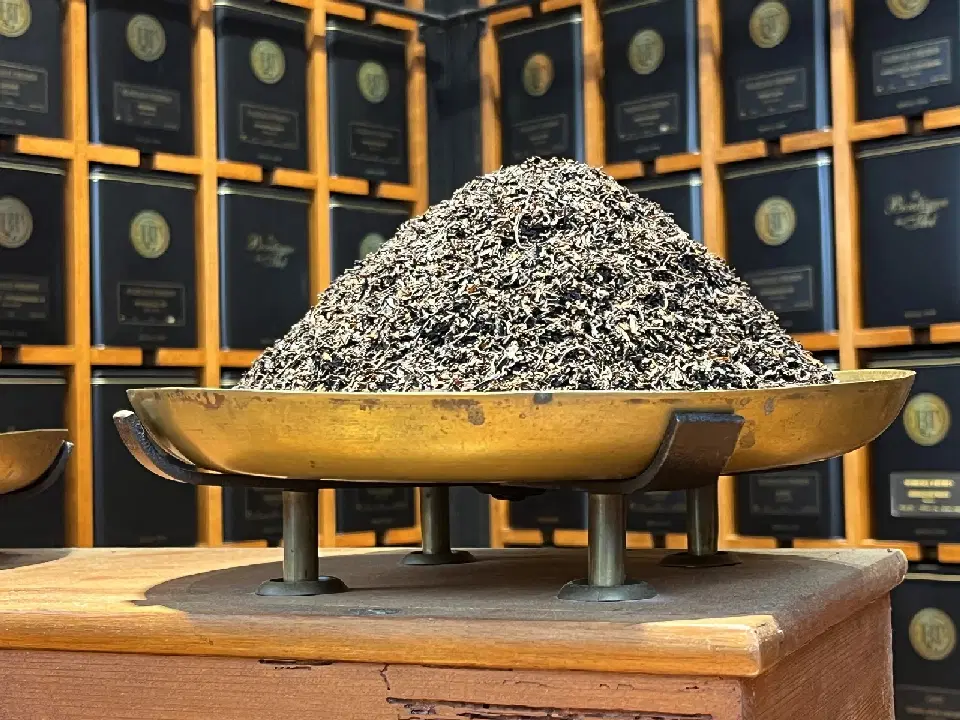
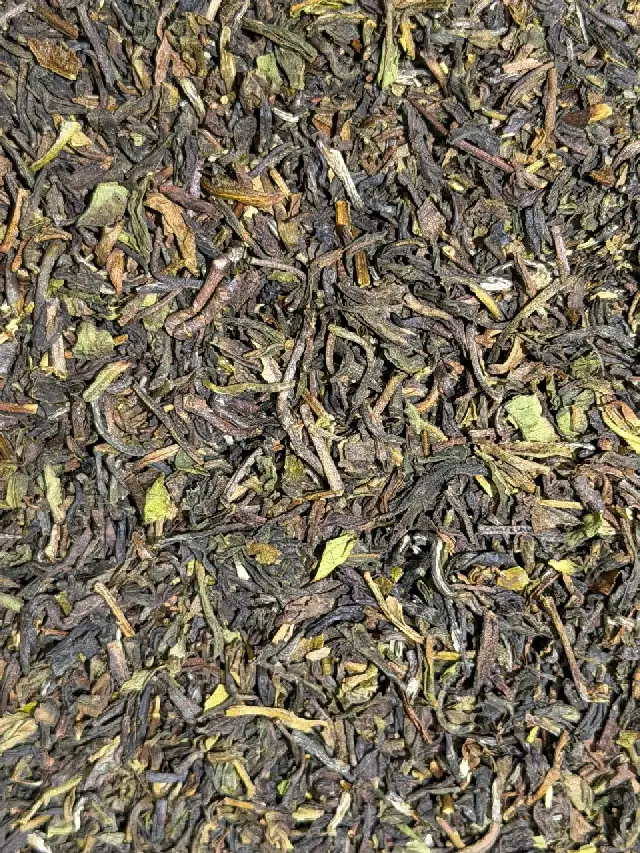
Most often, the scent comes from a flavouring. Earl Grey Impérial is a spring Darjeeling scented with bergamot, and its ingredients state “tea (Darjeeling), bergamot flavouring”. Those of Marco Polo state “tea, flavouring (fruit, flowers)”. Vanille des Îles combines both methods: vanilla in the blend, and a flavouring.
Flavouring, natural flavouring, natural … flavouring: what the label says
The words that follow “flavouring” on a label are governed by European Regulation (EC) No 1334/2008. The term “natural” is only permitted if the flavouring part comes exclusively from natural materials. And the more precise the wording, the more the source is prescribed: a “natural bergamot flavouring” must come at least 95% from bergamot.
| Wording | What it guarantees |
|---|---|
| Natural bergamot flavouring | Natural flavouring part, at least 95% from bergamot |
| Natural bergamot flavouring with other natural flavourings | Natural flavouring part, partly from bergamot, whose taste remains easy to recognise |
| Natural flavouring | Natural flavouring part, from several sources that are not named |
| Flavouring | No indication of origin: the wording covers natural flavourings as well as synthetic flavourings |
This wording tells you where the scent comes from, not its quality in the cup. The Syndicat national des ingrédients aromatiques alimentaires points out that the ingredients list is drawn up by the manufacturer of the product, and that it is this list you must read to know which flavouring it contains. On our website, each product page repeats these ingredients, like that of Earl Grey Impérial or Jasmin Chung Feng.
Black, green, white, oolong tea or rooibos: why the base matters
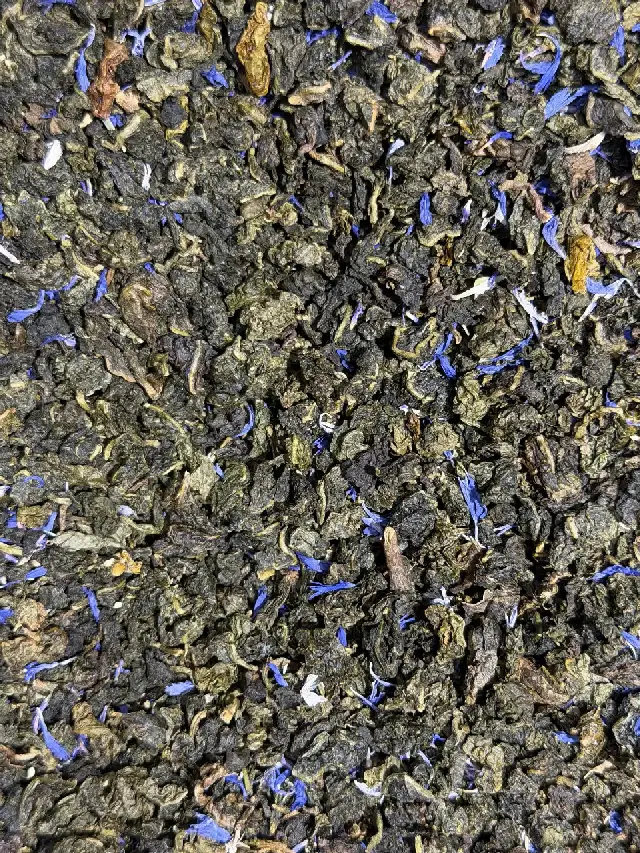
The base determines how the scent settles. The product page of Earl Grey Impérial explains it: on a light spring Darjeeling, bergamot settles better than on a full-bodied black tea, and the liquor stays clear. An oolong tea such as Opera Blue brings a velvety texture on which its notes of vanilla and red berries become rounder.
The base also sets the caffeine and the settings. Rouge Earl Grey transposes bergamot onto a red rooibos, caffeine-free, whereas Brume de Rose, a white tea, needs twice as many leaves. The scents in the table below are those of the ingredients lists, the settings those of the product pages.
| Tea | Base | Ingredients | Preparation |
|---|---|---|---|
| Jasmin Chung Feng | Green tea | Green tea, jasmine flowers | 2.5 g per 200 ml, 95 °C, 3 minutes |
| Thé Vert à la Menthe Suprême | Green tea | Green tea, mint | 2.5 g per 200 ml, 95 °C, 2 minutes |
| Brume de Rose | White tea | White tea, rose petals, flavouring | 5 g per 200 ml, 95 °C, 7 minutes |
| Opera Blue | Oolong tea (blue tea) | Oolong tea, flavouring, blue flowers | 3 g per 200 ml, 90 °C, 5 minutes |
| Earl Grey Impérial | Black tea (Darjeeling) | Tea (Darjeeling), bergamot flavouring | 2.5 g per 200 ml, 95 °C, 5 minutes |
| Marco Polo | Black tea | Tea, flavouring (fruit, flowers) | 2.5 g per 200 ml, 95 °C, 5 minutes |
| Lapsang Chinbara | Black tea | Smoked black tea | 2.5 g per 200 ml, 95 °C, 5 minutes |
| Rouge Earl Grey | Red rooibos, caffeine-free | Red rooibos, flavouring | 2.5 g per 200 ml, 95 °C, 5 minutes |
How do you prepare a scented tea?
A scented tea is prepared first and foremost like its base: it is the base that sets the measure, the temperature and the time, not the scent. Jasmin Chung Feng, a green tea, steeps for 3 minutes, no longer, so that the tea stays gentle beneath the flower; Brume de Rose, a white tea, needs 7. Our guide to steeping times and temperatures gives the reference points for each family.
Milk is decided tea by tea. The product page of Marco Polo recommends it plain to keep its bouquet intact, or with a dash of milk that brings out its indulgent side. That of Earl Grey Impérial prefers it without milk, which would weigh down the Darjeeling. To compare the house's different bergamots, our Earl Grey guide presents them one by one.
How do you store a scented tea without it scenting the others?
Keep each scented tea in its own airtight tin, away from air and light, and away from other teas. The product pages of our teas say it again and again: the smoke of Lapsang Chinbara passes to neighbouring leaves, the bergamot of Earl Grey Impérial is a volatile scent, and Marco Polo keeps away from coffee and spices.
One tin per tea prevents these exchanges, and a delicate plain tea thus keeps its own taste. The Esprit Céladon tins and the tea tins range offer the means to store each scent separately. Our guide to storing tea details what spoils it and where to keep it.
The sommelier's selection
Frequently asked questions
Scented tea or flavoured tea: what is the difference?
In everyday use, none: both expressions refer to a tea to which a scent of flowers, fruit, spices or smoke has been added. The useful difference can be read in the ingredients. “Green tea, jasmine flowers” indicates a scent obtained through contact with flowers, “smoked black tea” a scent that comes from smoking, and the word “flavouring” a scent added in the form of a flavouring, on its own or with petals, fruit or spices.
What does “natural flavouring” mean on a packet of tea?
Under European Regulation (EC) No 1334/2008, “natural flavouring” means that the flavouring part comes exclusively from natural materials, drawn from several sources that are not named. “Natural bergamot flavouring” goes further: at least 95% of this part comes from bergamot. The word “flavouring” used on its own does not specify the origin and also covers synthetic flavourings.
Scented green tea or scented black tea: which to choose?
It all depends on the cup you like. A scented green tea, such as Jasmin Chung Feng or Thé Vert à la Menthe Suprême, gives a pale liquor and steeps briefly, 2 to 3 minutes according to their product pages. A scented black tea, such as Marco Polo or Vanille des Îles, gives an amber, rounded liquor after 5 minutes. For the evening, a scented rooibos such as Rouge Earl Grey is caffeine-free.
To go further
Sources
How we write our guides
Our guides are prepared by La Boutique du Thé, Mariage Frères stockist in Bordeaux and Nice since 1999, drawing on our product sheets, the experience of our shops and the sources cited. Each text is checked and approved by the team before publication. The teas and accessories featured are on sale at the time you read the page. The LBDT Sommelier · A question? Write to us
More guides from the house
- Jasmine tea: how the flowers scent the leaf, and which to chooseJasmine tea is a green or white tea scented through contact with fresh flowers. The process, reading the label, steeping and 8 teas compared.Read the guide →
- Tea types: the six families, from green tea to dark teaA tea family depends on how the leaf is processed, not on the plant: green, white, yellow, oolong, black, dark, with a table and a tea for each.Read the guide →
- Lapsang Souchong and smoked teas: from the lightest to the boldestLapsang Souchong is a Chinese black tea dried over a pine fire. Our smoked teas compared: smoke, milk, settings, and which to choose.Read the guide →