
Lapsang Souchong and smoked teas: from the lightest to the boldest

By the LBDT Sommelier · published on · 7 min read
Reviewed and approved by the La Boutique du Thé team
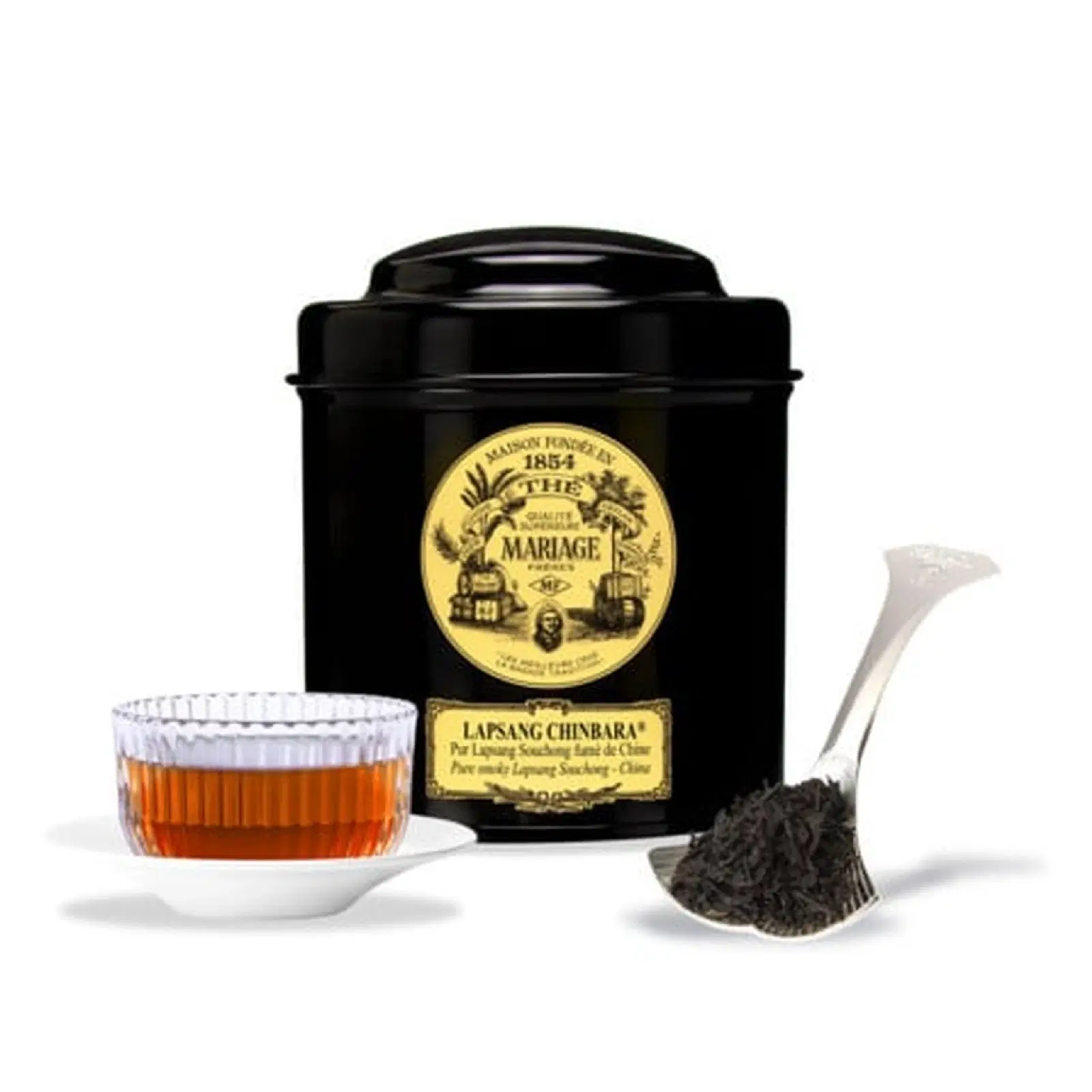
Lapsang Souchong is a black tea from the Wuyi Mountains in Fujian, dried over a pinewood fire that gives it its notes of smoke and resin. Around it, smoked teas range from a discreet hint to outright smoke, sometimes lifted with bergamot or jasmine. Here are our smoked teas in stock, compared according to their product sheets, with their settings and our pointers for choosing.
Lapsang, souchong: what do these two words mean?
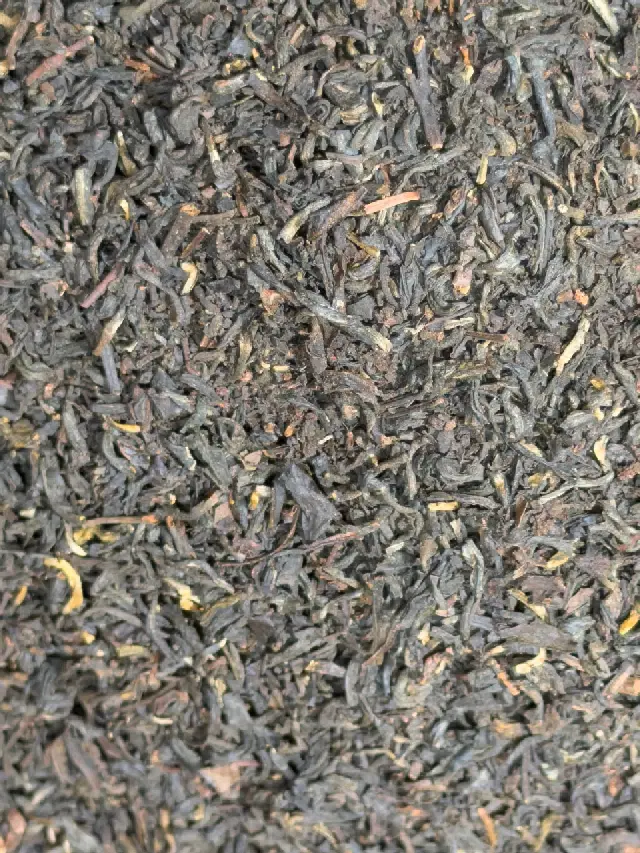
Lapsang Souchong comes from the village of Tongmu, in the Wuyi Mountains of Fujian, in south-east China. Its origins are traced back to the 17th century. Its black tea leaves are dried over a pinewood fire, whose smoke permeates them and leaves woody, resinous notes. At Mariage Frères, this tea bears the name Lapsang Chinbara. How smoked teas are made is summarised in our smoked tea collection.
The name reads in two parts. In the local dialect, “lapsang” refers to pinewood. “Souchong”, for its part, denotes a grade of tea leaf, not the smoking. Imperial Souchong shows this well: its product page states that this fine black tea from Hunan is not smoked. It offers floral notes and a smooth liquor, without astringency, and is drunk plain. China's other black teas are presented in our guide to the great styles of black tea.
Our smoked teas compared, in one table
The table runs from the most restrained smoked tea in our selection, Feu de Thé, to the boldest, Lu Yu. Their product pages all give the same intensity, 5 out of 5: the order therefore follows the way each page describes its smoke, and what accompanies it (wood, flower, citrus). The brewing settings and milk advice are those of the product pages, to be followed as given.
| Tea | What it contains | The smoke, according to the product page | Settings | Milk |
|---|---|---|---|---|
| Feu de Thé | Black tea and smoked tea | Very light, the house's most restrained | 95 °C, 5 min, 2.5 g per 200 ml | Plain or a dash |
| Empereur Chen-Nung | Smoked black tea from China | Light, a gentle, balanced smokiness | 95 °C, 5 min, 2.5 g per 200 ml | No milk |
| Roi-Soleil | Yunnan teas, smoked tea, green tea tips | Discreet, it adds nuance to the tea | 95 °C, 5 min, 2.5 g per 200 ml | Plain or a dash |
| Black Léopard | Black tea from Malawi smoked with guava leaves | Delicate, soft and fruity | 95 °C, 4 min, 2.5 g per 200 ml | No milk |
| Gengis Khan | Smoked blend, jasmine flowers, silver tips | Light, brightened by jasmine | 95 °C, 5 min, 2.5 g per 200 ml | Plain |
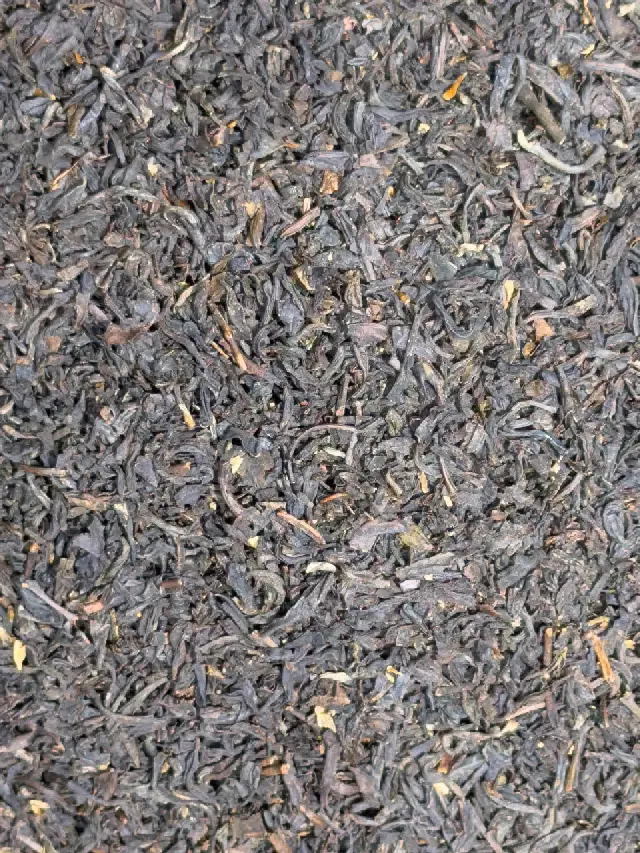
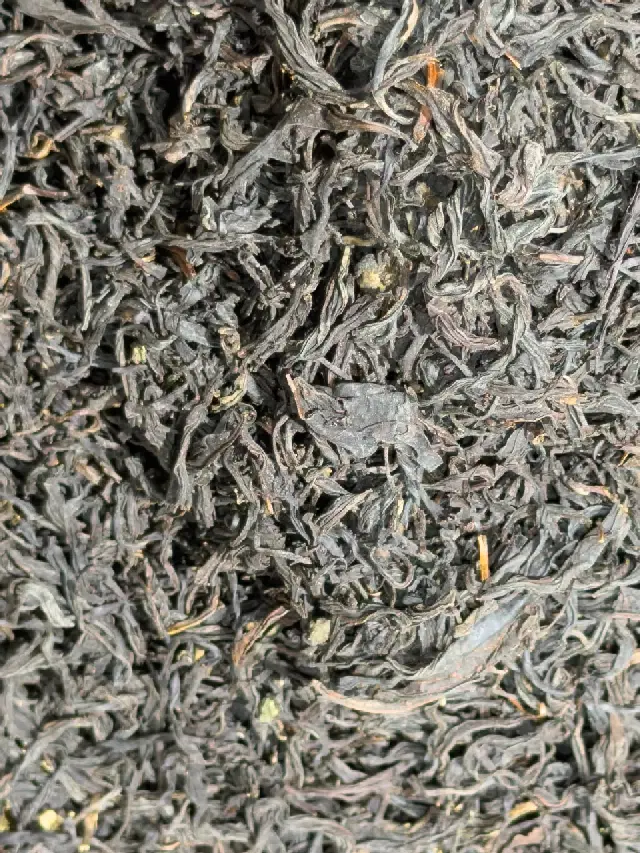
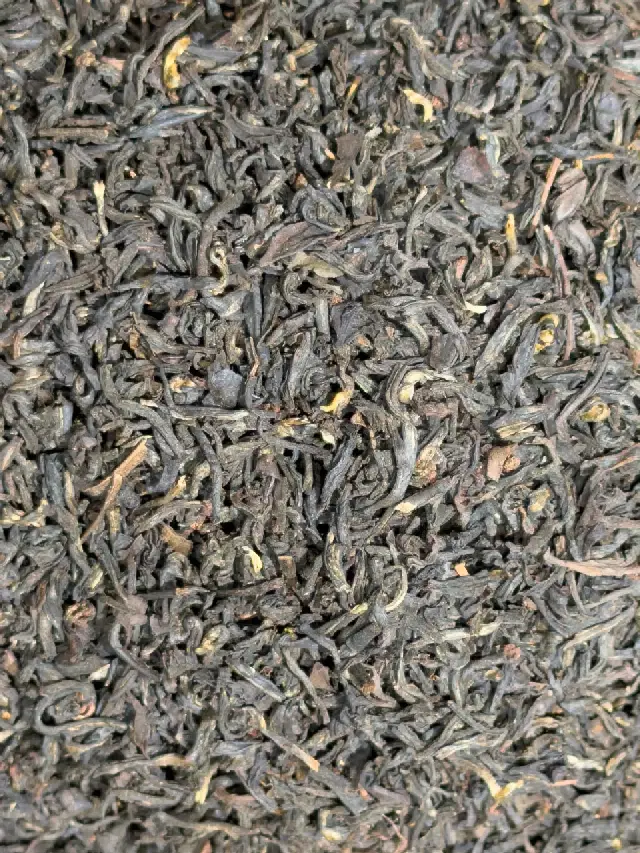
| Lapsang Chinbara | Chinese Lapsang Souchong smoked over a wood fire | Woody and resinous, without overpowering the tea | 95 °C, 5 min, 2.5 g per 200 ml | Plain or a dash |
| Smoky Earl Grey | Smoked black tea and bergamot-scented black tea | Pronounced, a very strong aroma | 95 °C, 5 min, 2.5 g per 200 ml | No milk |
| Lu Yu | Heavily smoked tea and robust bergamot-scented tea | The boldest, more so than Smoky Earl Grey | 95 °C, 5 min, 2.5 g per 200 ml | No milk or sugar |
Feu de Thé, Empereur Chen-Nung, Roi-Soleil: the gentlest smoke
Feu de Thé is the most restrained of the Mariage Frères smoked teas. Its product page describes it as a blend of black tea and smoked tea, with a very lightly smoky taste: the smoke remains a nuance behind the roundness and frank tannins of the black tea. It is drunk plain or with a dash of milk, alongside a savoury breakfast, scrambled eggs or smoked salmon.
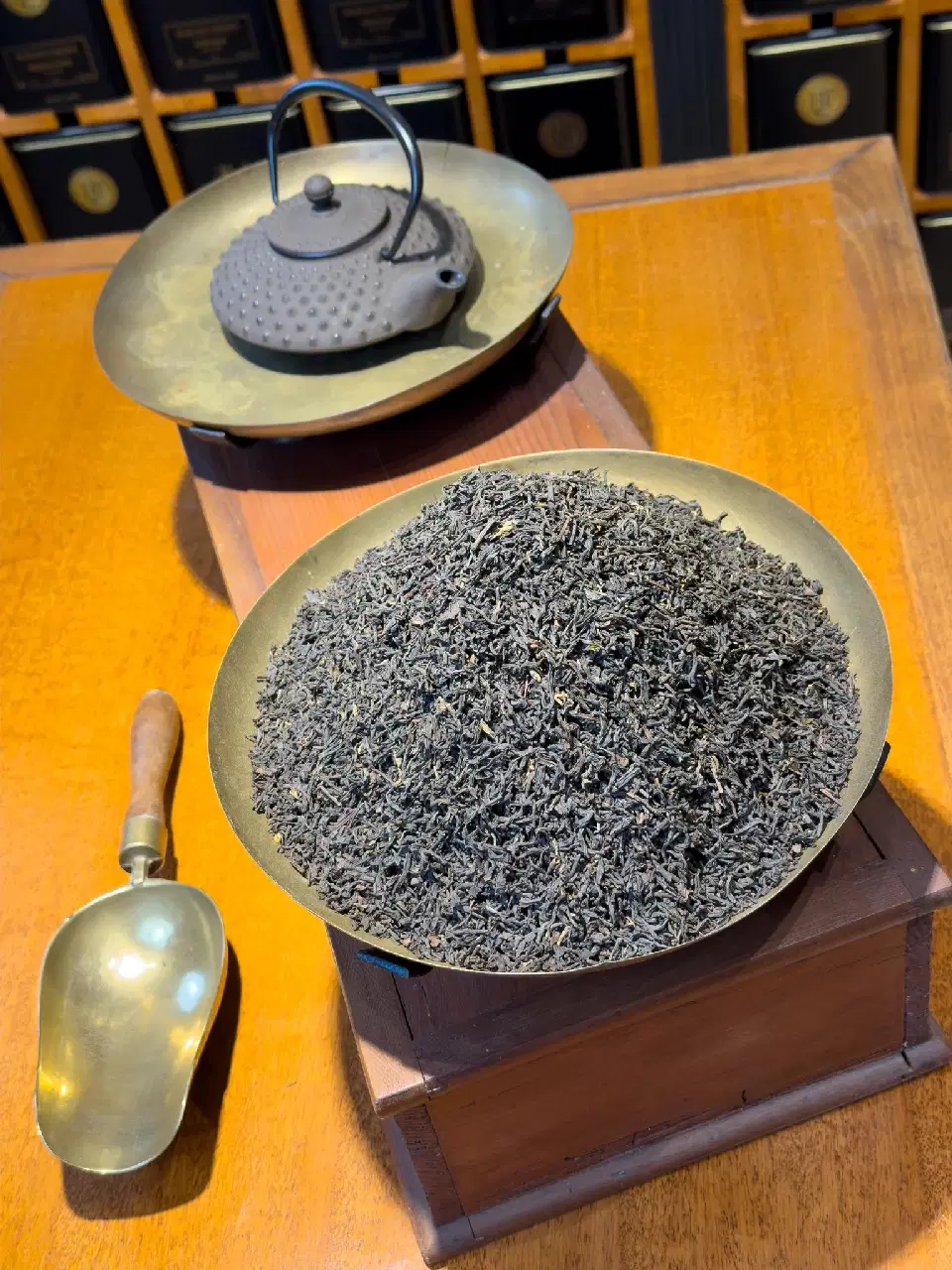
Empereur Chen-Nung, a smoked black tea from China, bears the name of the emperor to whom legend attributes the discovery of tea. Its product page speaks of a gentle, balanced smokiness, over a round, amber liquor where the woody notes let the tea express itself. It is drunk without milk, to keep the smoke clean, with brunch or a plate of charcuterie. It is also available in a box of 30 cotton muslin tea sachets.
Roi-Soleil combines golden Yunnan teas, a subtly smoked black tea and green tea tips. The smoke remains discreet, carried by the roundness of the Yunnan. Its product page suggests it plain or with a dash of milk, with roast poultry or mushrooms, and notes that it lends itself to cold brewing; the method is explained in our guide to homemade iced tea.
Black Léopard and Gengis Khan: another idea of smoke
Black Léopard comes from Malawi, from a family plantation at an altitude of 1,150 m. Its leaves are smoked with the leaves of the guava trees that grow on the plantation. Its product page describes a smoke softer and fruitier than that of resinous woods, with notes of nougat, dates and marron glacé. It is drunk plain, without milk, hot or iced, and steeps for 4 minutes instead of 5.
Gengis Khan combines a smoked blend, jasmine flowers and silver tips, the buds that soften the leaf. Its product page calls it lightly smoked: the woody smoke comes first, then the jasmine brightens the cup. It is drunk plain, during the day, with a savoury dish or a mature cheese. It bridges two families, jasmine teas and smoked teas.
Lapsang Chinbara: the Lapsang Souchong of China
Lapsang Chinbara is the Mariage Frères Lapsang Souchong: a black tea from Fujian, smoked over a wood fire in the traditional way. The house notes that authentic Chinese Lapsang Souchong has become almost impossible to find. Its product page describes a woody, resinous smoke that envelops the tea without overpowering it, the sweetness of a Chinese black tea beneath the smoke and a long, dry finish.
It is at home at the table, with savoury dishes: scrambled eggs, smoked salmon, goat's cheese or mature cheese, grilled meat. It is drunk plain or with a dash of milk, which rounds out its smoke. It is available as loose leaf, in a 100 g tea tin and in a box of 30 cotton muslin tea sachets. For pairings with a festive meal, see our guide tea and Christmas dinner.
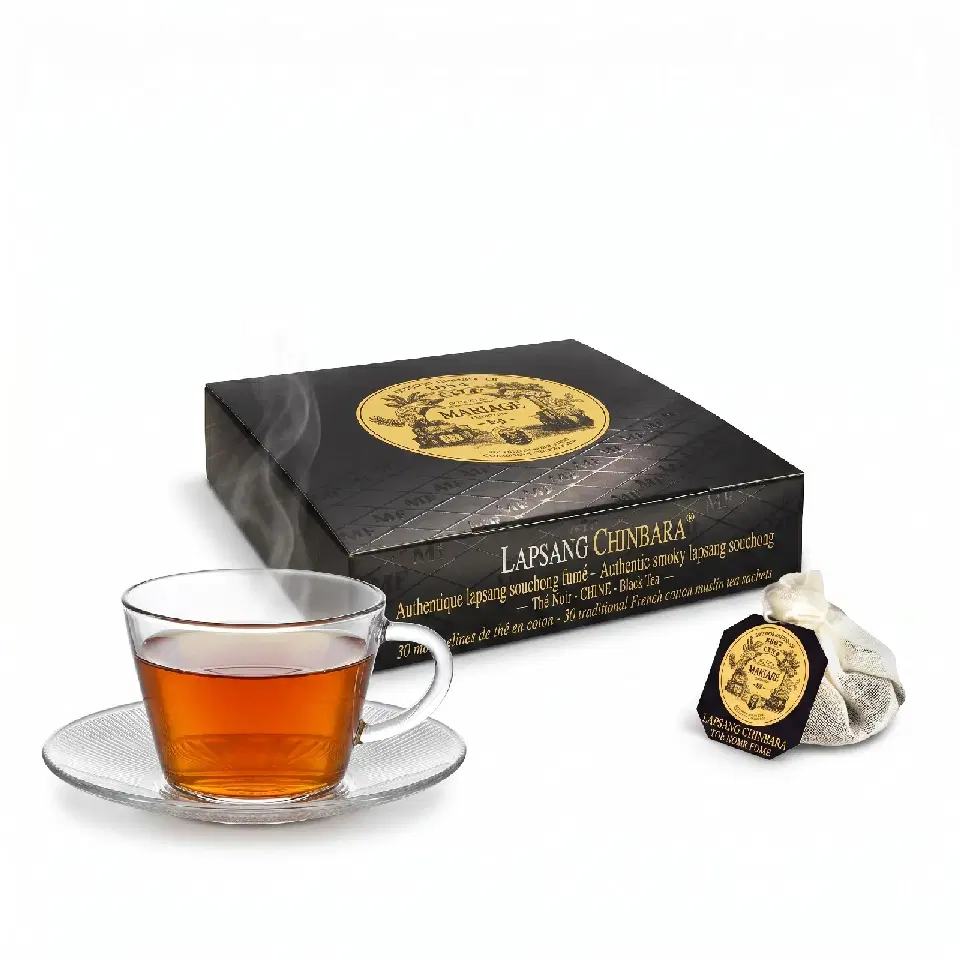
The same smoke can also be tasted by the spoonful. Mariage Frères jars Tarry Souchong, a smoked black tea of bold character, in its Tarry Souchong tea jelly: cooked in a copper pan, it accompanies mature cheeses, cold meats or toast, and the breakfast of lovers of pronounced flavours.
Smoky Earl Grey and Lu Yu: smoke and bergamot
Smoky Earl Grey brings together a smoked black tea and a bergamot-scented black tea. Its product page gives it a very pronounced aroma: the smoke opens, frank, then the citrus cuts through it. It is drunk plain, without milk, with savoury rather than sweet food: eggs, smoked salmon, mature cheese. For bergamot and the other versions of this scented tea, see our guide to Earl Grey.
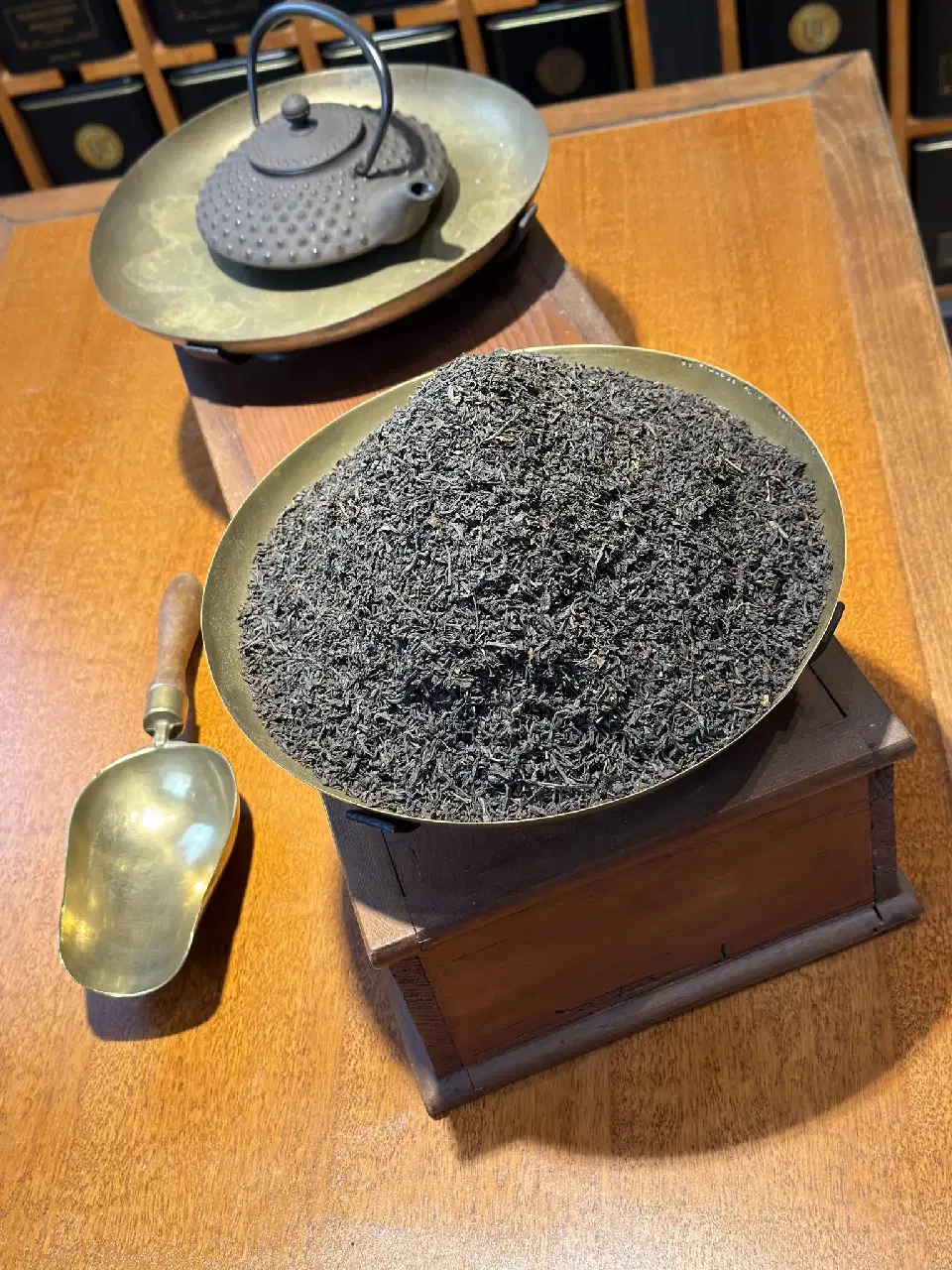
Lu Yu bears the name of the Chinese sage who wrote the first treatise devoted to tea. It combines a heavily smoked tea and a robust bergamot-scented tea, and its product page describes it as smokier than Smoky Earl Grey: it is the boldest in our selection. It is drunk plain, without milk or sugar, with a savoury breakfast or brunch.
Which smoked tea to start with, and which with milk?
The choice depends on how much room you want to give the smoke, and on what accompanies it. Here are our pointers, drawn from each tea's product page.
- For a first cup: Feu de Thé, which its product page presents as the smoked tea for beginners, or Empereur Chen-Nung, with its gentle smokiness.
- To taste a Chinese Lapsang Souchong: Lapsang Chinbara.
- For a fruity smoke, without resin: Black Léopard.
- For a floral smoke: Gengis Khan, with jasmine.
- For bergamot lovers: Smoky Earl Grey, then Lu Yu, smokier still.
- With a dash of milk: Lapsang Chinbara, Feu de Thé and Roi-Soleil. The others are drunk plain.
How to prepare and store a smoked tea?
Our smoked teas are prepared like a black tea: 2.5 g of leaves per 200 ml of water at 95 °C. Their product pages give a steeping time of 5 minutes, except that of Black Léopard, 4 minutes. In cotton muslin tea sachets, Lapsang Chinbara and Empereur Chen-Nung are measured at one sachet per 200 ml. Guidance for the other tea families is gathered in our guide to steeping times and temperatures.
The product pages of these teas stress one point: their smoke readily passes to neighbouring leaves. Store each smoked tea in its own closed tin, away from other teas. To keep loose leaf tea, the Esprit Céladon range offers tea caddies, and Lapsang Chinbara is already available in a tea tin.
The sommelier's selection
Frequently asked questions
What does Lapsang Souchong mean?
The name comes from the Fuzhou dialect, in Fujian. There, “Lapsang” refers to pinewood, the wood of the fire that dries and smokes the leaves. “Souchong” designates a grade of tea leaf, not the smoking: there are therefore unsmoked souchongs, such as Mariage Frères’ Imperial Souchong. The full name thus describes souchong leaves dried over a pinewood fire.
Which smoked teas does Mariage Frères offer?
Among Mariage Frères’ smoked teas, our website offers Lapsang Chinbara, the house’s Lapsang Souchong, Feu de Thé, Empereur Chen-Nung and Roi-Soleil, with gentler smokiness, Black Léopard, smoked over guava wood, Gengis Khan, with jasmine, and two smoked teas with bergamot, Smoky Earl Grey and Lu Yu. They are gathered in our smoked tea section.
What is Tarry Souchong?
Tarry Souchong, or Tarry Lapsang Souchong, is the name given to heavily smoked Lapsangs: the English word “tarry” evokes tar. Mariage Frères makes it into a smoked black tea jelly, the Tarry Souchong tea jelly, to be served with mature cheeses, cold meats or toast. In the cup, the smokiest of our selection is Lu Yu.
To go further
Sources
How we write our guides
Our guides are prepared by La Boutique du Thé, Mariage Frères stockist in Bordeaux and Nice since 1999, drawing on our product sheets, the experience of our shops and the sources cited. Each text is checked and approved by the team before publication. The teas and accessories featured are on sale at the time you read the page. The LBDT Sommelier · A question? Write to us
More guides from the house
- Tea types: the six families, from green tea to dark teaA tea family depends on how the leaf is processed, not on the plant: green, white, yellow, oolong, black, dark, with a table and a tea for each.Read the guide →
- Black tea: the great styles, from Assam to Yunnan, and how to choose oneBlack tea: what sets it apart, its great styles from Assam to Lapsang, water temperature, steeping time and milk, with teas in stock.Read the guide →
- Ceylon tea: the seven regions, the two monsoons and our gardensCeylon tea comes from Sri Lanka: its seven regions, the seasons dictated by the monsoons, and our Uva and Ratnapura teas with their brewing settings.Read the guide →