
Glass teapots: which to choose, how to use and care for them

By the LBDT Sommelier · published on · 7 min read
Reviewed and approved by the La Boutique du Thé team
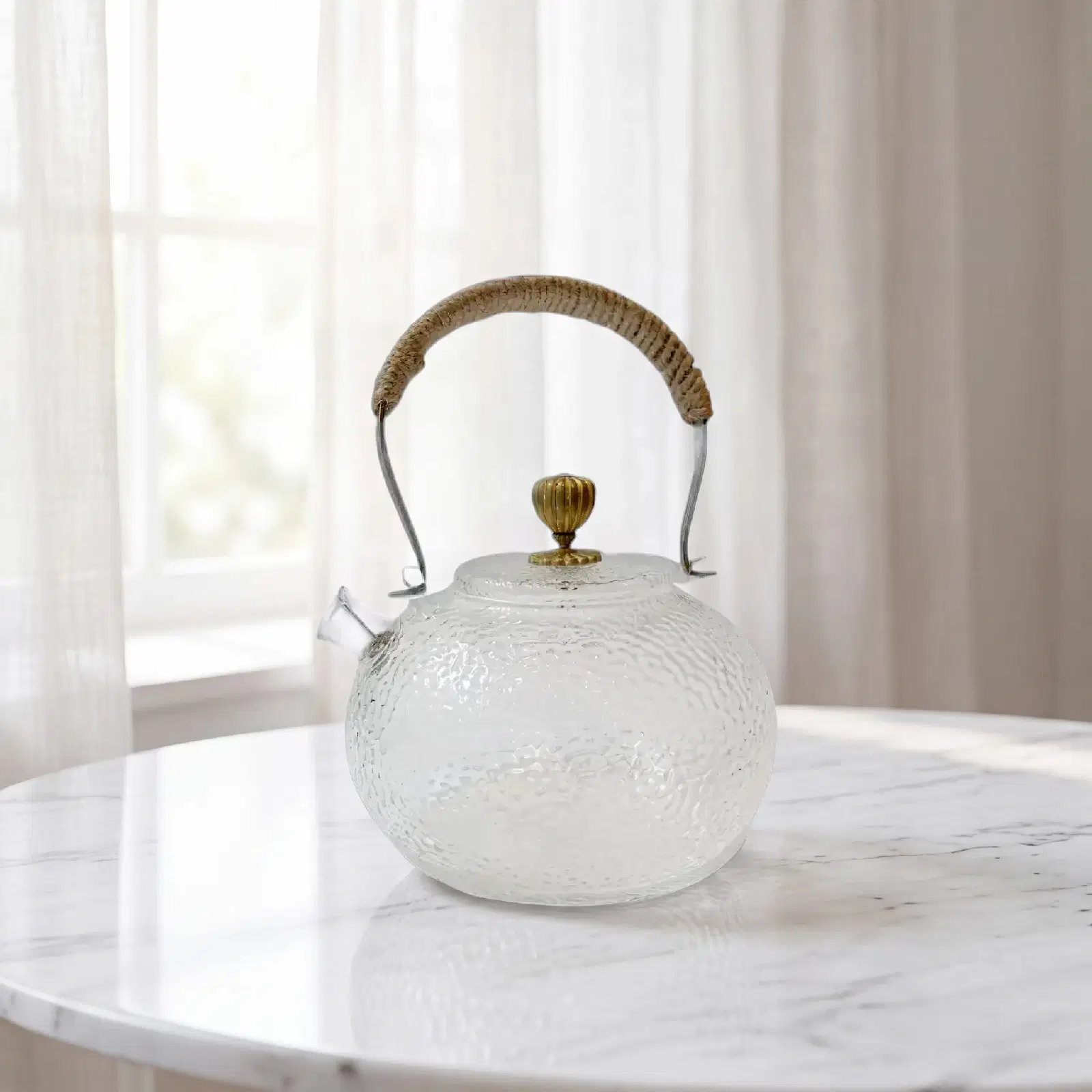
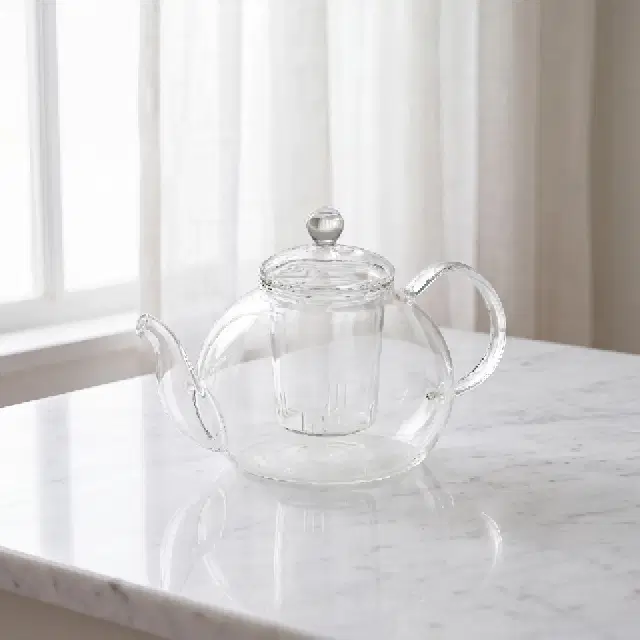
A glass teapot is chosen first for its filter and its capacity: stainless steel microfilter, removable strainer or glass tea strainer, from 0.6 to 1.2 l. Neutral in taste, glass suits every tea, and comes into its own with teas that are meant to be watched: hand-tied teas, white teas, colourful infusions. We compare our five glass teapots and jugs sold individually, then explain why water is heated in a kettle, how to keep tea warm and how to keep the glass clear.
Which teas call for a glass teapot?
A glass teapot suits every tea and every infusion: glass is neutral in taste and does not hold on to the aroma of the previous tea, as the product pages for our models point out. Its particular strength lies elsewhere. The transparent wall lets you watch the leaves unfurl and the liquor take on its colour, from the palest to the deepest. It is therefore chosen first and foremost for teas that are as much a pleasure to watch as to drink.
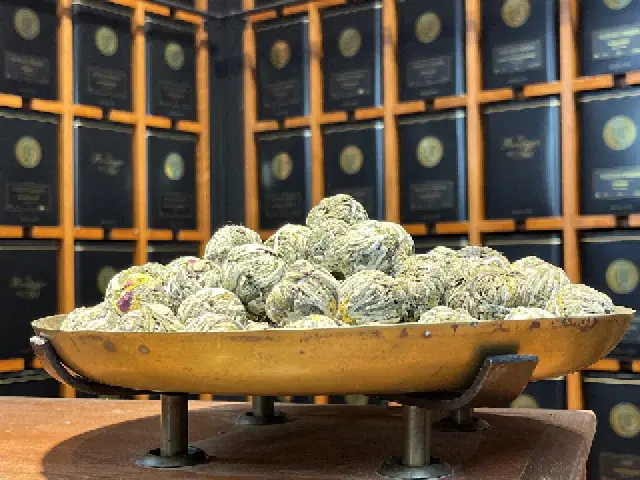
Mariage Frères' Fleur d'Orient tea is the most telling example. This green tea, made of hand-shaped buds, is tied into a single piece that opens in hot water, its marigold flowers and rosebuds unfurling with it. Its product page recommends 2.5 g per 200 ml, water at 85 °C and a steeping time of 5 minutes: in glass, you can follow every stage of this opening.
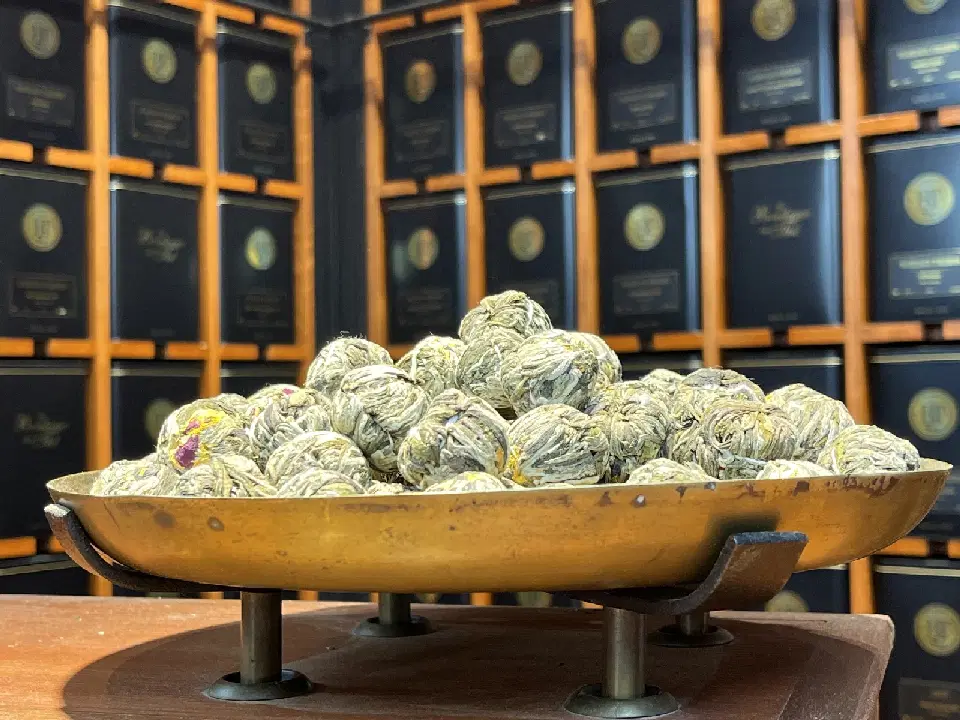
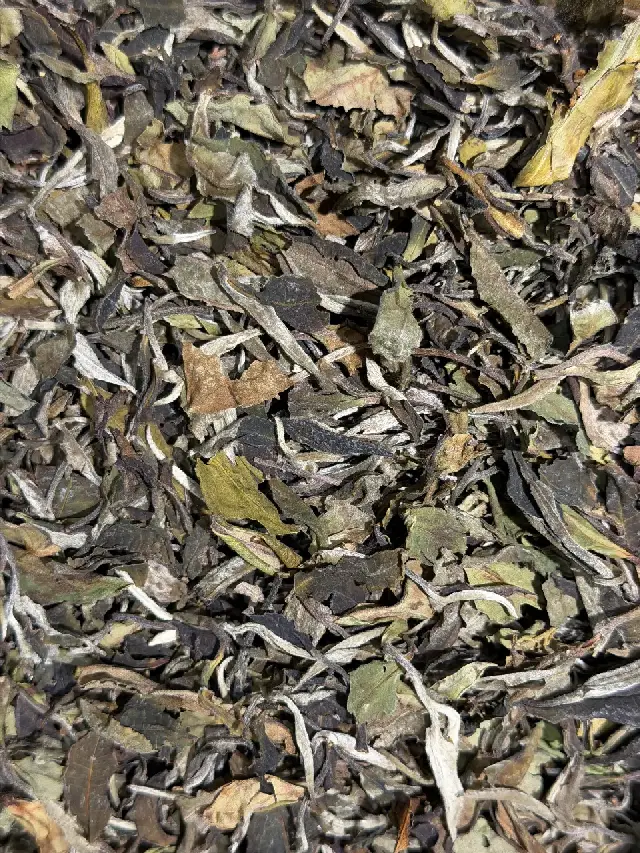
White teas rich in buds lend themselves to it too. Pai Mu Tan Impérial, a white peony from Fujian, contains a large proportion of silver needles among its jade-coloured leaves; its product page gives 5 g per 200 ml, 85 °C and 7 minutes. Our white tea guide presents the other crus of this family, and the settings for each family are gathered in our guide to steeping times and temperatures.
As for infusions, Ombelle's Fleurs d'Hibiscus Karkadé Bio give a naturally caffeine-free, garnet liquor that colours the teapot within the first few minutes. For black teas and oolongs, our guide to choosing a teapot recommends enamelled cast iron instead, which retains the heat: glass is not the only material, it is the one that shows the tea. Our cast iron teapot guide explains how to recognise, prepare and care for one.
Microfilter, strainer or tea strainer insert: our glass teapots compared
A glass teapot stands out above all by the way it holds back the leaves, then by its capacity. Our five glass teapots and jugs sold individually share three systems: a stainless steel microfilter, a removable strainer or filter, or a glass tea strainer. The table brings them together, from smallest to largest; all our other models, in cast iron or porcelain, are in the teapots section.
| Model | Capacity | What holds back the leaves | Who it is for, according to the product page |
|---|---|---|---|
| Cruche en Verre “Sencha”, 0.6 l | 0.6 l | Glass tea strainer | One or two people, hot or cold |
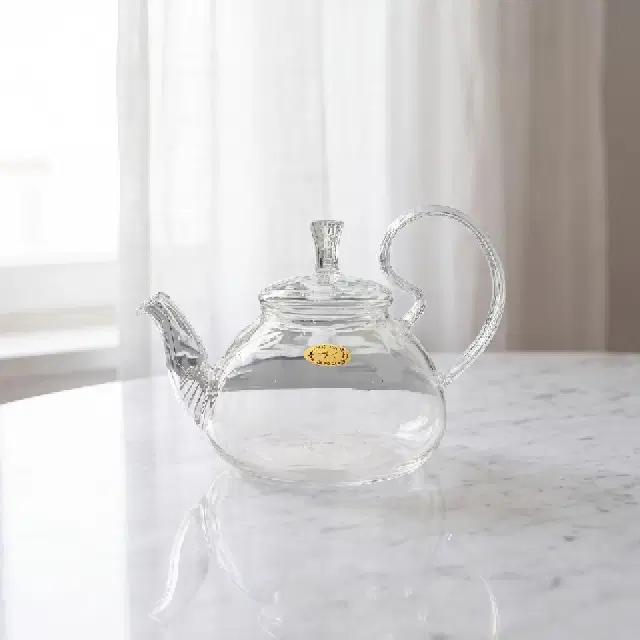
| Théière en Verre 'Oriental', 650 ml | 650 ml | Removable strainer | Two or three people |
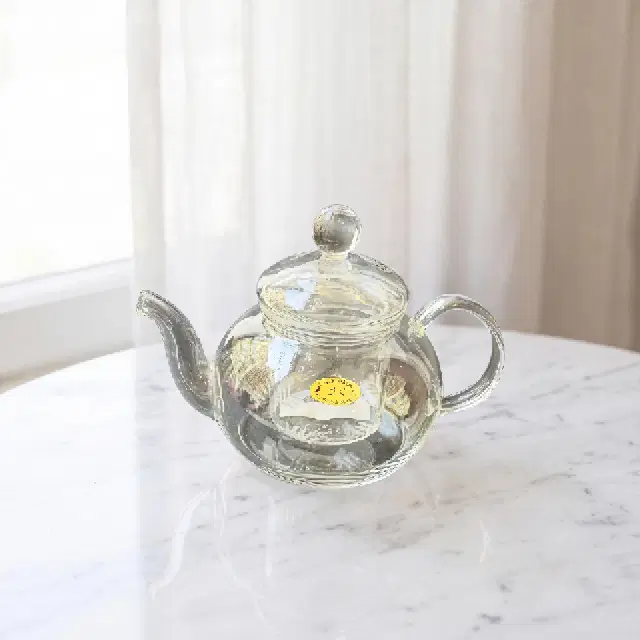
| Théière en Verre 'Anne' avec Filtre, 800 ml | 800 ml | Removable filter | Several cups |
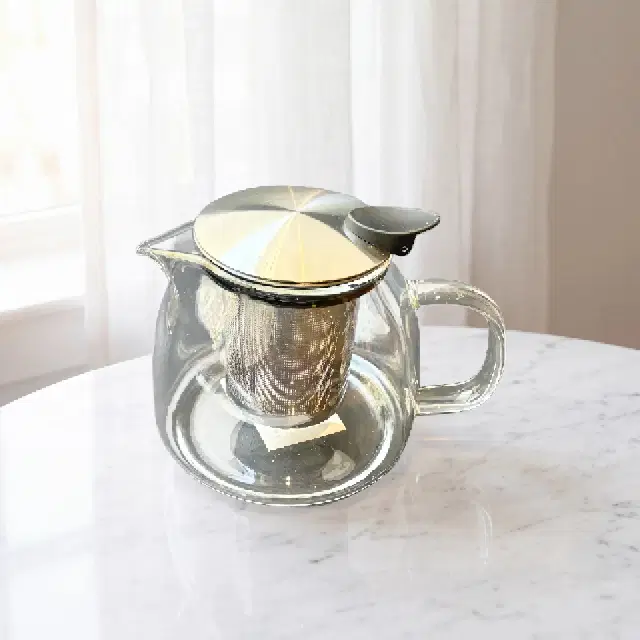
| Théière en Verre 'Finn', 0.9 l | 0.9 l | Stainless steel microfilter | Several cups |
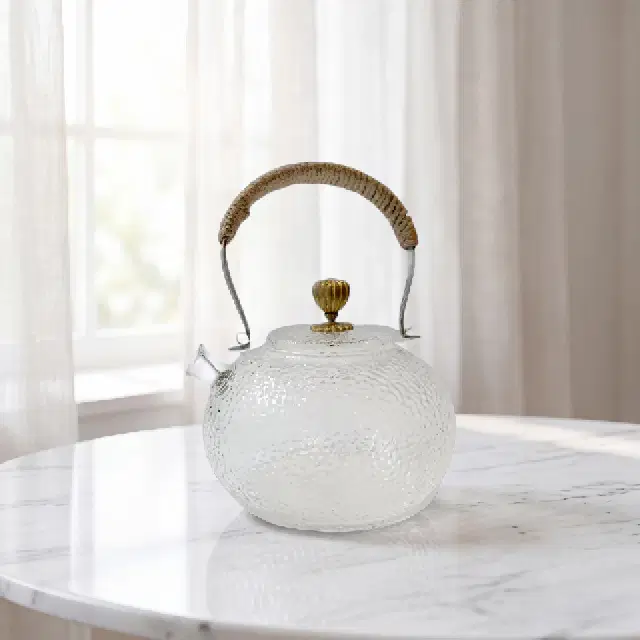
| Cruche en Verre 'Lu', 1.2 l, Faite à la Main | 1.2 l | Built-in tea strainer | Serving several people, iced tea and cold infusions |
The stainless steel microfilter: the Finn
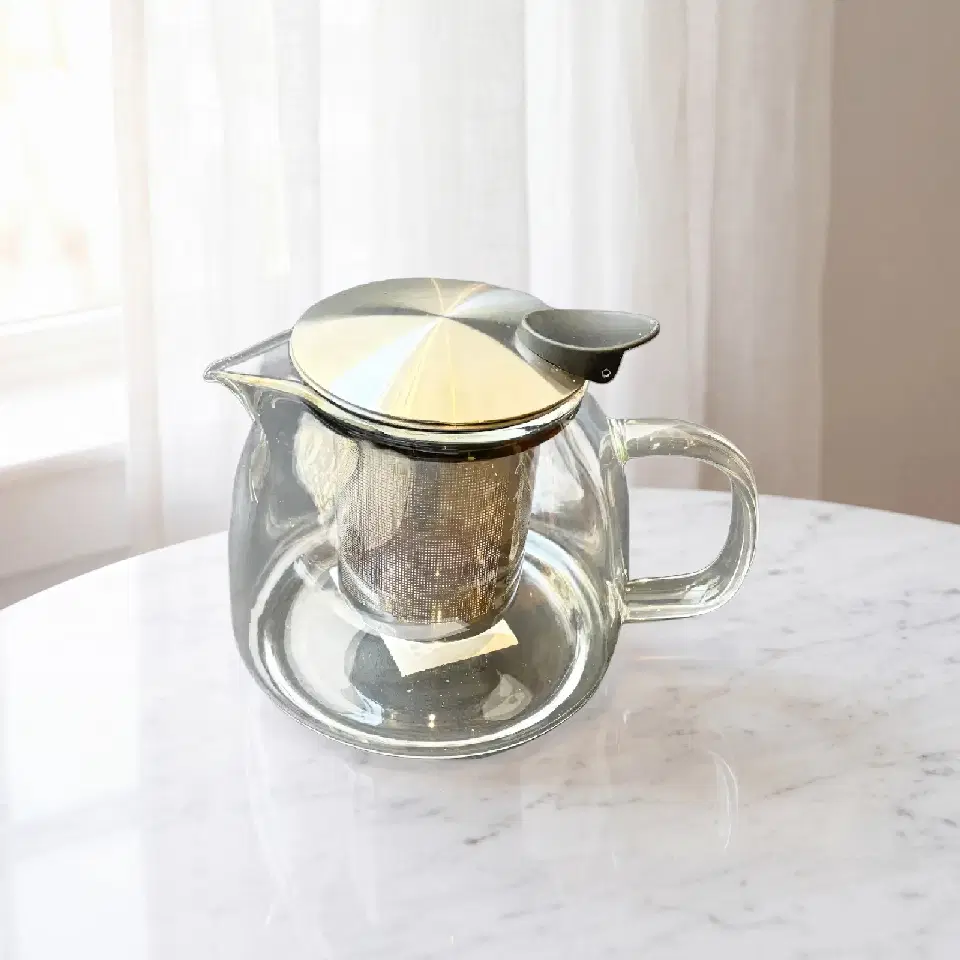
The Théière en Verre 'Finn', 0.9 l comes with its lid and a stainless steel microfilter that holds back the leaves during steeping. Its capacity serves several cups, for a moment to share. At the end of the time given on the tea's product page, remove the microfilter: the leaves stop steeping, and the tea keeps the setting you chose right to the last cup.
The removable strainer or filter: the Anne and the Oriental
The Théière en Verre 'Anne' avec Filtre, 800 ml has a removable filter that holds back the leaves and makes cleaning easier; it serves several cups. The Théière en Verre 'Oriental', 650 ml, with its Oriental-inspired curves, has a removable strainer and suits two or three people. The method is the same for both: place the tea in the strainer at the measure given on its product page, pour in the water, then remove the strainer when the time is up.
The glass tea strainer: the Sencha and Lu jugs
Two of our pieces are called jugs on their product pages. The Cruche en Verre “Sencha”, 0.6 l comes with a tea strainer, also in glass, which holds back the leaves as you serve: an all-glass piece, for one or two people, with hot tea as well as a cold drink. Its name evokes sencha, but it serves all teas and infusions.
The Cruche en Verre 'Lu', 1.2 l, Faite à la Main is hand-blown, as the fine irregularities in the glass show. Its product page describes it as a glass teapot with a built-in tea strainer, designed for iced tea and cold infusions served to several people. Our guide to homemade iced tea gives the cold-brew method that suits it.
Can a glass teapot go on the hob?
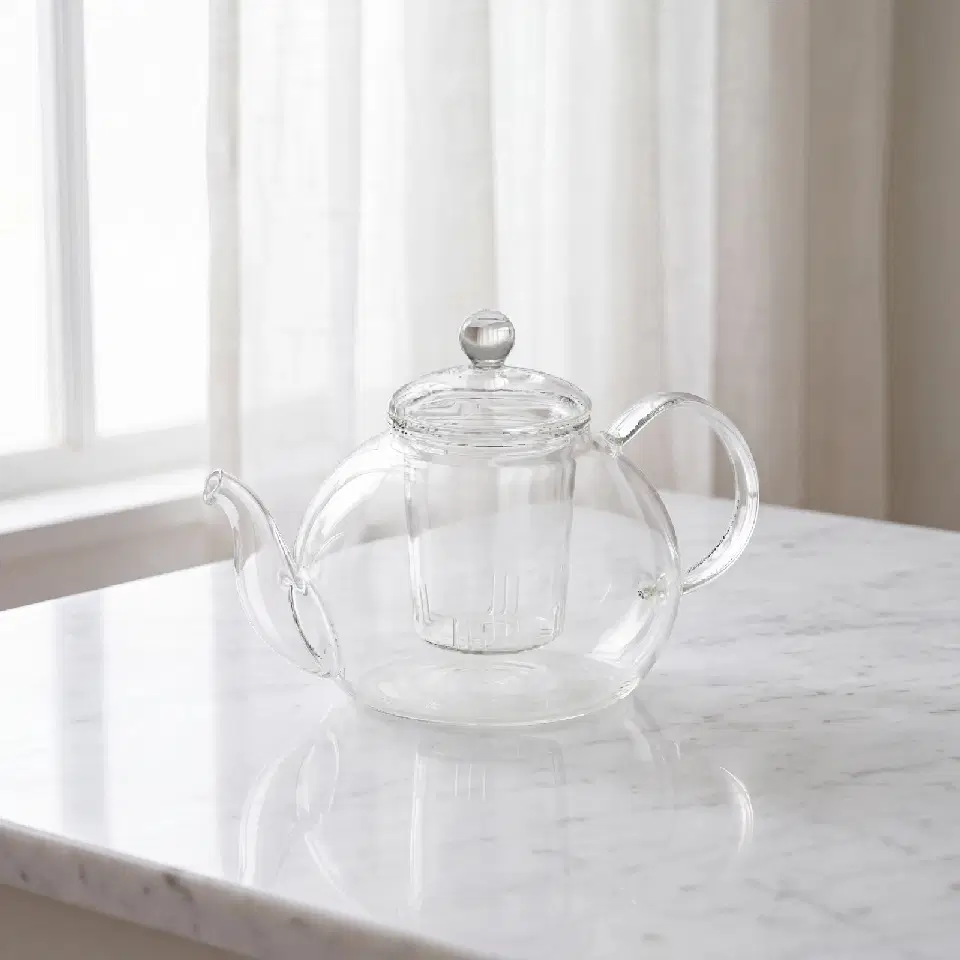
None of the product pages for our glass teapots indicates use on the hob: heat the water in a kettle, then pour it into the teapot. This is also what one glass teapot manufacturer's instructions require, excluding the oven, the hotplate, gas and the microwave for its models, and warning against thermal shock. A kettle from our kettles section gives water at the right temperature without exposing the glass.
Even glass made for heat can crack under a sudden or uneven change in temperature. During steeping, the same instructions point out that the wall, the lid and the filter become very hot: pour while holding the handle, and keep the teapot out of the reach of children. Before each use, check that the glass is not cracked and that the filter and lid sit firmly in place.
How do you keep tea hot in a glass teapot?
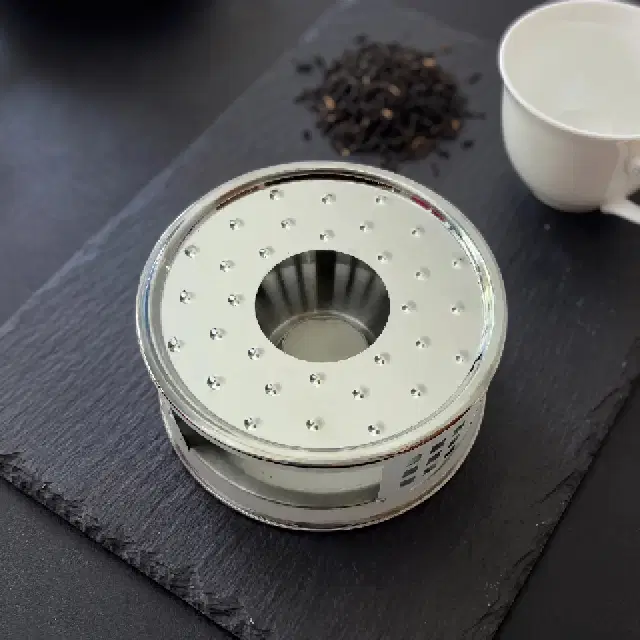
To keep tea hot while serving, place the teapot on a candle warmer rather than heating it again. The Réchaud Inox, 140 mm in diameter, keeps the teapot at temperature with a tealight placed underneath; its product page states that it is compatible with most glass, porcelain or cast iron teapots. The Réchaud Verre works in the same way, lets the glow of the flame show through and keeps tea warm without bringing it back to the boil.
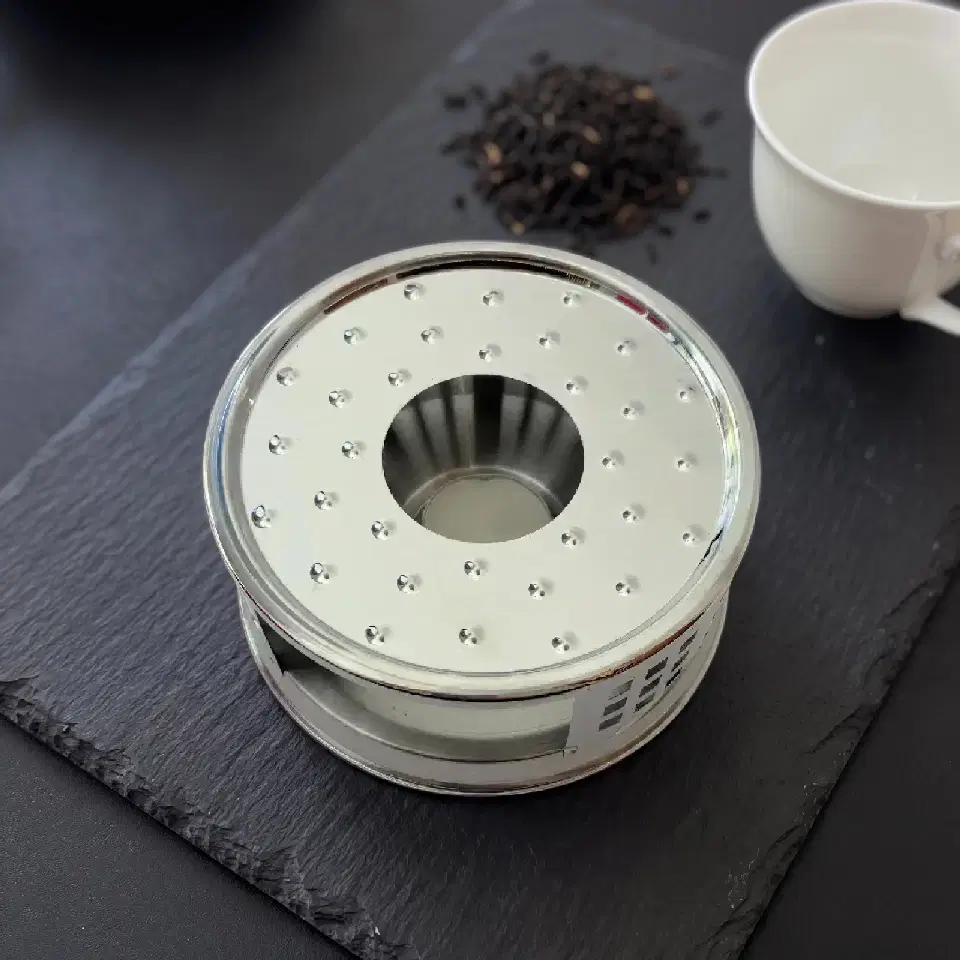
Before placing the teapot on the warmer, remove the filter or strainer: the leaves stop steeping, and the tea does not grow stronger from cup to cup. To drink it hot to the very end, the Tasse 'Arvid' Double Paroi en Verre, 220 ml keeps tea at temperature for longer and shows off its colour, just like the teapot; our other models are gathered in the glasses section.
How do you clean a glass teapot and keep the glass clear?
Wash the glass teapot by hand, straight after use: this is the best way to keep it transparent. The instructions mentioned above explain that glass can become dull through contact with tea, acids, alkaline products and dishwasher salt, and advise avoiding alkaline detergents, fruit juices and vinegar. Before first use, they recommend washing in very hot water with washing-up liquid, rinsing thoroughly, then drying.
Removable filters make this easier. On the Théière en Verre 'Anne' avec Filtre, 800 ml, the filter comes out and is washed separately, and the transparent wall of the Théière en Verre 'Finn', 0.9 l is easy to clean, according to their product pages. Empty out the leaves as soon as serving is over, rinse the filter or strainer, wash the teapot in hot water with a little washing-up liquid, then dry it.
The sommelier's selection
Frequently asked questions
What is a borosilicate glass teapot?
It is a teapot made of glass that contains boron trioxide in addition to silica. This glass, also used for laboratory glassware, expands much less with heat than ordinary glass and therefore withstands temperature changes better. It is not unbreakable, however: a sudden or uneven change can crack it. Our product pages do not specify the type of glass of our models; for each one, the water is heated in a kettle.
Glass teapot with stainless steel filter or glass strainer: which to choose?
The stainless steel filter, like the microfilter of the Théière en Verre 'Finn', 0.9 l, keeps the leaves in a basket that is removed at the end of steeping: the tea then stops infusing. The glass strainer, that of the Cruche en Verre “Sencha”, 0.6 l, keeps the piece entirely transparent and holds back the leaves when serving. If you want to control the steeping time precisely, the removable filter is the simplest.
Glass or cast iron teapot: which to choose?
They meet two different desires. Glass is neutral in taste and lets you watch the infusion: it shows off green teas, white teas, hand-shaped teas and colourful herbal infusions. Enamelled cast iron keeps the heat longer, which suits black teas and oolongs well.
Which small glass teapot for one person?
For one or two people, the Cruche en Verre “Sencha”, 0.6 l is the smallest of our glass pieces: it serves hot tea or a cold drink, with its glass strainer. The Théière en Verre 'Oriental', 650 ml, with a removable strainer, suits two or three people. Beyond that, the Théière en Verre 'Anne' avec Filtre, 800 ml and the Théière en Verre 'Finn', 0.9 l serve several cups.
To go further
Sources
How we write our guides
Our guides are prepared by La Boutique du Thé, Mariage Frères stockist in Bordeaux and Nice since 1999, drawing on our product sheets, the experience of our shops and the sources cited. Each text is checked and approved by the team before publication. The teas and accessories featured are on sale at the time you read the page. The LBDT Sommelier · A question? Write to us
More guides from the house
- Tea infuser: ball, tube, paper filter or filter teapot, which to chooseTea infuser: ball, tube, paper filter, bottle or filter teapot, compared by cup, leaves and care, in one table.Read the guide →
- Tea service: putting one together for entertaining, from 4 to 50 guestsTea service for entertaining: teapot capacity for 4 to 12 people, the tea to allow for 50 guests, and how to keep it hot.Read the guide →
- Tea accessories: the essentials, and the ones that bring pleasureWhich tea accessory to buy first: adjustable kettle, infuser, measuring spoon, tea timer, caddy. The role of each and the pleasure items to add.Read the guide →