
Ceylon tea: the seven regions, the two monsoons and our gardens

By the LBDT Sommelier · published on · 8 min read
Reviewed and approved by the La Boutique du Thé team
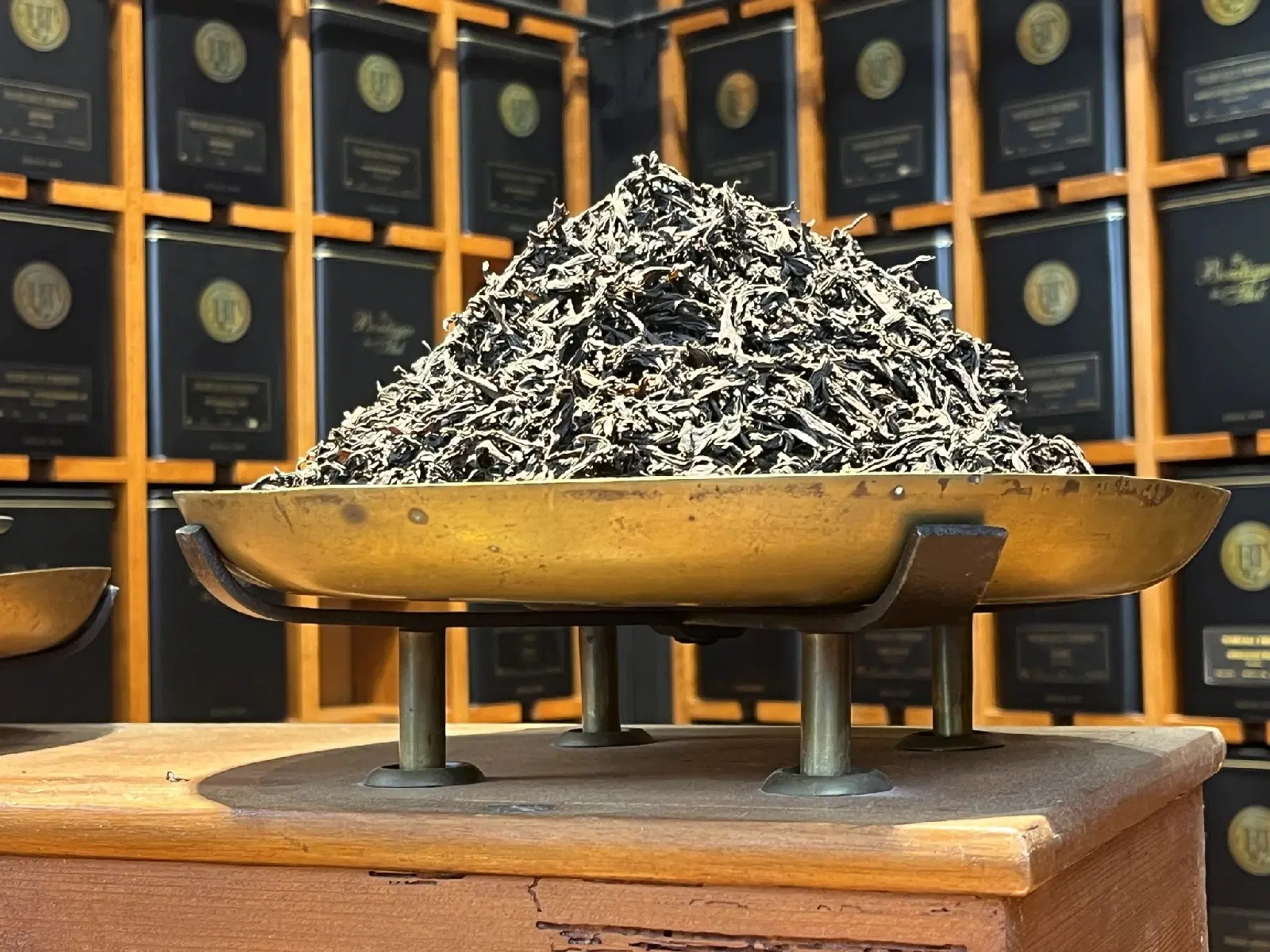
Ceylon tea is tea from Sri Lanka, mostly black, and its taste depends on two things: the altitude of its region and the season of its harvest, governed by the monsoons. Here are the island's seven regions, why the “quality season” does not arrive at the same time in the east and the west, and the Uva and Ratnapura gardens from our product sheets, with their brewing settings.
What is Ceylon tea?
Ceylon tea is tea grown and made in Sri Lanka, the island once called Ceylon, whose former name the tea world has kept on its labels. Cultivation began there in 1867 in the Kandy region, when the planter James Taylor had tea bushes planted; it took off after the disease that wiped out the island's coffee plants in the 19th century.
The island produces mainly black teas, as whole or broken leaves, but also green teas and a few white teas. Its cup is known for its clarity and coppery colour: this is why so many Earl Greys are built on a Ceylon, such as Grand Earl Grey Ceylan, whose frank base carries the bergamot. Our Earl Grey guide tells the story of that pairing; here, we talk about plain Ceylon, and what changes from one garden to another.
What are the seven Ceylon tea regions?
Sri Lankan exporters recognise seven producing regions, grouped by altitude. The high country brings together Nuwara Eliya, Dimbula, Uva and Uda Pussellawa; Kandy forms the mid country, with gardens no higher than 1,300 m; Ruhuna and Sabaragamuwa are the low country, where gardens go down to sea level. To bear the name of a region, a tea must have been grown and made there.
Each region has its own signature in the cup. Nuwara Eliya, the highest district, gives the palest liquor on the island. Dimbula is recognised by a golden liquor verging on orange, Kandy by a bright infusion with coppery glints. Uva teas are described as smooth and rounded, those of Uda Pussellawa as darker, with a pinkish tint. The low country gives dark, full-bodied liquors: in Sabaragamuwa, the cup turns a yellowish brown with red glints.
| Region | Elevation | Slope | Quality season |
|---|---|---|---|
| Nuwara Eliya | High country, the highest | Central highlands | Two seasons, west and east |
| Dimbula | High country | West | From the start of the year to March or April |
| Uva | High country | East | From July to September |
| Uda Pussellawa | High country | East | From June to September |
| Kandy | Mid country | West | Western season, early in the year |
| Ruhuna | Low country | Mountain foothills | Not specified |
| Sabaragamuwa | Low country | South-west | Not specified |
Why the season changes the flavour: the two monsoons
In Sri Lanka, a tea's season depends on the two monsoons of the Indian Ocean. The north-east monsoon brings rain from December to March, the south-west monsoon from June to September. The central mountains act as a barrier: each slope receives mostly the rain of one and stays largely sheltered from the other.
When a monsoon crosses the mountains, it has lost its moisture and brings cool, dry weather to the other side. This is the “quality season”: warm days and cool nights, without rain, which refine the aroma of the leaf. In the west, in Dimbula and Kandy, it falls early in the year, until March or April. In the east, in Uva, it arrives with the dry winds from July to September, and gives the teas of this season the almost minty freshness that has made their reputation.
The same garden therefore does not give the same cup all year round. The page for Uva Highlands BOP says so: Mariage Frères selects for this tea a harvest from Uva's best season, when the dry-season winds have concentrated the leaf.
Uva: the gardens of the eastern highlands
Uva, on the eastern slope of the central mountains, is the region most represented among our Ceylon teas. Its capital is Badulla, and it is in the Badulla region, at the Glenanore garden, that Mariage Frères places the teas of the Blackwood estate. Uva teas are known for their lively character, and several of our product pages mention their fresh, almost minty note.
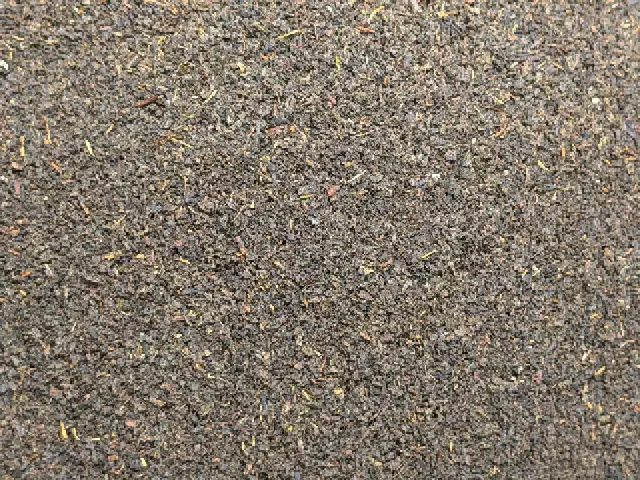
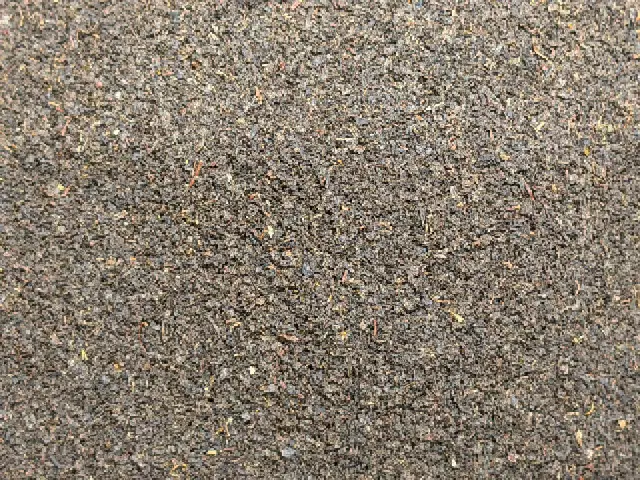
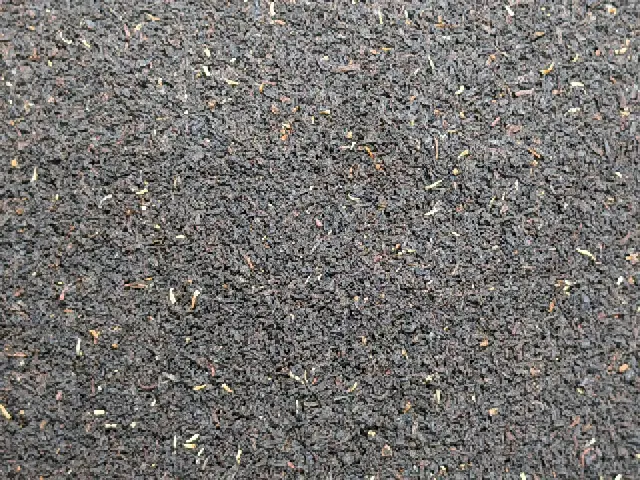
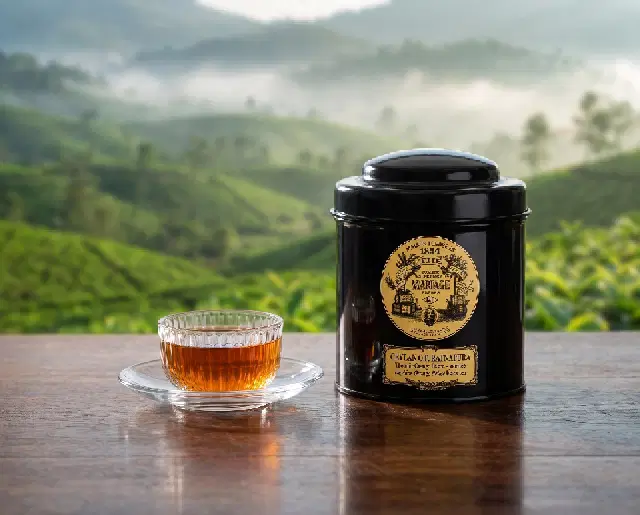
Uva Highlands BOP gives an amber, full-bodied liquor, made for breakfast, plain or with a dash of milk. Saint James BOP, from the Shawlands estate, is powerful and full of flavour, with a frank tannic structure; Saint James · OP, also from Uva, comes in large leaves. Blackwood OP1 offers a rounded, malty cup with a fruity bouquet, which the house likens to açaí and rosewood, while Blackwood BOP, from the same garden, is denser and livelier. Prince de Colombo OP, which its page also links to Uva, is an everyday Ceylon, rounded and full-bodied with fruity accents.
The grade reads in a few letters: OP (Orange Pekoe) means a long, whole leaf, BOP (Broken Orange Pekoe) a broken leaf that infuses faster and stronger, OP1 a large, top-grade whole leaf. For a Ceylon without scales, Orange Pekoe Ceylan, from the Blackwood garden, comes in a box of 30 cotton muslin tea sachets.
| Tea | Garden or estate | Grade | In the cup | Steeping |
|---|---|---|---|---|
| Uva Highlands BOP | Uva highlands | BOP | Amber, full-bodied, minty | 95 °C, 3 minutes, 2.5 g per 200 ml |
| Saint James BOP | Shawlands estate | BOP | Powerful, malty, long finish | 95 °C, 5 minutes, 2.5 g per 200 ml |
| Blackwood OP1 | Glenanore garden, Badulla | OP1 | Rounded, malty, fruity | 95 °C, 3 minutes, 2.5 g per 200 ml |
| Blackwood BOP | Glenanore garden, Badulla | BOP | Dense, lively, full-bodied | 95 °C, 5 minutes, 2.5 g per 200 ml |
| Prince de Colombo OP | Uva | OP | Rounded, full-bodied, fruity accents | 95 °C, 3 minutes, 2.5 g per 200 ml |
Ratnapura: a low-country Ceylon from the south-west
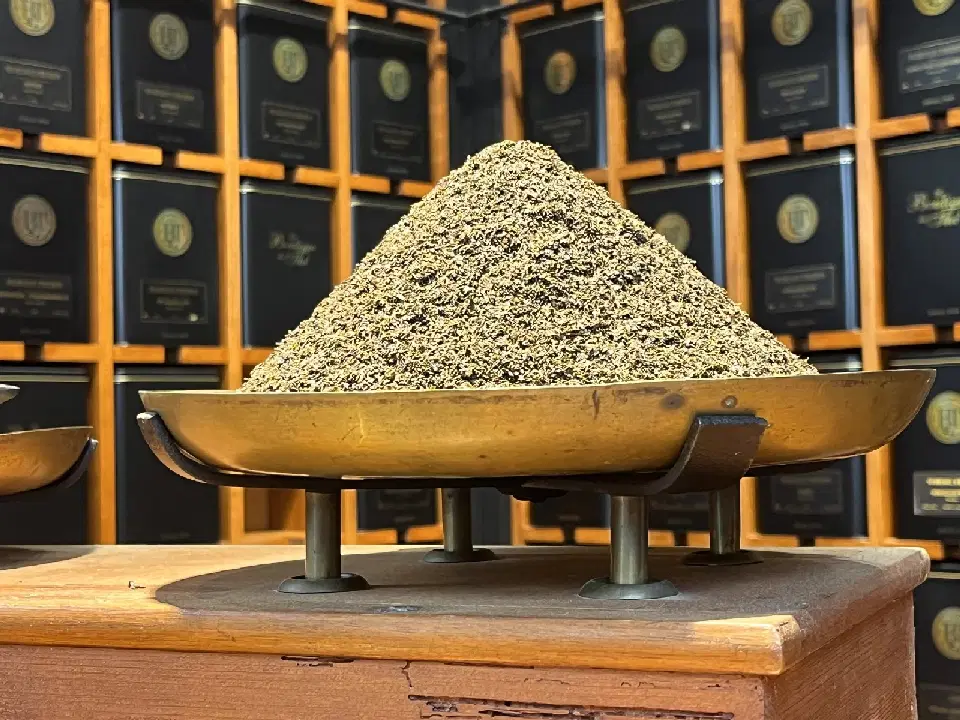
Ratnapura is the capital of Sabaragamuwa province, in the south-west of the island, the largest of Sri Lanka's tea regions. Its gardens are at low altitude, and the region is also known for its precious stones: our tea's page recalls that Ratnapura is nicknamed “the city of gems”.
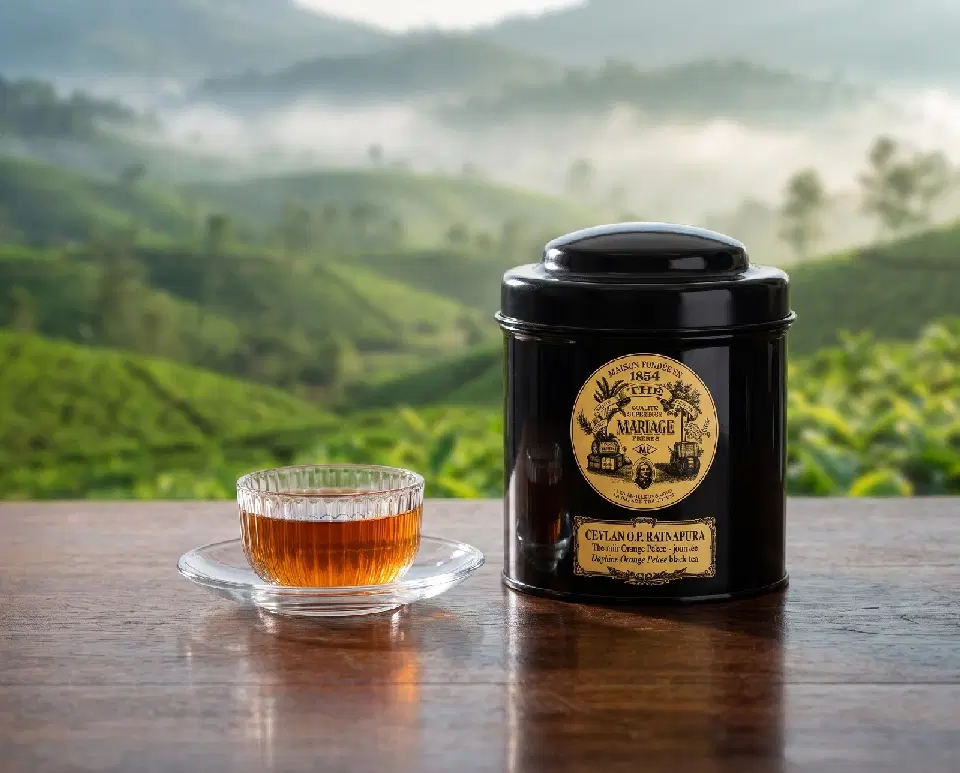
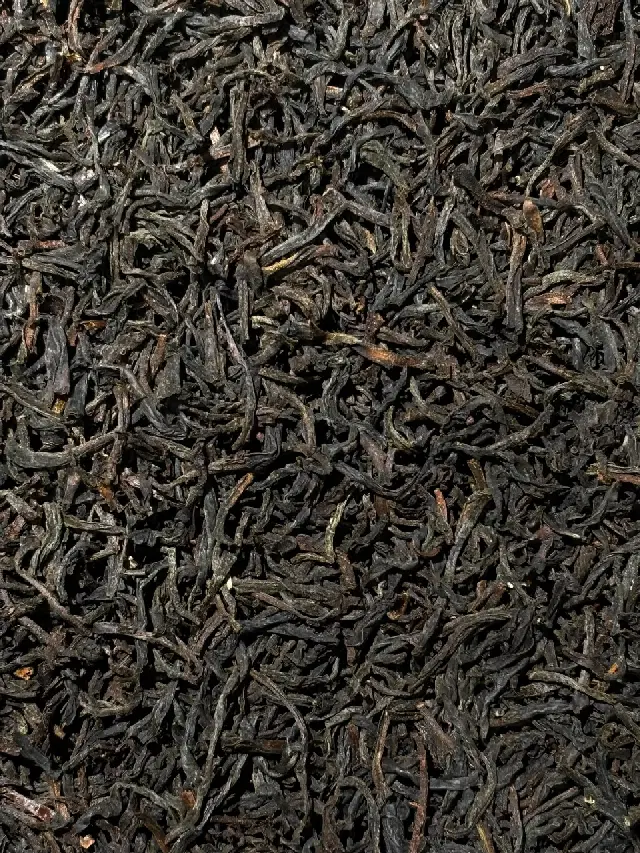
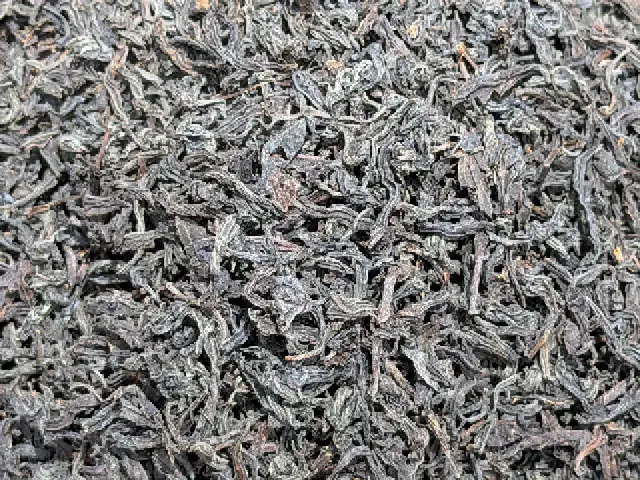
Mariage Frères' Ratnapura comes from the Vithanakande garden. It is a plain black tea of OP grade, with long leaves, whose amber, coppery liquor remains mellow, without harshness. The house makes it a five o'clock tea, plain or with a dash of milk; its page recommends 2.5 g per 200 ml of water at 95 °C and a steeping time of 5 minutes. Alongside the Uva teas, it shows the other face of Ceylon: softer, rounder.
Is there Ceylon green tea and white tea?
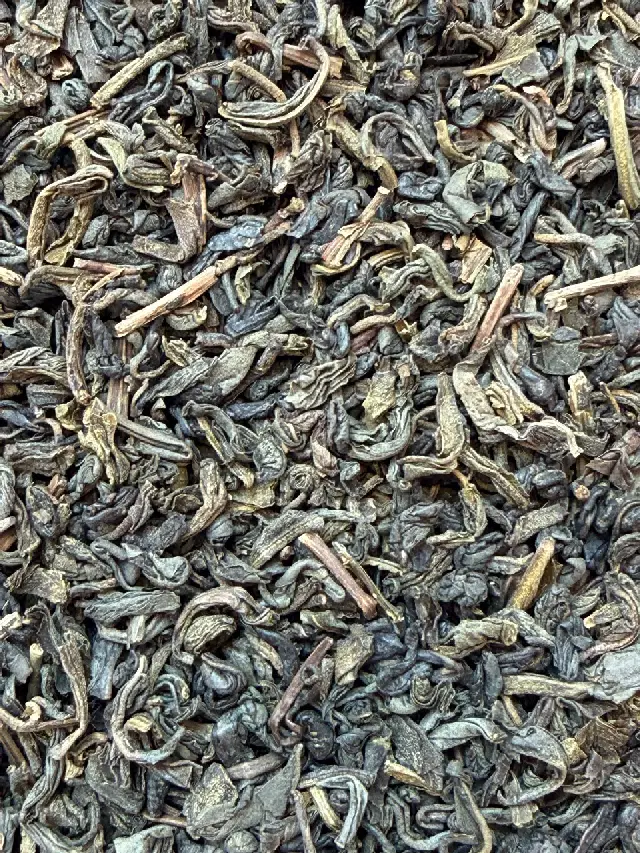
Yes, Sri Lanka also produces green teas and white teas, in far smaller quantities than its black teas. Idulgashina Vert is a green tea grown in the island's highlands, with a clear, soft liquor and a fruity flavour. Like any green tea, it calls for cooler water: its page recommends 75 to 80 °C, 2 to 3 minutes, 2.5 g per cup. The other green teas are in the green tea section.
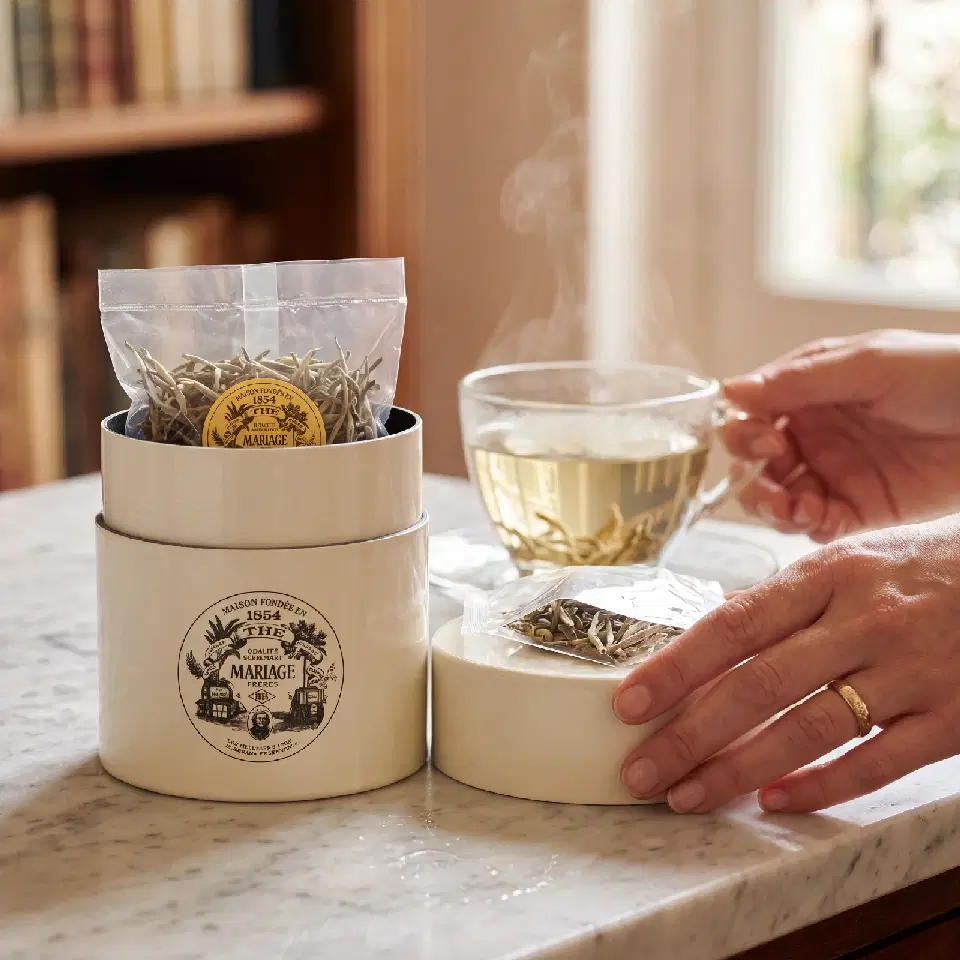
Mariage Frères' Thé Blanc Sacre is a Ceylon white tea made from buds alone, simply withered and dried. Its crystal-clear, velvety liquor opens on a white flower fragrance, then on a forest-floor note. Its tin holds 4 envelopes of 5 g, each for a 200 ml teapot, to be steeped for 7 minutes at 85 °C. Our white tea guide explains how this family is made.
How to choose your Ceylon tea?
For a morning tea that takes milk well, choose a broken leaf from Uva: Uva Highlands BOP, Saint James BOP or Blackwood BOP. For a rounder cup, to drink plain during the day, pick a whole leaf, Blackwood OP1 or Prince de Colombo OP. For the afternoon, Ratnapura offers the softness of a low-country Ceylon.
The Ceylon black teas on our product pages are steeped at 95 °C, with 2.5 g per 200 ml, but their steeping time varies from 3 to 5 minutes depending on the tea: follow each one's page. Our guide to steeping times and temperatures compares these settings with those of other families, and the Ceylon tea section brings together all the island's gardens in stock.
The sommelier's selection
Frequently asked questions
Is Ceylon tea black or green?
Most often black: Sri Lanka is best known for its black teas, whole-leaf or broken-leaf. The island also produces green teas, such as Idulgashina Vert from the high plateaus, and a few white teas, such as Mariage Frères' Thé Blanc Sacre. The word Ceylon refers to the origin, not the type: check the type shown on the label.
What does Ceylon tea taste like?
A Ceylon black tea generally gives a clear, amber or coppery liquor, clean on the palate. The taste changes with the region: Uva teas are lively, with an almost minty freshness, those from Nuwara Eliya are the lightest, those from the lowlands darker and fuller-bodied. Ratnapura, for example, is mellow and smooth, whereas Uva Highlands BOP is full-bodied.
How long should Ceylon tea be steeped, and at what water temperature?
For the Ceylon black teas on our product pages, the water is at 95 °C, with 2.5 g per 200 ml. The time ranges from 3 minutes (Uva Highlands BOP, Blackwood OP1, Prince de Colombo OP) to 5 minutes (Saint James BOP, Blackwood BOP, Ratnapura). A Ceylon green tea calls for gentler water, 75 to 80 °C, and Thé Blanc Sacre 85 °C for 7 minutes.
What does plain Ceylon tea contain?
A plain Ceylon tea contains only tea leaves, with no added flavouring or scent: this is the case for Uva Highlands BOP, Saint James BOP, Blackwood OP1 and Ratnapura. An Earl Grey on a Ceylon base, such as Grand Earl Grey Ceylan, adds bergamot flavouring. The exact ingredients are listed on each tea's product page.
Which Ceylon teas does Mariage Frères offer?
In our shops, Mariage Frères is represented by garden black teas from Uva (Uva Highlands BOP, Saint James BOP and Saint James · OP, Blackwood OP1 and Blackwood BOP, Prince de Colombo OP), by Ratnapura from the lowlands, by Orange Pekoe Ceylan in cotton muslin tea sachets and by Thé Blanc Sacre. The house also creates blends on a Ceylon base, such as Grand Earl Grey Ceylan.
To go further
Sources
How we write our guides
Our guides are prepared by La Boutique du Thé, Mariage Frères stockist in Bordeaux and Nice since 1999, drawing on our product sheets, the experience of our shops and the sources cited. Each text is checked and approved by the team before publication. The teas and accessories featured are on sale at the time you read the page. The LBDT Sommelier · A question? Write to us
More guides from the house
- Tea-producing countries: where tea grows and what each origin brings to the cupTea-producing countries, from China to Rwanda: where the tea plant grows, what makes a terroir and the style of 12 origins, each with a tea to taste.Read the guide →
- Black tea: the great styles, from Assam to Yunnan, and how to choose oneBlack tea: what sets it apart, its great styles from Assam to Lapsang, water temperature, steeping time and milk, with teas in stock.Read the guide →
- Matcha whisk and bowl: choosing, using and caring for the chasen and chawanBamboo matcha whisk: how to use it, which matcha bowl to choose and how to care for your chasen so it keeps its shape, with our bowls.Read the guide →