
Cast iron teapot: telling it apart from a tetsubin, preparing it and caring for it

By the LBDT Sommelier · published on · 7 min read
Reviewed and approved by the La Boutique du Thé team
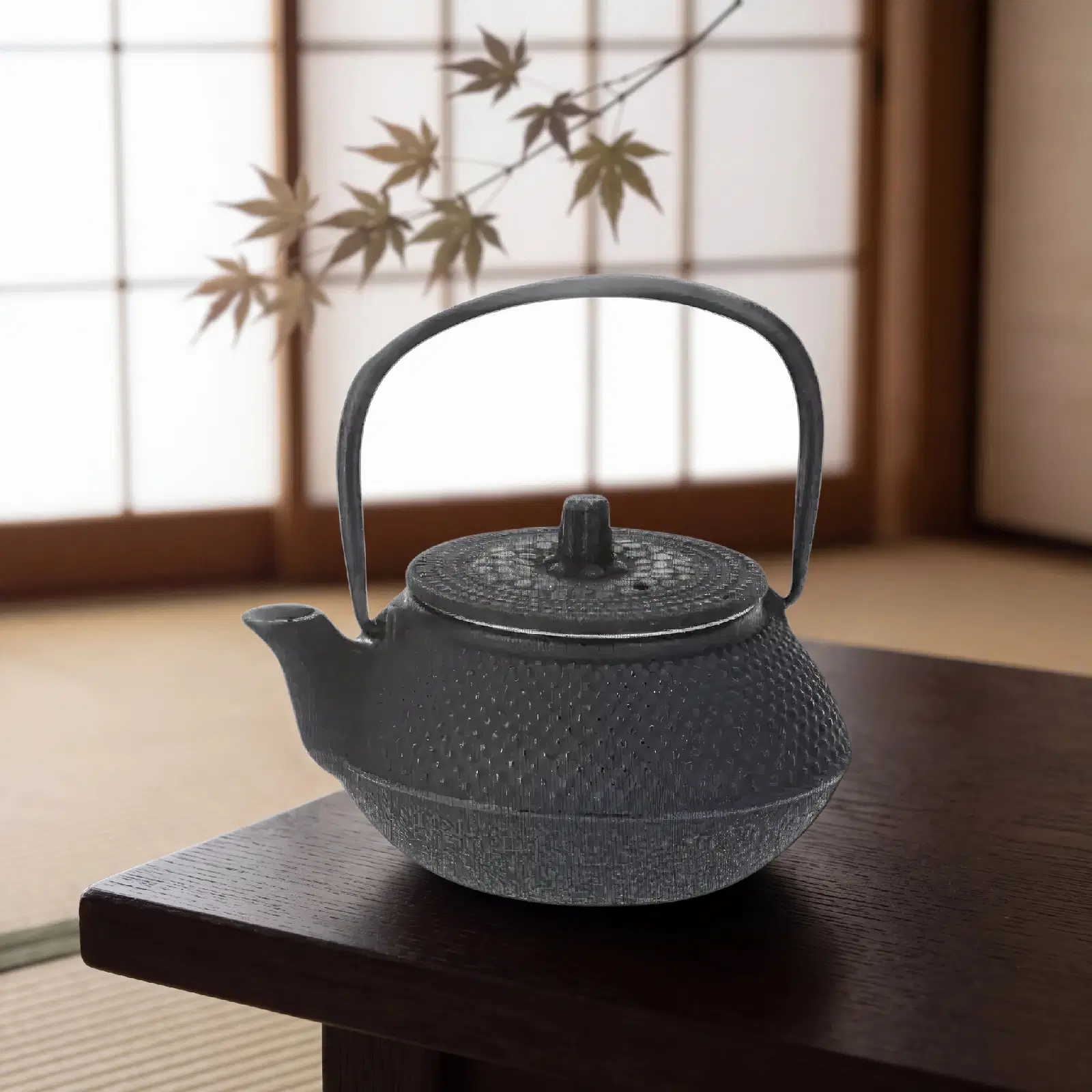
A cast iron teapot is enamelled inside and made for steeping tea: water heated separately is poured into it, and it never goes on the stove. The tetsubin, by contrast, is an unenamelled cast iron kettle. Here is how to tell them apart, choose the right size among our Japanese models, prepare the teapot before the first tea, care for it and prevent rust.
Cast iron teapot or tetsubin: what is the difference?
The tetsubin is a kettle: a piece of cast iron with no enamel inside, placed on the heat to warm the water. The cast iron teapot, which the Japanese call tetsu kyusu, is used for steeping: its interior is enamelled and it never goes on a heat source, as the enamel would not withstand it. In the West, tetsubin is often used for both, hence much confusion when buying.
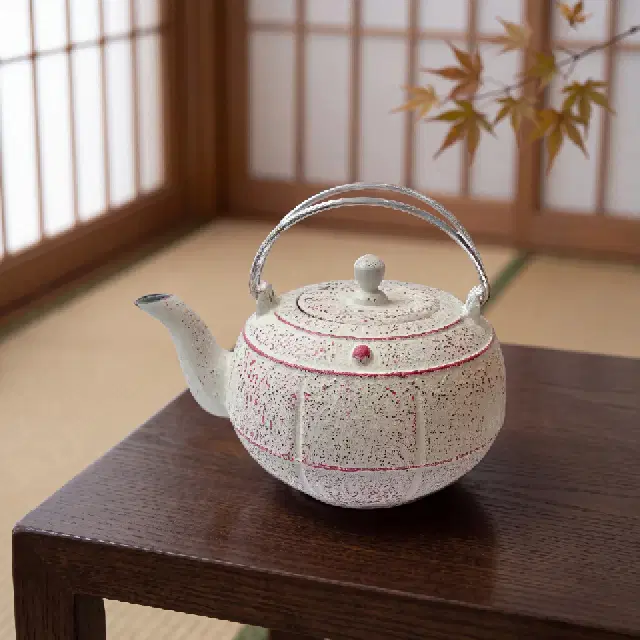
All the cast iron pieces in our selection are teapots for steeping. The water is heated separately, in a kettle, then poured over the leaves. The product page for the Pleine Lune teapot says so plainly: enamelled cast iron made in Japan, built-in metal filter, never placed on the heat.
| Tetsubin (kettle) | Cast iron teapot (tetsu kyusu) | |
|---|---|---|
| Use | Heating water | Steeping tea |
| Interior | Unenamelled cast iron | Enamelled |
| On the heat | Yes, that is its purpose | Never |
| Filter | None | Often a metal filter |
| What it requires | Emptying and drying after each use | Rinsing with hot water and drying thoroughly |
Where does the Japanese cast iron teapot come from?
Japanese cast iron for tea began with kettles. In Iwate Prefecture, in northern Japan, the founders of Morioka, in the service of the Nambu clan, were casting cauldrons for the tea ceremony as early as the 17th century. Around 1750, one of them, Koizumi Nizaemon, devised a smaller kettle with a handle and a spout: the tetsubin. Today the name Nambu tekki covers the cast iron of both Morioka and Mizusawa.
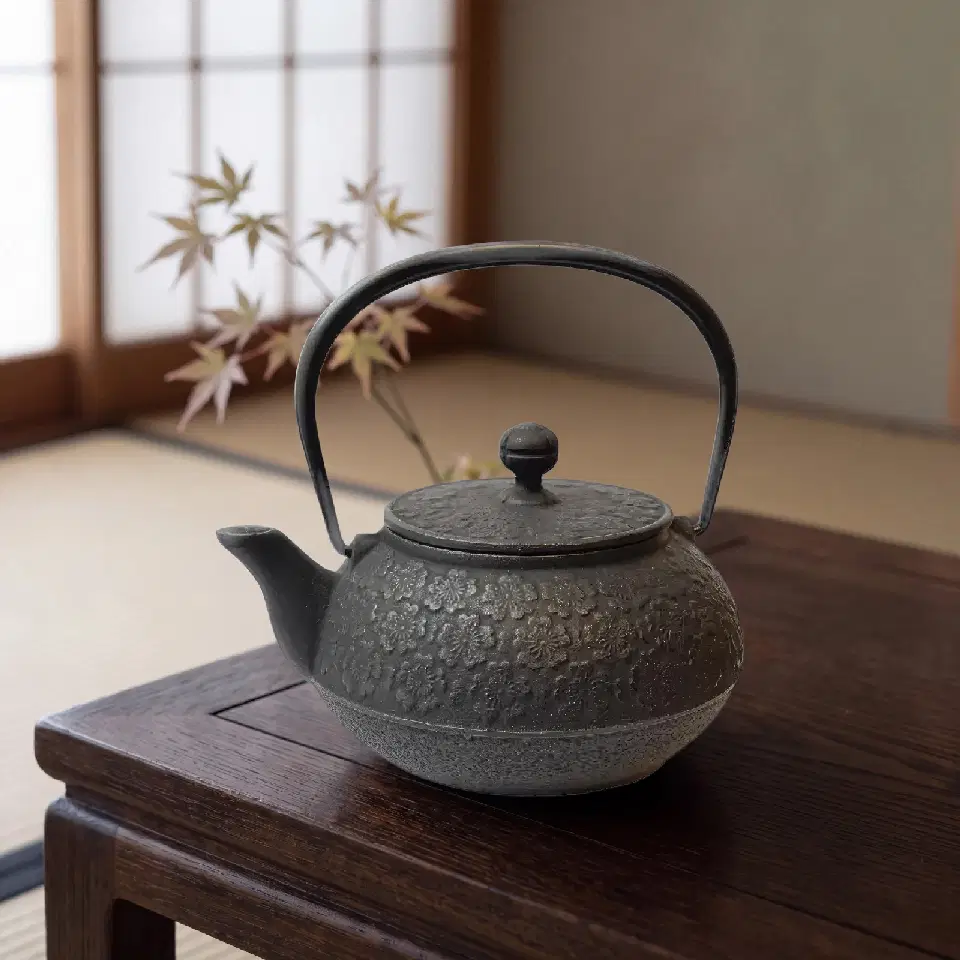
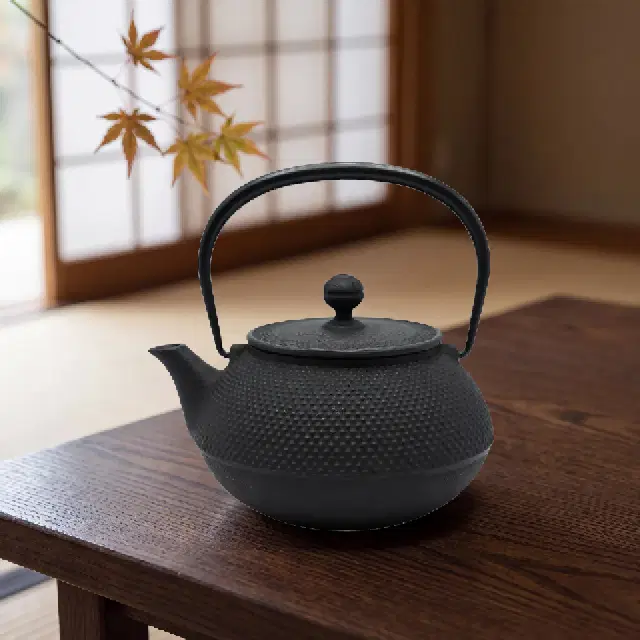
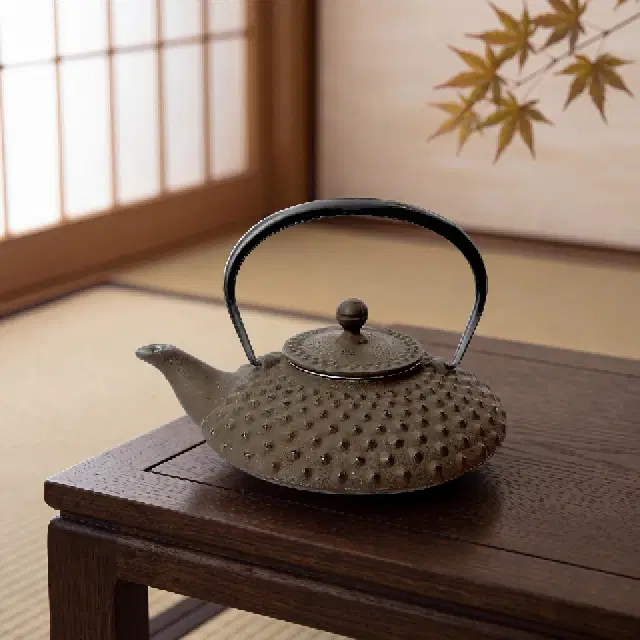
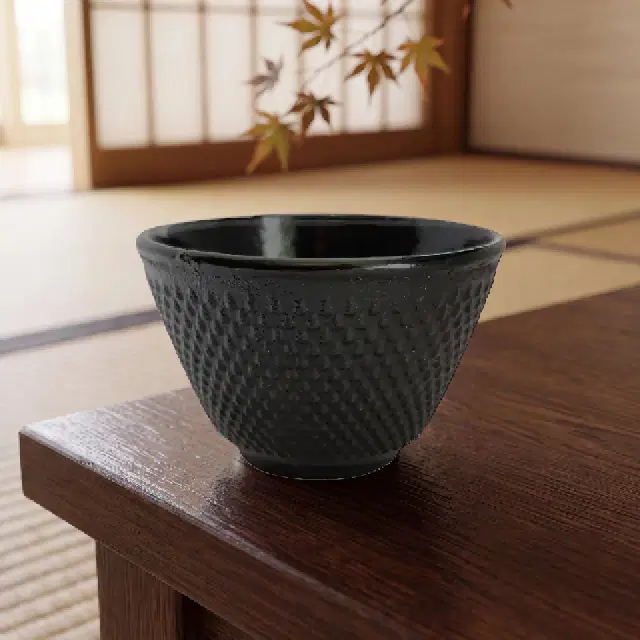
The enamelled teapot borrows the material and decoration of the kettles: the arare pattern, small studs evoking hailstones that artisans press one by one into the mould, the metal handle, the reliefs of leaves or flowers. The product pages for our teapots specify handcrafted cast iron made in Japan.
Which cast iron teapot should you choose?
Choose the capacity first, then the design. One point to know before comparing: on the product pages of most of these teapots, the volume given refers to the outside of the piece, not the water it holds. To serve two or three 200 ml cups, aim for a size slightly larger than the volume you need, or the Pleine Lune, whose product page gives the usable capacity.
| Teapot | What sets it apart | Sizes and colours |
|---|---|---|
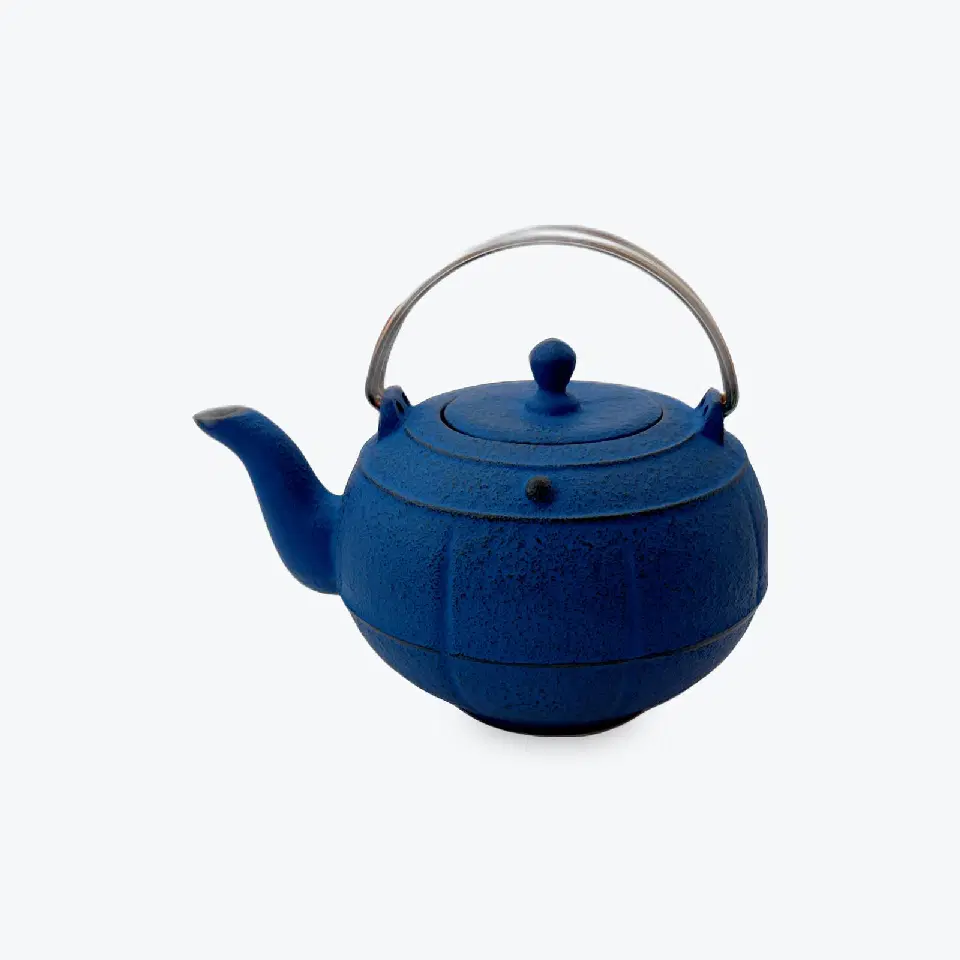
| Pleine Lune | Round, enamelled with iridescent or opal sheen, moon-coloured double handle, built-in filter | 0.6 l usable (three 200 ml cups), one product page for all four colours: blue, fuchsia, gold white and gold pink |
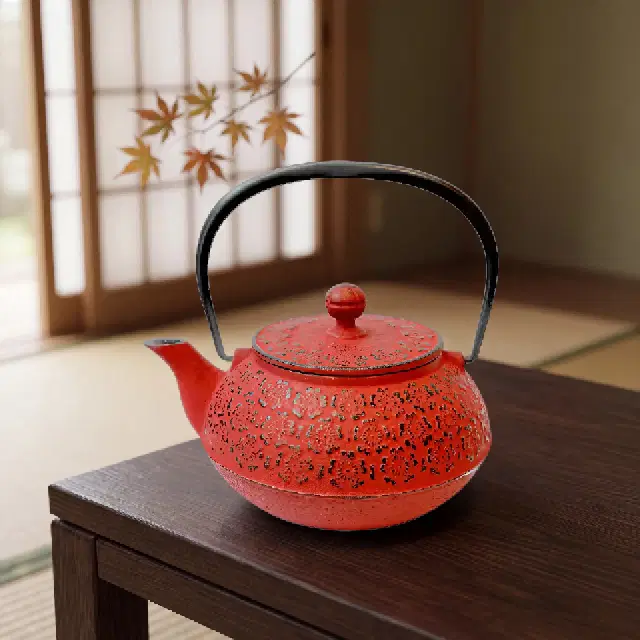
| Arare | The classic arare pattern | 0.6 l (black, blue, red), 1 l (blue, plum, green), 1.4 l (black, red, green) |
| Natsumi | Full, rounded curve, textured surface | 1 l, black or red |
| Kanbin | Clean silhouette | 0.5 l brown, 0.8 l rust |
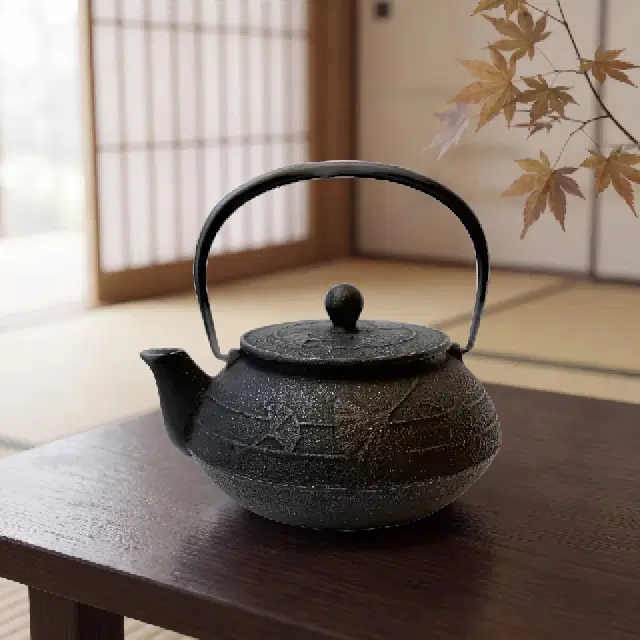
| Gingko | Ginkgo leaves in relief on the body | 0.6 l, red, black or blue |
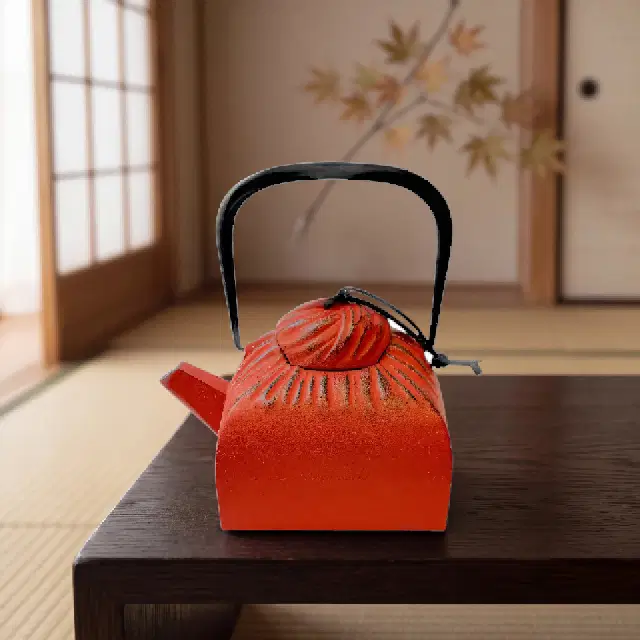
| Drape | Surface pleated like knotted fabric, supplied with its filter | 800 ml, red |
For one person or a couple, the 0.5 l Kanbin or the Gingko will suffice. For the family or guests, the 1.4 l Arare is the largest size in the selection. The Natsumi and the Drape are pieces to display on the table as much as everyday teapots. Our guide to choosing a teapot compares cast iron with porcelain and glass.
How do you prepare a cast iron teapot before the first tea?
A new cast iron teapot is rinsed several times with boiling water before receiving any leaves. This first bath removes dust from manufacturing and packaging. Nothing else is needed: no soap, no oil inside. Here is the method given on the product page for the Pleine Lune teapot:
- Fill the teapot with boiling water, then empty it.
- Repeat three or four times.
- Wipe it while still warm with a soft cloth, without rubbing.
- Leave it to finish drying in the air, lid removed.
How do you steep tea in a cast iron teapot?
Cast iron heats up slowly and holds its heat for a long time: the tea stays hot throughout the service. It therefore suits teas that like very hot water. The product page for the Pleine Lune mentions black teas, oolong teas, rooibos and spiced Christmas teas, steeped at around 95 °C.
- Scald the teapot to warm it, then empty it.
- Put the leaves in the filter: 2 g per 200 ml of water.
- Pour in the water heated in the kettle and close the lid.
- At the end of the steeping time, remove the filter so the tea does not keep steeping.
For a Japanese green tea, let the water cool much further before pouring: our guide to steeping times and temperatures gives the settings for each type, from 60 to 70 °C for a sencha to 90 to 95 °C for a black tea.
How do you care for a cast iron teapot day to day?
After each tea, empty the teapot, rinse it with hot water, without detergent, and dry it straight away, inside and out. Never leave water in it, and put it away only when it is completely dry. These are the steps given on the product pages for the Pleine Lune, and they apply to any enamelled cast iron teapot.
- Washing: by hand, with hot water only, without an abrasive sponge.
- Drying: a soft cloth, then the open air, lid removed, so the moisture can escape.
- Tea deposits: if they mark the enamel, leave very hot water with lemon juice or bicarbonate of soda to work, then rinse.
- Heat: never on the heat or on a hob, electric or induction; the water is always heated separately.
Why does a cast iron teapot rust?
Cast iron is iron: where the enamel does not cover it and moisture remains, it oxidises, especially when the teapot is put away still wet. Drying it thoroughly after each use is the best defence. Over the years, a few small spots of rust may nonetheless appear: the product page for the Pleine Lune describes them as normal on cast iron, and the FAQ below explains how to remove them.
The pieces that accompany a cast iron teapot
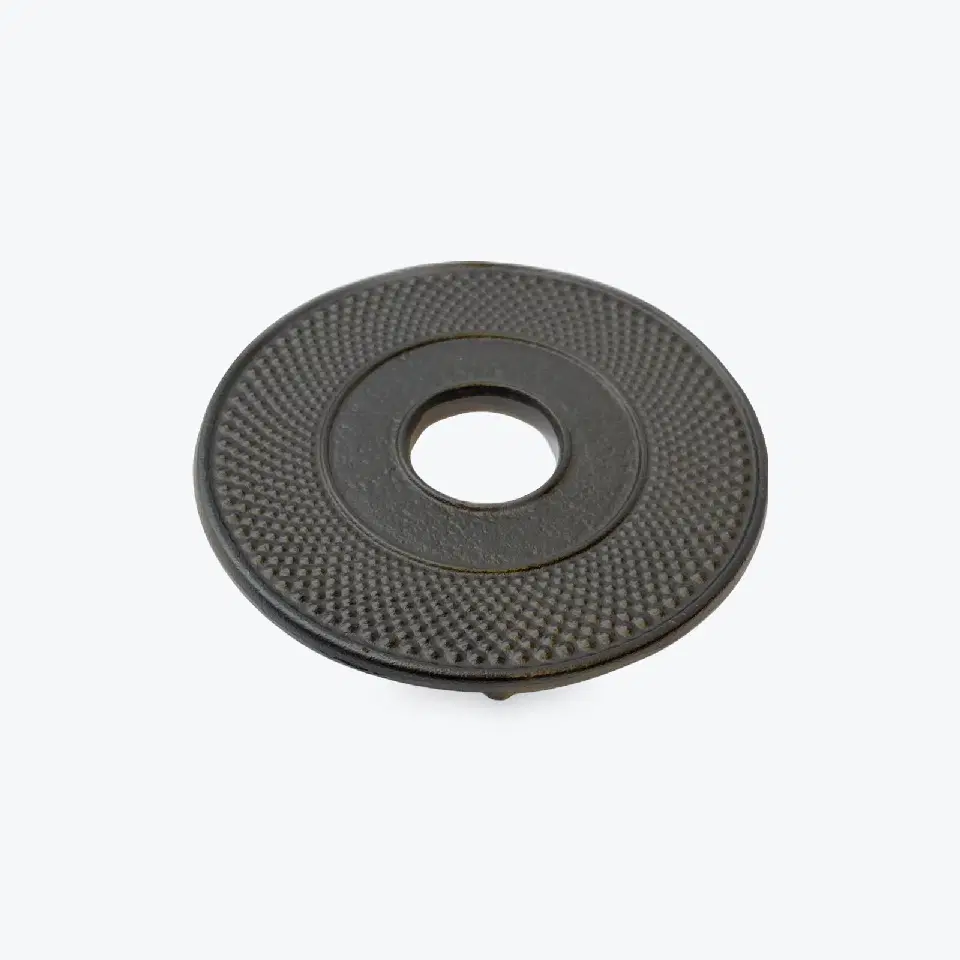
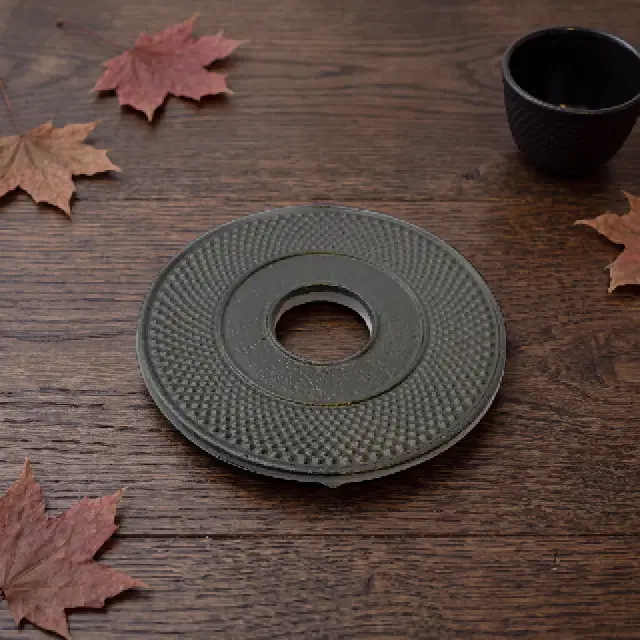
A full cast iron teapot is heavy and stays hot for a long time: place it on a trivet. The black Arare trivet and the rust Natsumi trivet, in cast iron about 14 cm in diameter, echo the design of their teapot and protect the table from the heat. The square lacquer trivets, in black or satin red with the Mariage Frères logo, also protect the table, in a more graphic style. All are in our teapot trivets section.
For serving, the Jang cast iron cups, sold in pairs, hold 80 ml each: the size for teas enjoyed in small quantities. The Feuille cast iron saucer, in red, green, rust or black, completes the service. A cast iron teapot with its trivet makes a lasting gift, to be chosen from all our teapots.
The sommelier's selection
Frequently asked questions
Should you choose an enamelled cast iron teapot?
For steeping tea, yes. The enamel lining makes cast iron suitable for steeping and simply rinses clean with hot water, without detergent. A cast iron piece without enamel is a tetsubin kettle: it is used to heat water, not to steep the leaves. Before buying, look at the inside or the description: the word enamelled, or the presence of an infuser, indicates a teapot.
How do you recognise a quality cast iron teapot?
First, look at where it comes from: cast iron for tea is a Japanese tradition, and copies made elsewhere circulate under Japanese names. Next, check the interior finish, which should be enamelled for a teapot. Finally, read whether the stated volume is the actual capacity or the outer size. The product pages for our teapots specify handcrafted cast iron made in Japan.
How do you clean a rusty cast iron teapot?
If a few spots of rust appear on the cast iron, rub them with a stiff brush and a cloth soaked in neutral oil, then wipe off the excess. This is the method given on the product page for the blue Pleine Lune teapot, which notes that these spots are normal over the years. Afterwards, always dry the teapot completely, with the lid removed, before putting it away: it is moisture that makes cast iron rust.
To go further
Sources
How we write our guides
Our guides are prepared by La Boutique du Thé, Mariage Frères stockist in Bordeaux and Nice since 1999, drawing on our product sheets, the experience of our shops and the sources cited. Each text is checked and approved by the team before publication. The teas and accessories featured are on sale at the time you read the page. The LBDT Sommelier · A question? Write to us
More guides from the house
- Choosing your teapot, and the kettle to go with itJapanese cast iron, porcelain, glass, clay: which teapot for which tea, what capacity, care, and why a temperature-controlled kettle matters just as much.Read the guide →
- Glass teapots: which to choose, how to use and care for themGlass teapots: microfilter, strainer or tea strainer, our 5 models compared, the teas that suit them, heat, warmers and caring for the glass.Read the guide →
- Tea infuser: ball, tube, paper filter or filter teapot, which to chooseTea infuser: ball, tube, paper filter, bottle or filter teapot, compared by cup, leaves and care, in one table.Read the guide →