
Organic herbal infusion: what the EU logo guarantees, and how to read the label
By the LBDT Sommelier · published on · 9 min read
Reviewed and approved by the La Boutique du Thé team
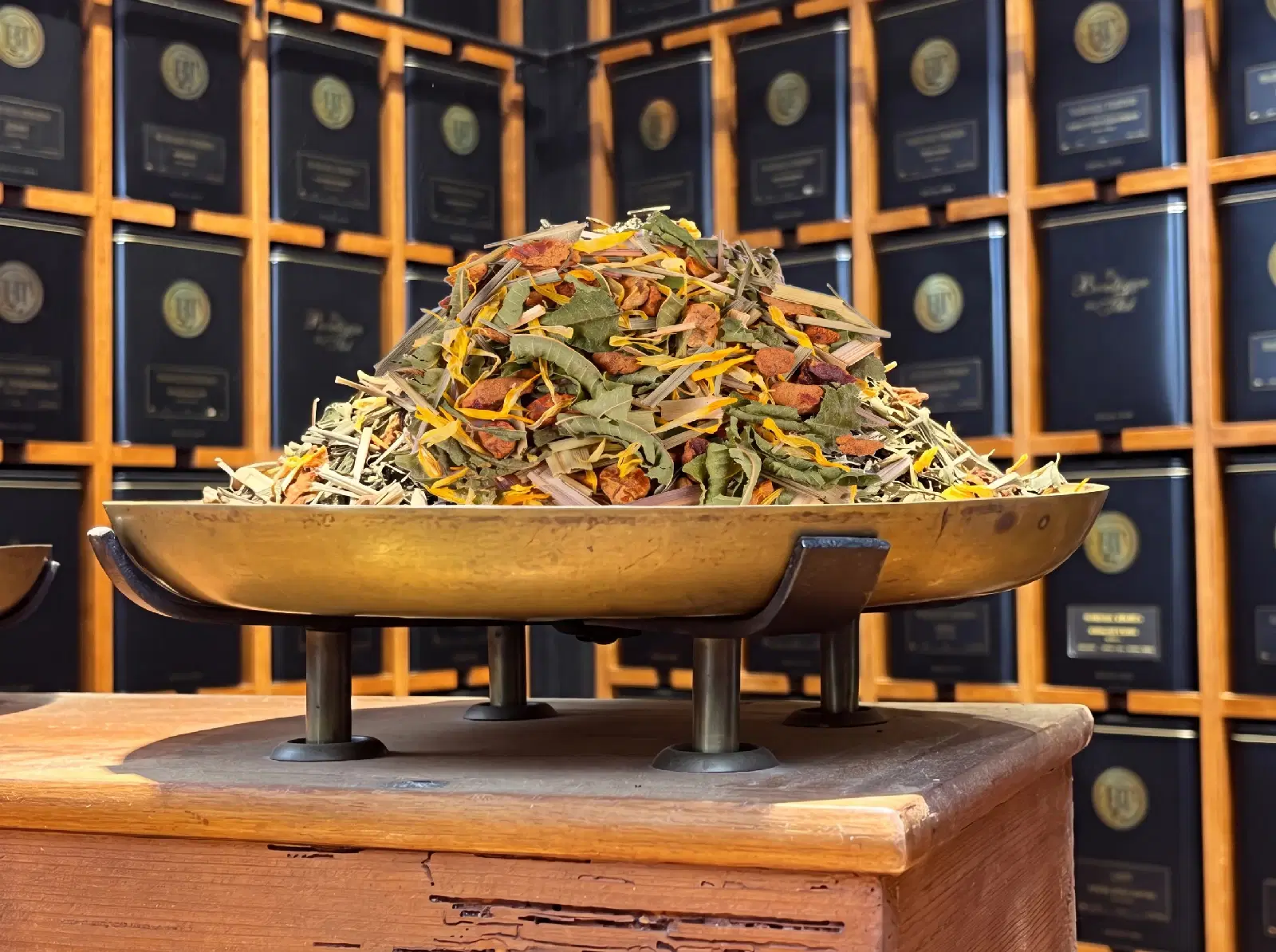
An organic herbal infusion is one in which at least 95% of the agricultural ingredients come from organic farming, grown without synthetic chemical pesticides or fertilisers, in a supply chain inspected at least once a year. The EU organic logo certifies this. Here is how to read that logo, the code of the certification body and the origin statement that accompany it, on a packet as on our product pages, for herbal infusions as for teas.
What does the EU organic logo guarantee on a herbal infusion?
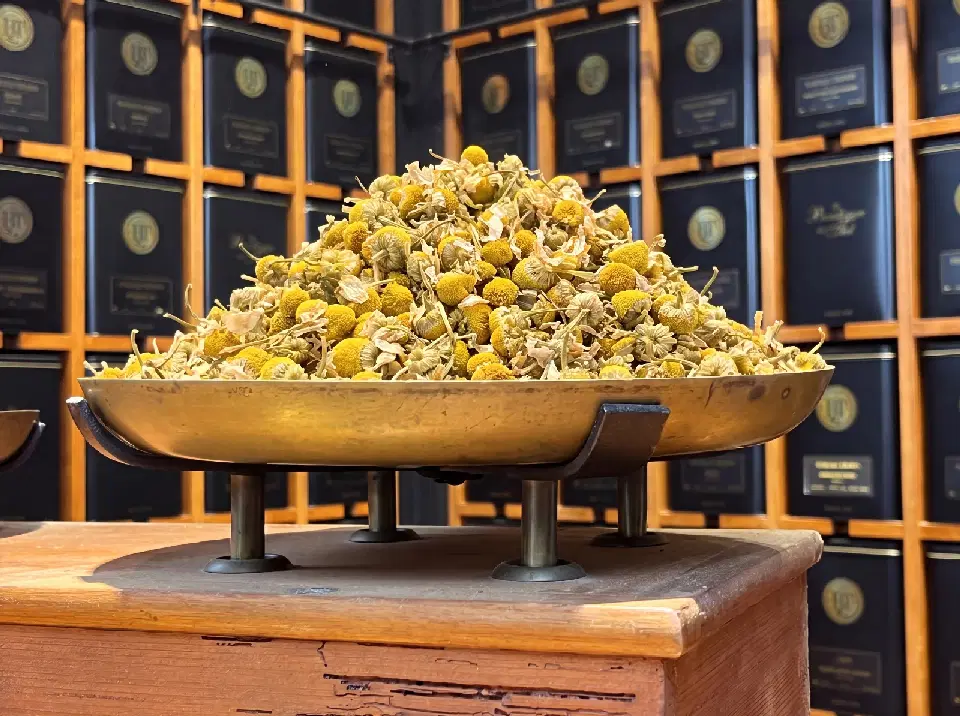
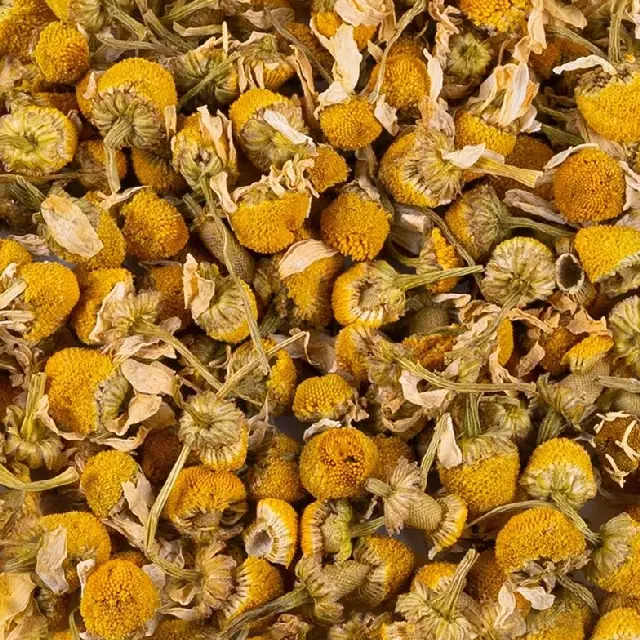
The EU organic logo guarantees that a herbal infusion follows the European Union's rules on organic production, from the growing of the plants right through to the packaging. It is only permitted if at least 95% of the agricultural ingredients are certified organic; the rest may only consist of ingredients that are expressly authorised and unavailable in organic form. For a single-plant infusion, such as our Fleurs de Camomille Matricaire Bio, the question does not even arise: the ingredients list has only one ingredient, and it is organic.
In growing, synthetic chemical pesticides and fertilisers are not permitted, and GMOs are prohibited, in growing as in processing. Organic lots are stored in dedicated areas, separate from conventional lots, and a processed product accepts only a limited list of additives. These requirements are the same in every country of the Union: an organic verbena grown in Portugal and an organic chamomile grown in Croatia meet the same specifications.
Inspections are what give the logo its value. Every operator in the supply chain, from the producer to the importer, by way of the processor and the distributor, is inspected at least once a year by a certification body approved by INAO, the French National Institute of Origin and Quality. The DGCCRF, the French public fraud control authority, also checks the products put on sale and has samples analysed to verify the absence of pesticide residues.
Since 1 July 2010, this logo has been compulsory on organic products pre-packaged in the European Union; it remains optional on imported products. The same logo and the same rules apply to tea: on an organic black tea, rooibos, maté or matcha, it reads exactly as it does on a herbal infusion. The word “organic” itself is regulated: only a product that complies with these rules may use it in its name.
How do you read the label of an organic herbal infusion?
On the packaging of an organic herbal infusion, three statements go together: the logo, the code of the certification body and the statement of the plants' origin. The code is placed close to the logo, and the origin in the same field of vision. A fourth clue is found in the list of ingredients, where each organic ingredient is marked. The table below tells you where to look for each one, and what it tells you.
| Statement | Where to find it | What it tells you |
|---|---|---|
| EU organic logo (the Euro-leaf) | On the packaging | At least 95% of the agricultural ingredients are organic, and the product follows the European rules |
| Code of the certification body | Close to the logo | Who inspected the product; in France, FR-BIO followed by a number, for example FR-BIO-01 |
| Origin statement | In the same field of vision as the logo | EU Agriculture, non-EU Agriculture, EU/non-EU Agriculture, or the name of a country when the agricultural raw materials come from there |
| Asterisks in the ingredients | In the list of ingredients | Which ingredients are organic; below 95%, the word organic may only appear here |
The code does not designate the brand, but the body that inspected the product. INAO publishes the list of approved bodies and their codes: in its version of 2 July 2025, Ecocert France appears under the code FR-BIO-01 and Certipaq Bio under the code FR-BIO-09.
The origin statement is read together with the product description. According to its product page, our organic German chamomile comes from Egypt, Croatia and Kosovo: a blend of plants grown inside and outside the Union, which falls under the statement EU/non-EU Agriculture. The rule gives the broad area; only the product page, or the brand's description, names the countries.
AB logo, Euro-leaf, Jardin Premier: what are the differences?
The AB logo is the French organic farming mark, created in 1985. It is optional and may be added alongside the EU logo, but never more prominently than it. On a herbal infusion pre-packaged in the Union, it is therefore always the Euro-leaf, the common name for the EU logo, that is compulsory: the AB logo, when present, accompanies it as a second signature, more familiar in France.
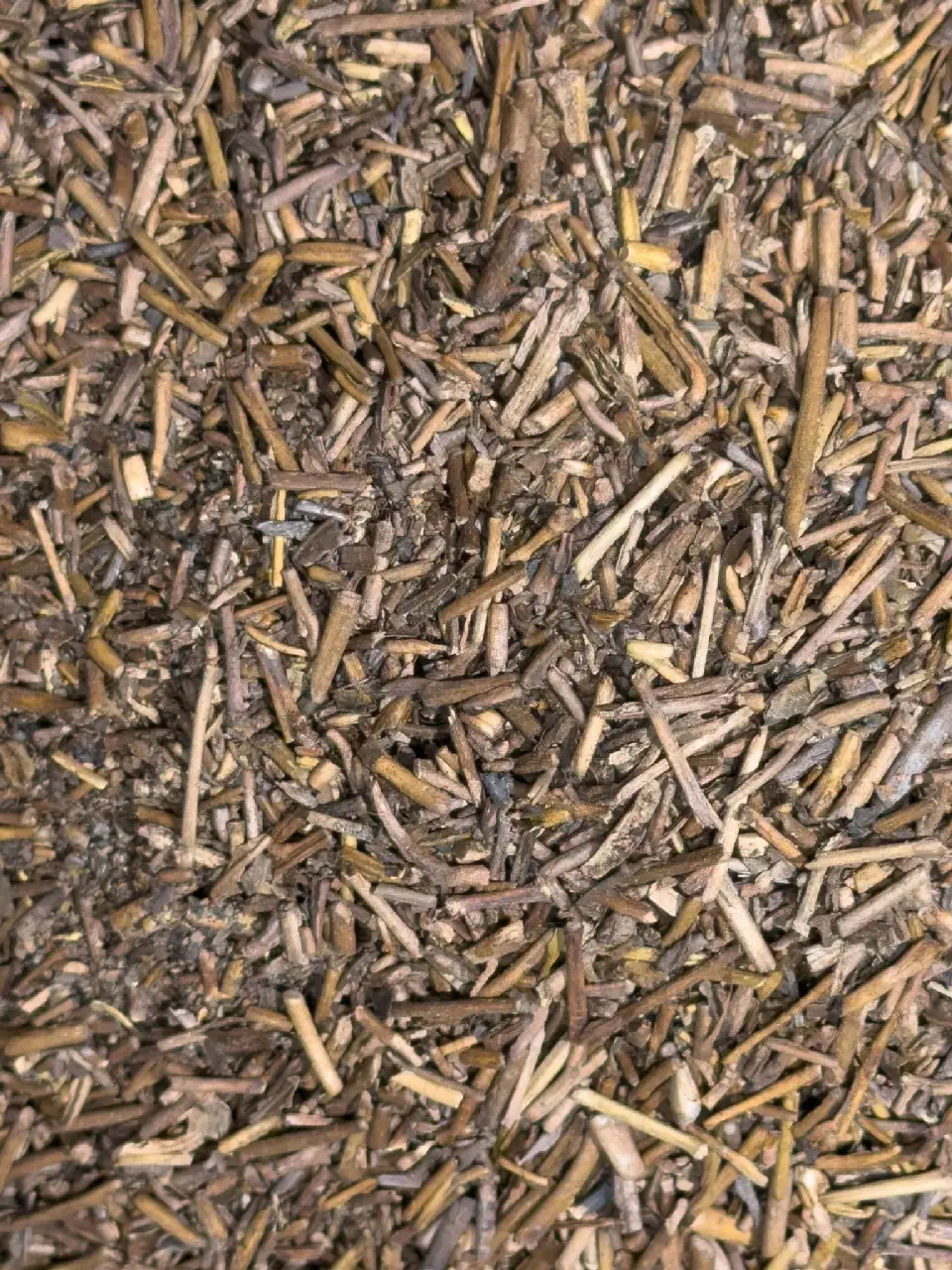
On our Mariage Frères product pages, you will come across another statement: Jardin Premier. The product page for Kuki-Hojicha, a Japanese roasted green tea, presents it as a Mariage Frères selection free from pesticide residues, and specifies that its small family garden in Mie, Japan, is farmed organically according to the house. This is a commitment by the tea house, distinct from the EU organic logo: its product page displays the Jardin Premier statement, not the Euro-leaf.
How do you spot an organic herbal infusion or tea on our product pages?
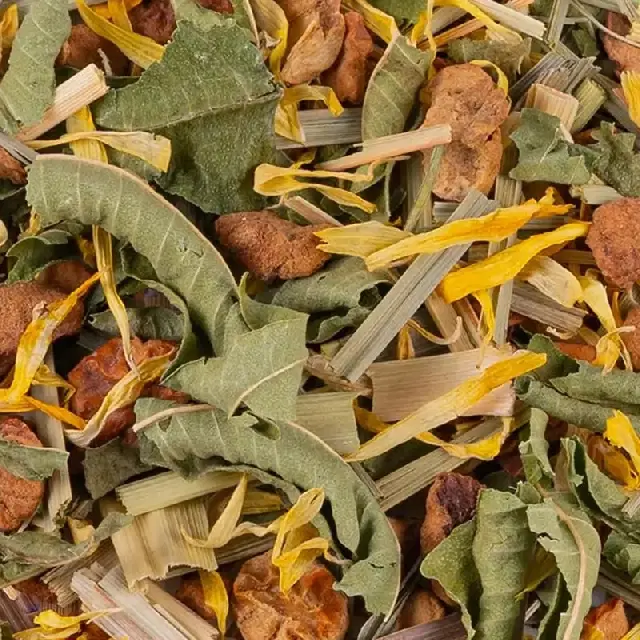
On our website, a product page displays the label “Organic farming (EU organic logo)” when the product carries it, and its ingredients list marks each organic ingredient with an asterisk, with the statement “From organic farming” at the end of the list. That of Instant de Bonheur Verveine Bio reads as follows: apple, lemongrass, whole verbena, marigold flowers and lemon myrtle, each followed by its asterisk. The herbal infusions from the Ombelle house almost all carry the word Bio in their name; it is the label on the product page that is the reference.
| Product | Family | Organic ingredients | Origin according to the product page | Caffeine |
|---|---|---|---|---|
| Instant de Bonheur Verveine Bio | Herbal infusion | Apple, lemongrass, whole verbena, marigold flowers, lemon myrtle | Verbena from Morocco and Portugal, apple from Turkey, lemongrass from Egypt | Naturally caffeine-free |
| Fleurs de Camomille Matricaire Bio | Herbal infusion | Chamomile | Egypt, Croatia, Kosovo | Naturally caffeine-free |
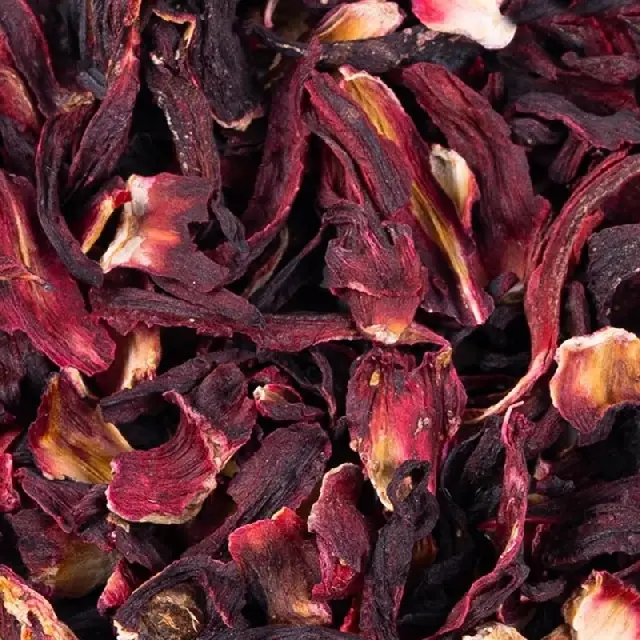
| Fleurs d'Hibiscus Karkadé Bio | Herbal infusion | Hibiscus | Burkina Faso, Nigeria, Egypt | Naturally caffeine-free |
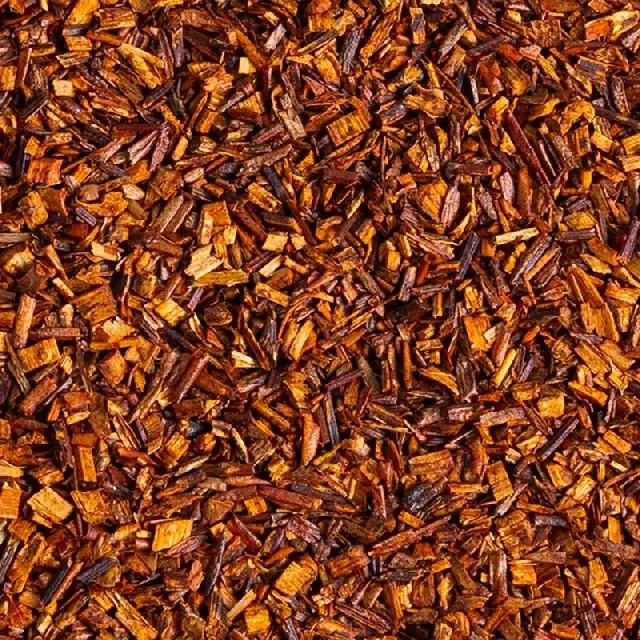
| Rooibos Rouge Nature du Cederberg Bio | Rooibos | Natural rooibos | South Africa | Naturally caffeine-free |
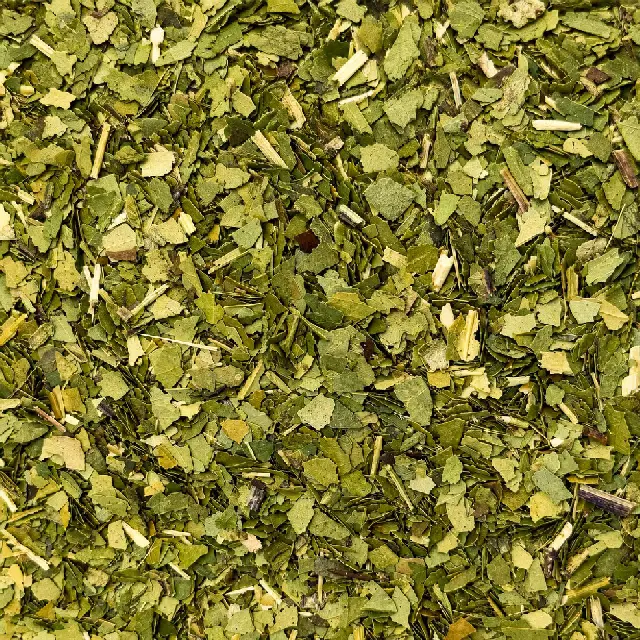
| Maté Vert Pur d'Argentine Bio | Maté | Green maté | Brazil, for this lot | Moderate |
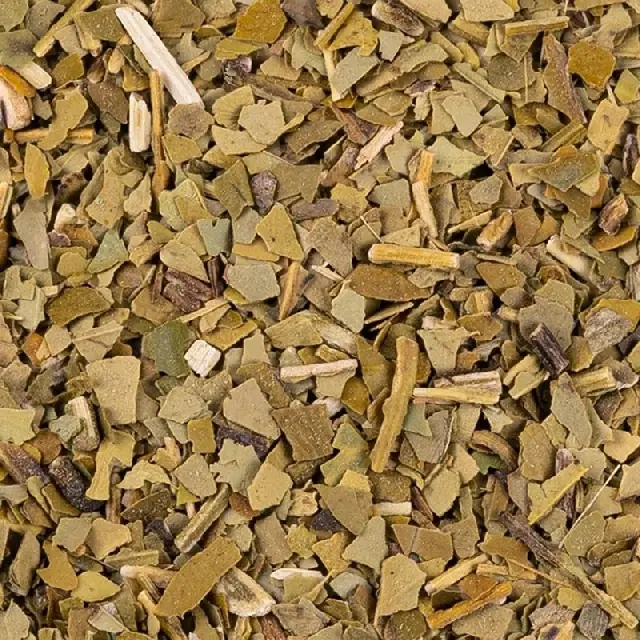
| Maté Original Bio | Maté | Green yerba maté | Argentina | Moderate |
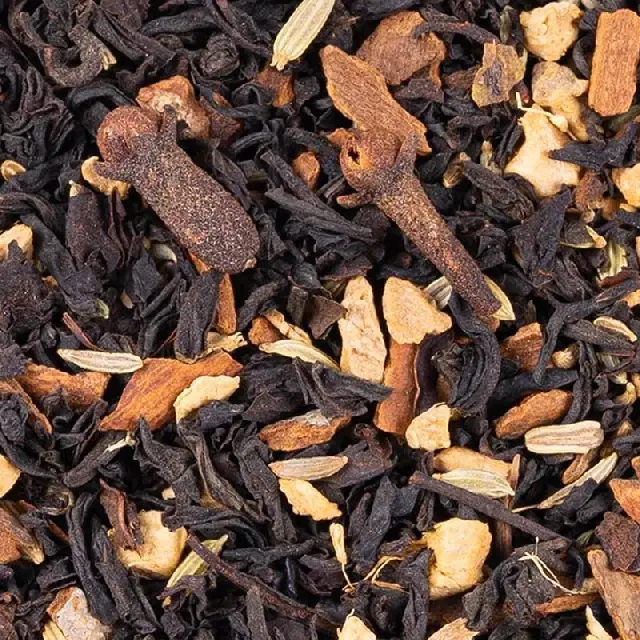
| Chai Impérial Thé Noir Assam Bio | Spiced black tea | Assam and South Indian black tea (54%), cinnamon, fennel, ginger, anise, clove, cardamom | Tea from India, cinnamon from Viêt-Nam and Indonesia, fennel from Egypt | Moderate |
| Chai du Matin Thé Vert Bio | Spiced green tea | Chinese Sencha (51%), jasmine green tea (6%), cinnamon, lemongrass, nettle, spices | Teas from China, cinnamon from Indonesia and Viêt-Nam, lemongrass from Egypt | Moderate |
A product's name does not always say where the plant comes from. Among our matés, Ombelle's Maté Vert Pur d'Argentine Bio pays tribute in its name to the growing of maté around the Río de la Plata, but its product page specifies that the leaf of this lot comes from Brazil. Maté Original Bio by Mimaté, for its part, is a green yerba from Argentina, sorted and then packed in the Gironde according to its product page.
The logo also exists on tea. Chai Impérial Thé Noir Assam Bio is based on a black tea from India, Assam and South India, which makes up 54% of the blend; Chai du Matin Thé Vert Bio on a Chinese Sencha lifted with a jasmine green tea; Éveil de l'Esprit Thé Blanc Bio on a Pai Mu Tan white tea and a Chun Mee green tea. In these three blends, every ingredient, spices and peels included, carries its asterisk.
Taste, freshness, origin: where to read them?
The organic logo speaks of the growing method and the inspections; the taste, the freshness and the exact country are read elsewhere. On the product page, you will find the flavours, the caffeine content and the steeping settings; in the description, the origin. The product page for Instant de Bonheur Verveine Bio thus announces a caffeine-free herbal infusion, with fresh, fruity flavours, to be steeped for 10 to 12 minutes in water at 100 °C, with 15 to 20 g of blend per litre.
An organic tea or herbal infusion does not taste different in itself: the aroma comes from the plant, its terroir, its harvest and its processing. Choosing organic means choosing a way of growing and an inspection; choosing a taste means reading the product page. To discover the plants one by one, our guide to single-plant herbal infusions presents them, and our guide to the difference between tisane and infusion explains these two words.
Freshness, finally, is also a matter of what happens at home. An organic loose leaf herbal infusion is stored like a tea, in an opaque, airtight container, away from heat and kitchen spices: Esprit Céladon caddies are made for this. Our guide to storing tea explains what damages leaves and plants, and where to keep them.
The sommelier's selection

Frequently asked questions
What is the difference between the AB logo and the Euro-leaf?
The Euro-leaf is the organic logo of the European Union: it has been compulsory since 1 July 2010 on organic products pre-packaged in the EU and is optional on imported products. The AB logo is the French organic farming mark, created in 1985 and optional. It may be added alongside the Euro-leaf, but never more prominently than it. On a herbal infusion pre-packaged in the EU, it is therefore the Euro-leaf that is required; the AB logo, when it also appears, accompanies it.
What does the EU organic label mean on a packet of herbal infusion?
It means that at least 95% of the agricultural ingredients in the infusion are certified organic, grown without synthetic chemical pesticides or fertilisers and without GMOs, and that every operator in the supply chain has been inspected at least once a year by an approved body. The logo is always accompanied by that body's code, in the form FR-BIO followed by a number in France, and by an origin statement: EU Agriculture, non-EU Agriculture or EU/non-EU Agriculture.
Can you find organic loose leaf tea?
Yes. The Ombelle organic teas we offer, such as Chai Impérial Thé Noir Assam Bio, Chai du Matin Thé Vert Bio or Éveil de l'Esprit Thé Blanc Bio, are sold loose, from 50 g on our website. Their product pages carry the organic farming label and mark each organic ingredient with an asterisk. Loose leaf lets you choose the quantity, then store the tea in an opaque, airtight container, away from air and moisture.
Does an organic green tea taste different?
Not in itself. The organic logo describes a way of growing and inspecting, not a taste profile: the aroma of a green tea depends on its plant, its terroir, its harvest and the way it is made. Two green teas, one organic and the other not, may be very close or very different. To choose a taste, read the flavours, the origin and the steeping settings given on the tea's product page.
How can you tell whether a Mariage Frères tea is organic?
Look at the labels shown on its product page, then at the packaging: a certified organic tea is recognisable by the EU organic logo or the word organic, together with the code of the body that inspected it. Many Mariage Frères product pages display another statement, Jardin Premier, which the Kuki-Hojicha page presents as a house selection free from pesticide residues. This is a Mariage Frères commitment, distinct from the EU organic logo.
To go further
Sources
How we write our guides
Our guides are prepared by La Boutique du Thé, Mariage Frères stockist in Bordeaux and Nice since 1999, drawing on our product sheets, the experience of our shops and the sources cited. Each text is checked and approved by the team before publication. The teas and accessories featured are on sale at the time you read the page. The LBDT Sommelier · A question? Write to us
More guides from the house
- The difference between tisane and infusion: the words, the methods, the settingsThe tisane is the drink, infusion the method. Decoction, maceration, tea or tisane, families and preparation settings in one table.Read the guide →
- Maté: a beginner's guide, from gourd to teapotPlain or flavoured Argentinian yerba maté, Mimaté, organic Ombelle, Mariage Frères: caffeine, preparation with a bombilla or in a teapot, our selection.Read the guide →
- The best Ombelle herbal infusions, according to our tea advisers15 organic Ombelle herbal infusions recommended by our tea advisers in Bordeaux and Nice, sorted by moment and mood, with ingredients and preparation.Read the guide →