
Caffeine-free teas and infusions: what to drink in the evening?

By the LBDT Sommelier · published on · 4 min read
Reviewed and approved by the La Boutique du Thé team
A cup at the end of the day, without worrying about caffeine: the choice is far wider than you might think. Rooibos from South Africa, herbal infusions, hibiscus carcadets, decaffeinated teas: this guide reviews everything you can drink in the evening, with preparation tips and the house's ideas, official Mariage Frères stockist in Bordeaux and Nice since 1999.
Theine or caffeine: what is the difference?
None: it is the same molecule, caffeine, isolated in tea in 1827 and long called theine out of habit. The distinction concerns the drink, not the substance. Cup for cup, however, tea provides considerably less than coffee, partly because few leaves are used for a lot of water: allow around 2 grams per 200 ml.
The content then varies according to the type and the preparation. Buds and young leaves, found in the grands crus, are richer in caffeine than mature leaves. A short infusion gives a lighter cup, and successive infusions in the Chinese manner produce liquors with less and less caffeine. Conversely, very hot water and a long steeping time extract more. For an evening, then, look either for a plant that contains none at all, or for a tea made low in caffeine by its preparation or by a decaffeination process.
Is rooibos really caffeine-free?
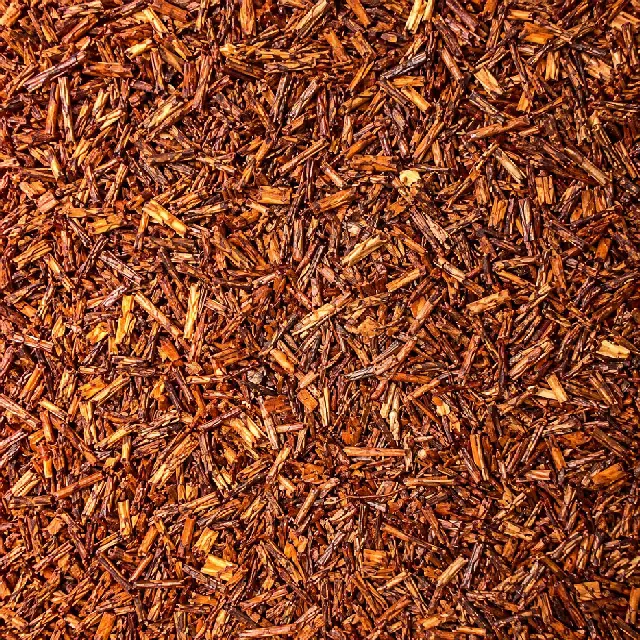
Yes, and for a simple reason: rooibos is not a tea. It is a shrub, Aspalathus linearis, which grows in the Cederberg region of South Africa. Once oxidised, its needles take on a coppery red hue and give an amber, rounded liquor with woody and honeyed notes. Dried without oxidation, it becomes green rooibos, fresher and more vegetal. In both cases it is naturally caffeine-free, which makes it the obvious companion for the end of the day, children included.
Plain, it is perfect on its own. Flavoured, it lends itself beautifully to pairings of fruit, flowers and spices: Mariage Frères' flavoured rooibos, including the famous Marco Polo Rouge, which transposes the fruity, floral bouquet of the famous Marco Polo onto rooibos, are a fine illustration. Prepare it with simmering water, between 90 and 100°C, for around five minutes: it develops no bitterness, even when forgotten in the teapot.
Herbal infusions, carcadets and hibiscus: evening infusions
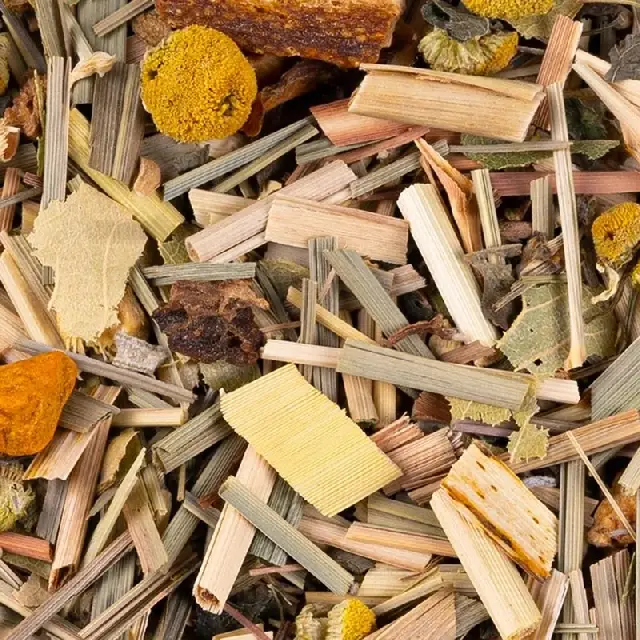
Herbal infusions bring together everything that is infused and does not come from the tea plant: verbena, chamomile, lime blossom, mint, blends of plants and barks. Caffeine-free by nature, they are chosen first by taste, grassy, floral or minty, and are prepared with simmering water, between 90 and 100°C, with generous steeping times of five to eight minutes. The organic herbal infusions from Ombelle, which we offer in Nice and online, cover this whole range, from evening lime blossom and chamomile to hibiscus blends.
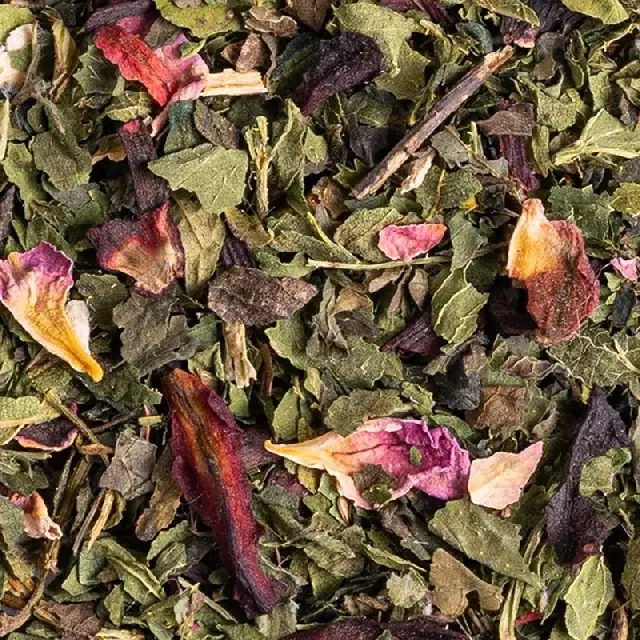
Carcadet deserves a place of its own. This blend built around hibiscus, whose calyces give a deep red liquor with a distinct acidity, is enriched with fruit and petals. Served hot, it warms winter evenings; iced, it becomes a very refreshing summer drink, caffeine-free and with no added sugar. The carcadets created by Mariage Frères explore this fruity register with the precision the house applies to its teas.
What is a decaffeinated tea?
For those who cherish the taste of tea itself, there is a third way: decaffeinated tea. The leaves are stripped of most of their caffeine before being packed, most often by a gentle extraction using natural carbon dioxide, a process that respects the aromas far better than the old solvent methods. The result keeps the character of its original tea, with a very low residual caffeine content.
A decaffeinated black tea is prepared exactly like its classic counterpart: water between 90 and 95°C, three to four minutes' steeping, 2 grams per 200 ml. It is the solution for tea lovers who wish to give up neither their end-of-day cup nor their tasting habits.
What to drink in the evening instead of tea?
It is all a matter of personal sensitivity: some sleep very well after a black tea, others prefer to stop by mid-afternoon. For a serene end to the day, the house recommends keeping robust teas for the morning and moving towards gentler cups as the hours go by: a tea low in caffeine or a second infusion of the same leaves in the late afternoon, then a rooibos, a herbal infusion or a carcadet once evening comes.
For ideas, a flavoured rooibos with gourmand notes pairs nicely with a dessert, a verbena or lime blossom gently rounds off dinner, and a carcadet prepared in the morning then chilled awaits summer evenings. Our advisers, in Bordeaux and in Nice, will help you build your evening repertoire to suit your tastes, loose leaf or in tea bags.
The sommelier's selection


Frequently asked questions
Does rooibos contain caffeine?
No, none at all. Rooibos does not come from the tea plant but from a South African shrub, and it is naturally caffeine-free, whether red or green, plain or flavoured. It is therefore suited to the evening and can be served to the whole family.
Can you decaffeinate your tea by discarding the first water?
This traditional practice lightens the cup but does not make it caffeine-free: an infusion of a few dozen seconds removes only part of it. For a cup that is truly low in caffeine, it is better to choose a decaffeinated tea, a rooibos or a herbal infusion.
Which tea to drink in the evening?
In the evening, turn to a rooibos, a herbal infusion or a hibiscus, all naturally caffeine-free. If you want the taste of tea, a decaffeinated tea or a second infusion of the same leaves gives a light cup.
Does decaffeinated tea taste the same as classic tea?
Today's gentle extraction processes, notably using natural carbon dioxide, preserve most of the aromas. A quality decaffeinated tea remains true to the character of its original tea, sometimes with a little less liveliness, and is prepared in exactly the same way.
To go further
More guides from the house
- The difference between tisane and infusion: the words, the methods, the settingsThe tisane is the drink, infusion the method. Decoction, maceration, tea or tisane, families and preparation settings in one table.Read the guide →
- Rooibos: the guide to choosing and preparing “red tea”Rooibos, the naturally caffeine-free South African infusion: red or green, pure or flavoured. Preparation, storage and our Mariage Frères selection, loose leaf and tins.Read the guide →
- Gong fu cha: brewing tea the Chinese way in a gaiwan, with short infusionsGong fu cha means plenty of leaves, little water and infusions of a few seconds: equipment, gaiwan technique, timings and teas to start with.Read the guide →