
The Mariage Frères journey · Nature Route · Stopover 9 out of 10
Specialities, great singularities
Specials
First movement
Boarding
The essentials at a glance
Specials
The house selection: Pu-erh · Royal Purple Tea · Huang Cha · Lapsang Chinbara
This family to taste, and a gold stamp to collect by rating your tastings.
Second movement
The port of call lesson
This stopover opens with this family: you already know how to brew them from the tea school; now meet the house's great names.
Special teas
Beyond the teas we come across every day lies a world of singular teas, teas that defy categories through their process or their nature. Some are born of a unique technique: pu-erh, the only truly fermented tea, slowly transformed by micro-organisms year after year; yellow tea, a cousin of green tea that undergoes a mysterious “yellowing” which softens it. Others owe their nature to the plant itself: purple tea, a spontaneous mutation with violet leaves. Others still take the art of fire to its peak, like China's great smoked tea. What unites them is not rarity but originality: each surprises with a way of being tea unknown to the other families. The curiosities of the menu, to be discovered just before the greatest crus.
Third movement
Tasting at home
The Stopover Discovery Trunk 9
Special teas
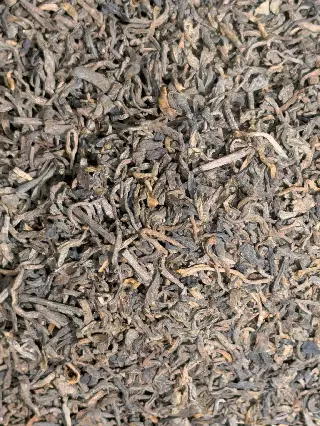
Pu-erh
The only fermented tea: Yunnan cakes, forest floor, cocoa, improves with age.
Pu-erh is the only truly fermented tea, born in Yunnan, the cradle of the tea plant. It has two faces: “raw”, which ages naturally over years, improving like a fine wine; and “ripe”, whose maturation is accelerated by wet fermentation, a technique developed in 1973. The dark, deep liquor evokes the forest floor after rain, damp earth, wood and cocoa. Round and free of bitterness, it can be steeped several times. The only tea, they say, that gets better with age.
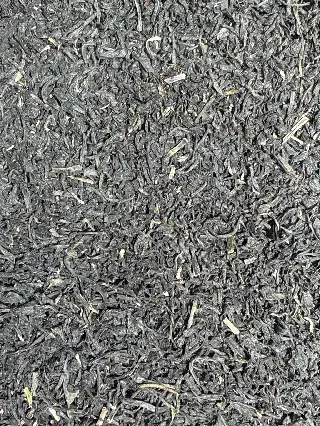
Royal Purple Tea
A tea plant with violet leaves: purple, fruity, velvety liquor.
On the highlands of Kenya grows a most unusual tea plant: its leaves are not green but naturally violet. This hue comes from anthocyanins, the same pigments that colour red berries and hibiscus, produced here in response to altitude and strong sunshine. No manipulation, no laboratory variety: the plant alone decides. The liquor bears its mark, purple and velvety, with delicate fruity notes. A botanical curiosity that has become a tasting tea in its own right, and proof that the tea plant still has surprises in store.
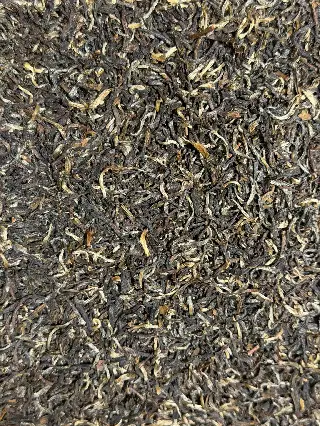
Huang Cha
A yellow tea from China: golden needles, a velvety, soft and floral liquor.
Huang Cha is a yellow tea, the rarest of the six families of tea. It is made much like green tea, with one secret step: “yellowing”, a slow, carefully controlled oxidation during which the leaves soften. This patient craft gives it a singular gentleness, somewhere between green tea and white tea. Its golden needles yield a clear, velvety liquor with soft, floral notes and not the slightest astringency. Once reserved for emperors, yellow tea demands such skill that few masters still practise it: a rare and precious yellow tea, to be enjoyed plain.
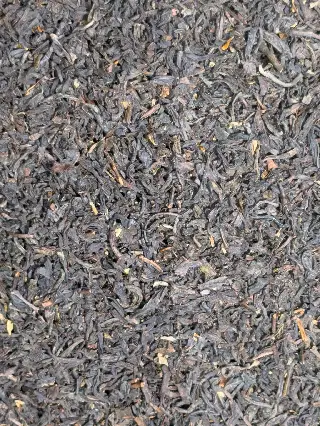
Lapsang Chinbara
China's great smoked tea: resinous wood, open fire, a powerful liquor.
Smoking was born, so the story goes, of urgency: in the Wuyi Mountains, hurried growers dried their leaves over pine fires. The method remained. Here, the oxidised leaf is laid on racks above a resinous wood that slowly imbues it. The liquor is amber and powerful, laden with wood and smoke, a tea that leaves no one indifferent. It is the companion of smoked dishes, from salmon to mature cheeses, and the easiest mirror pairing to achieve on the whole menu.
The complete stopover trunk 9
This family · 4 teas in the default format of each product page
CHF 55.10 i.e. ≈ CHF 0.69 the cup of excellence (based on the measure taught, 2 to 3 g of tea per cup)
The stopover protocol
The fermented tea, Pu-erh
Boiling water, 95-100 °C, short, repeated infusions (30 s). Rinse the cake first; look for forest floor and cocoa.
The singular teas: Royal Purple Tea & Huang Cha
Warm water: 90 °C, 4 minutes for Royal Purple Tea, 75 °C, 5 minutes for Huang Cha. Gentleness and finesse: let the purple fruitiness of one and the golden suppleness of the other speak.
The smoked tea, Lapsang Chinbara
Water at 95 °C, 5 minutes. No special care needed: this tea is made to be served strong. Look for resinous wood and open fire.
The traveller's ritual
Taste in this order: first the Pu-erh, deep and earthy; then Royal Purple Tea and its purple liquor; next Huang Cha, the most delicate; finish with Lapsang Chinbara, which would overwhelm the palate if served earlier. Four cups, four singularities.
The Grand Trunk of the Route
All ten stopovers at once: the entire selection Nature delivered in three instalments.
The “Le Voyageur” subscription
One stopover a month for ten months: the trunk, the story and the protocol arrive at your door.
Subscribe to the journey