
The Mariage Frères journey · Nature Route · Stopover 10 out of 10
Rare teas, the culmination
Rare
First movement
Boarding
The essentials at a glance
Rare
The house selection: Thé Blanc Sacré · Maori Blue · Gyokuro Kyoto · À la Porte Chinoise
This family to taste, and a gold stamp to collect by rating your tastings.
Second movement
The port of call lesson
This stopover opens with this family: you already know how to brew them from the tea school; now meet the house's great names.
Rare teas
What makes a tea rare? Sometimes nature: a micro-terroir, a harvest lasting a few days, a climate nothing can replace. Sometimes the human hand: buds picked one by one, patient shading, a skill that only a few masters still possess. Sometimes history: grades once reserved for the imperial court, produced in such small quantities that they never reached ordinary people. These exceptional teas are not enjoyed like others: in small amounts, slowly, with the attention one gives to a great wine or a precious perfume. They are the pinnacle of the art of tea, the promise of the whole journey fulfilled. After them, all that remains is to begin again, differently.
Third movement
Tasting at home
The Stopover Discovery Trunk 10
Rare teas
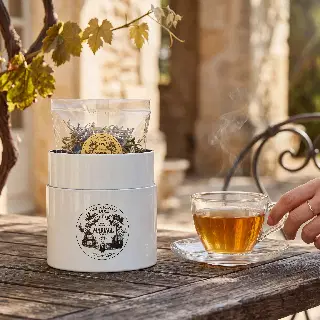
Thé Blanc Sacré
Harvested with golden scissors in Ceylon: white flowers, truffle and forest floor.
Here is one of the house's most singular teas, and it comes from where you would least expect: not from China, home of white tea, but from Ceylon. Its buds are harvested with golden scissors, without the hand touching the leaf, then dried in the sun. In the cup, the tender infusion releases a fragrance of white flowers, truffle and forest floor, of a depth unexpected in so pale a tea. It is presented in a white lacquered box with a double lid, containing four five-gram envelopes.
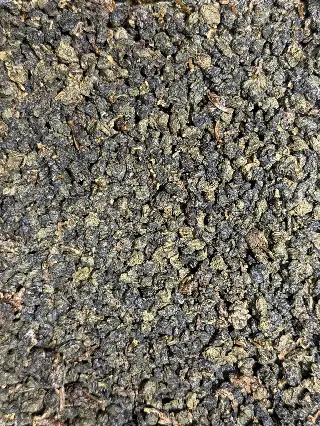
Maori Blue
A rare oolong with ultramarine glints: floral, creamy, with a long sweet finish.
Maori Blue is an oolong tea of great rarity, whose name evokes the far reaches of the Pacific and the deep blue of the oceans. Semi-oxidised according to the delicate art of the great oolongs, it sits halfway between green and black, rolled to release its aromas slowly. The golden, silky liquor unfolds a floral and fruity palette of rare elegance, with a creamy texture and a long sweet finish. Infuse it several times, each steeping revealing a new facet. An exceptional oolong, exotic and refined, the call of the open sea in a cup.
Gyokuro Kyoto
The “jade dew” of Uji: deep umami, vegetal, silky.
Gyokuro is the pinnacle of Japanese tea, and Uji, near Kyoto, has grown tea since the 13th century; gyokuro itself, born of the art of shading around 1835, is much younger than its terroir. Its secret lies in the shade: a few weeks before the harvest, the tea bushes are deprived of light. The leaf then stops producing bitterness and fills with theanine, the amino acid that gives this sweetness and broth-like umami. It is prepared against every convention: many leaves, very little water, barely warm. A tiny cup, dense and silky.
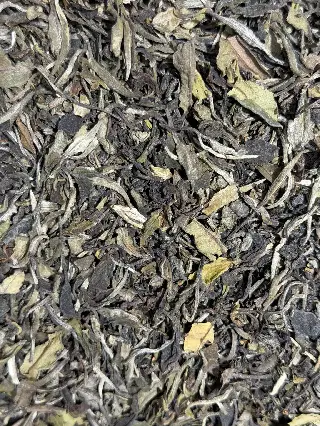
À la Porte Chinoise
Five types of tea brought together in one cup: a blend turned legend.
“À la Porte Chinoise” was the sign of a merchant of teas and goods from China, the Indies and the colonies, a whole world of imagination in 19th-century Paris, enamoured of the Orient. This tea keeps its spirit alive through a blender's feat: it unites the five types of tea, white, green, blue (oolong), black and scented, each with its own character, in a single cup. Bringing together five families that would normally each require their own water and time is quite an achievement; the result, lightly floral and astonishingly balanced, has something unique, almost mystical, about it. It is not rarity that earns it its place here, but this singularity: five teas in a single gesture.
The complete stopover trunk 10
This family · 3 teas in the default format of each product page
CHF 130.40 i.e. ≈ CHF 2.72 the cup of excellence (based on the measure taught, 2 to 3 g of tea per cup)
3 of the 4 teas from this stopover are available online today.
The stopover protocol
The white tea, Thé Blanc Sacré
Warm water, 60-70 °C, 7 minutes or more. One 5 g envelope is enough for a teapot. Let the white flowers, truffle and forest floor reveal themselves slowly.
The oolong, Maori Blue
Water at 90 °C, 1 minute, several times. Being rolled, it can be reinfused: follow the floral notes and creaminess from one cup to the next.
The gyokuro, Gyokuro Kyoto
Barely warm water, 60 °C, 2 minutes, with many leaves and very little water, 4 g per 100 ml. Almost a broth: look for the umami and the sweetness of seaweed and hazelnut.
The blend, À la Porte Chinoise
Water at 95 °C, 4 to 5 minutes. Five types of tea in the same teapot: discover how the white, green, oolong, black and scented teas answer one another.
The traveller's ritual
For these final treasures, taste in this order: first Thé Blanc Sacré, the most ethereal; then À la Porte Chinoise and Maori Blue; finally Gyokuro Kyoto, the densest, which should linger on the palate at the end. Four summits to close the Route Nature.
The Grand Trunk of the Route
All ten stopovers at once: the entire selection Nature delivered in three instalments.
The “Le Voyageur” subscription
One stopover a month for ten months: the trunk, the story and the protocol arrive at your door.
Subscribe to the journey