
The Mariage Frères journey · Nature Route · Stopover 7 out of 10
Africa & new worlds
Africa Black · World Green · World Black
First movement
Boarding
The essentials at a glance
Africa Black · World Green · World Black
The house selection: Guerriers · Rukeri · Jade Himalaya · Shan Tea OP
These 3 families to taste, and a gold stamp to collect by rating your tastings.
Second movement
The port of call lesson
This stopover opens with these 3 families: you already know how to brew them from the tea school; now meet the house's great names.
Africa, black teas
Africa is the great recent story of tea. Brought by the British at the beginning of the 20th century, the assamica variety found ideal highlands there: Kenya, today the world's leading exporter, covers the hills of the Rift Valley with it, on red volcanic soil and under an equatorial sun. Production is mainly “CTC” tea, crushed into fine granules, brisk and richly coloured, ideal for tea bags and chai. But a new generation is aiming for excellence: Rwanda, the “land of a thousand hills”, which took up tea in the 1950s, crafts whole-leaf high-altitude teas, finer and more complex. Full-bodied, richly coloured, forthright, Africa's black teas awaken mornings with generosity.
The world, green teas
Green tea is no longer the preserve of China and Japan: it now grows in every corner of the world. The Himalayan foothills of Nepal are the finest example, the same misty ridges as Darjeeling, the same high altitudes, the same small-leaf Chinese variety, but younger gardens and artisanal production. In Ilam, in the east of the country, greens of great purity are born, floral and lively, carried by the minerality of the peaks. Elsewhere, from Thailand to Laos, other new terroirs interpret green tea according to their climate and their know-how. These greens of the world offer a new freshness, sometimes gentler than their Asian models, proof that the geography of tea is still being written today.
The world, black teas
Wherever the tea plant grows, a black tea is always crafted in the end. This final family brings together the blacks of new terroirs, born far from the classic routes of China and India: Himalayan Nepal with its muscatel accents, gardens in Southeast Asia, the Americas or Oceania, where young producers reinvent black tea in their own way. Freed from the weight of tradition, they dare unprecedented profiles, fruitier, more floral, sometimes gentler than the great classics. This is the most contemporary side of tea: today's creativity, the kind that invents tomorrow's crus. Every cup is a discovery, a postcard from a corner of the globe where tea has just taken root.
Third movement
Tasting at home
The Stopover Discovery Trunk 7
Africa, black teas
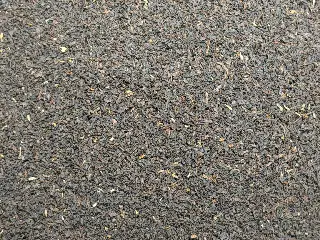
Guerriers
A black tea from the East African highlands: full-bodied, richly coloured, forthright.
Thé des Guerriers takes us to the highlands of East Africa, where tea grows at more than two thousand metres, on red volcanic soil and under the equatorial sun. The vigorous leaf gives a full-bodied, richly coloured liquor of fine coppery frankness. This is the tea for big mornings, drunk plain or lifted with a dash of milk. Powerful without being harsh, it embodies all the generosity of African teas, that solar energy of the highlands, which in a century have become one of the beating hearts of world tea.
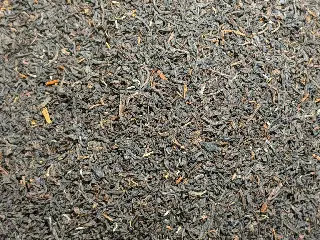
Rukeri
A Rwandan estate processed the orthodox way: amber, honeyed, toasty, all finesse.
Rukeri is an estate in Rwanda, the “land of a thousand hills”, which joined the tea adventure in the mid-20th century. On these mist-bathed volcanic heights, the leaf is processed the traditional way, “orthodox”, withered, rolled and carefully oxidised, to yield fine whole leaves. The result is a black tea finer and rounder than most African teas: an amber liquor, soft and honeyed, with warm, lightly toasted notes. Rukeri illustrates the move upmarket of Rwandan tea. A high-altitude black tea, generous and refined.
The world, green teas
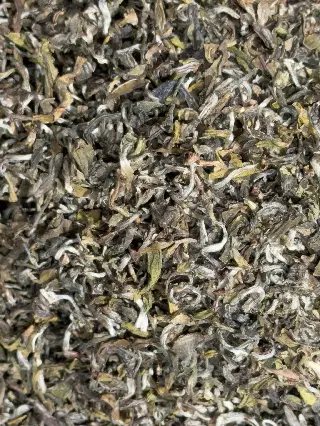
Jade Himalaya
A green tea from the Himalayan foothills of Nepal: clear, floral, mineral, crystalline.
Jade Himalaya carries us to the foothills of the Himalaya, in Nepal, on the same misty ridges that give us Darjeeling. Grown at high altitude, from the small-leaf Chinese variety, the leaf grows slowly in the cold, crisp air. Processed as green tea, it yields a clear, limpid liquor with a finely delicate vegetal freshness: tender grass, flowers, a mountain minerality. Gentler and less astringent than many Asian greens, it bears witness to the rise of Nepalese tea, Darjeeling's luminous cousin. A high-altitude green tea, pure and crystalline, to savour at a low temperature.
The world, black teas

Shan Tea OP
A black tea from Burma, from the hills of Shan State: fruity, gourmand, unexpected.
Shan Tea OP takes us to Myanmar, to the uplands of Shan State, where China, Laos and Thailand meet: an origin still little known, far from the great historic tea routes. Crafted as an Orange Pekoe grade black tea, the leaf, a luminous black, releases a surprising note of hazelnut shortbread when dry. Once steeped, it recalls wild blackberries and cardamom; the amber liquor offers a bouquet of fresh dates, lifted by a tangy hint of hibiscus. Far from the power of Assam or the briskness of Ceylon, it offers another idea of black tea, fruity and gourmand. A reminder that the map of tea is still growing.
The complete stopover trunk 7
These 3 families · 4 teas in the default format of each product page
CHF 36.00 i.e. ≈ CHF 0.45 the cup of excellence (based on the measure taught, 2 to 3 g of tea per cup)
The stopover protocol
African black teas: Guerriers & Rukeri
Water at 95 °C, 3 to 4 minutes. Look for the colourful power of Guerriers, and the fine, honeyed roundness of Rukeri.
Green tea of the world, Jade Himalaya
Water at 75 °C, 2 to 3 minutes. High-altitude softness and minerality: a crystalline green, never bitter.
Black tea of the world, Shan Tea OP
Water at 95 °C, 5 minutes. Let its gourmand fruitiness speak, fresh dates and wild blackberries: an unexpected black tea.
The traveller's ritual
Taste in this order: the two African black teas, Guerriers then Rukeri; move on to the green Jade Himalaya for freshness; finish with Shan Tea OP. From Africa to the uplands of Asia, the same curiosity.
The Grand Trunk of the Route
All ten stopovers at once: the entire selection Nature delivered in three instalments.
The “Le Voyageur” subscription
One stopover a month for ten months: the trunk, the story and the protocol arrive at your door.
Subscribe to the journey