
Gong fu cha: brewing tea the Chinese way in a gaiwan, with short infusions

By the LBDT Sommelier · published on · 8 min read
Reviewed and approved by the La Boutique du Thé team
Gong fu cha is the Chinese method of steeping a generous amount of leaves in very little water, a few seconds at a time, then starting again with the same leaves. Here is the equipment you need, the gaiwan technique step by step, the steeping times, a table for converting teapot settings to the gaiwan, and the teas from our selection best suited to it.
What is gong fu cha?
Gong fu cha is a Chinese way of preparing tea that turns our habits upside down: plenty of leaves, very little water, and steepings of just a few seconds, one after another with the same leaves. The word gongfu refers to skill, the patient care given to each gesture. The method is practised above all in Guangdong, in south-eastern China, and in regions of Han culture.
Where our oolong product pages call for 2.5 g of leaves per 200 ml of water and 7 minutes of steeping in a teapot, gong fu cha concentrates the leaf in a small vessel and steeps it very briefly. Each cup differs from the one before: the first is lively, the second fuller, the third deeper. You do not drink a single cup, you follow the tea from steeping to steeping, as described in our Tea Academy School.
It is not a codified ceremony like Japan's: it is first and foremost a convivial way of serving, designed to bring out the taste and aroma of a whole leaf. It needs little equipment and is easily practised at home, alone or for two.
What equipment for a first gong fu cha?
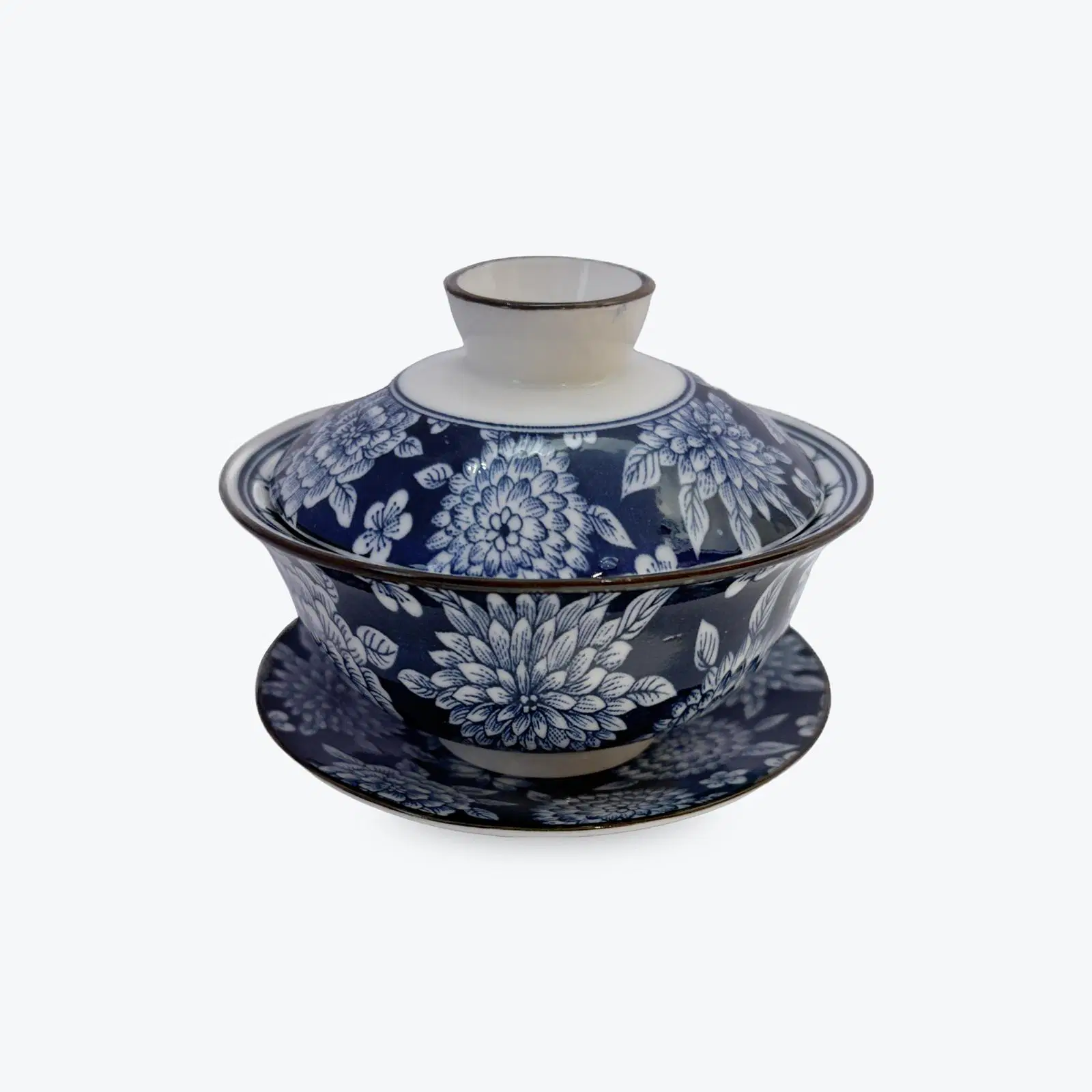
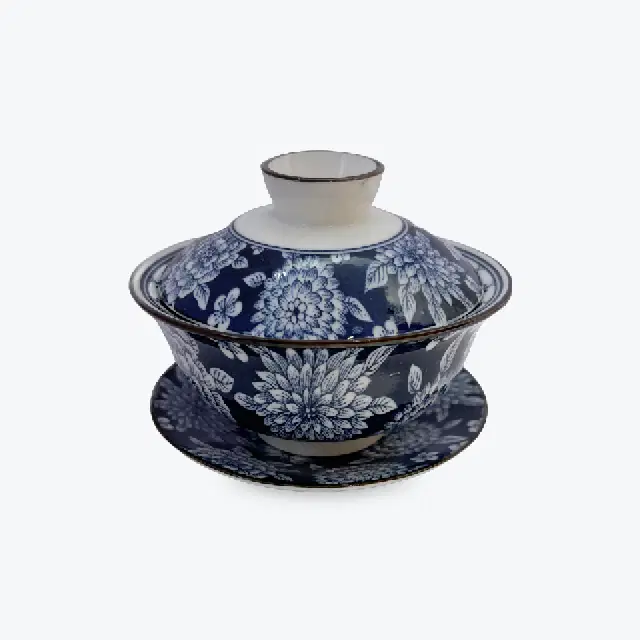
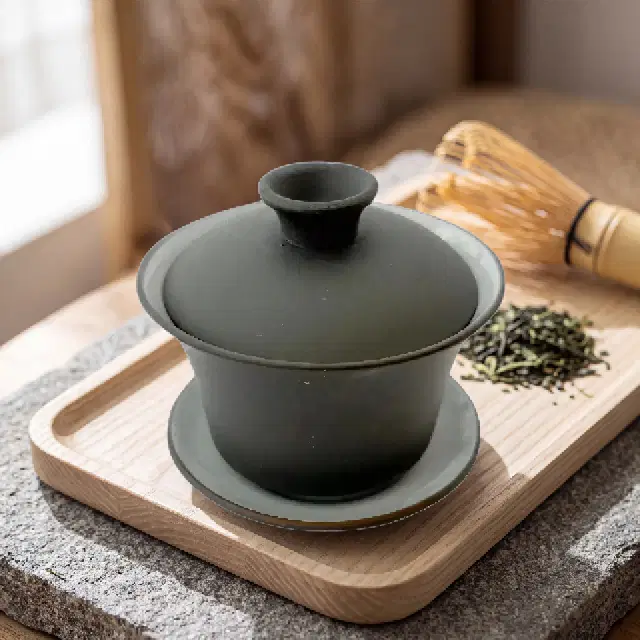
To begin, all you need is a small vessel and small cups. The simplest is the gaiwan, a lidded bowl resting on a saucer, in three pieces. It serves both as a teapot and, if you wish, as a cup. Its use is traced back to the Ming dynasty, and it remains the most widespread tool for tasting a tea in short steepings.
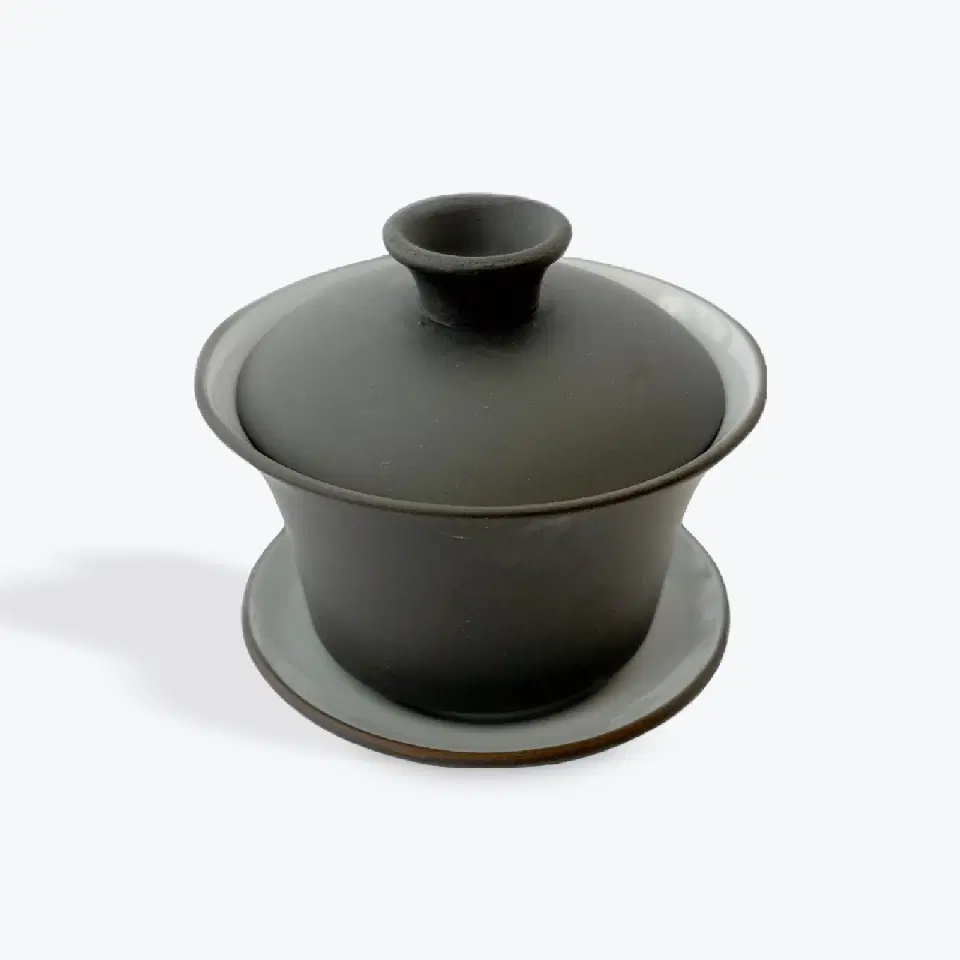
The 120 ml Ahri porcelain gaiwan is a good starting point: glazed porcelain retains no taste, so it suits every tea and shows the colour of the liquor. The Tasse Yixing Ton Gaiwan pairs the same shape with Yixing clay, an unglazed, porous stoneware that develops a patina over the steepings. Its product page advises keeping it for a single type of tea and rinsing it with hot water, without soap.
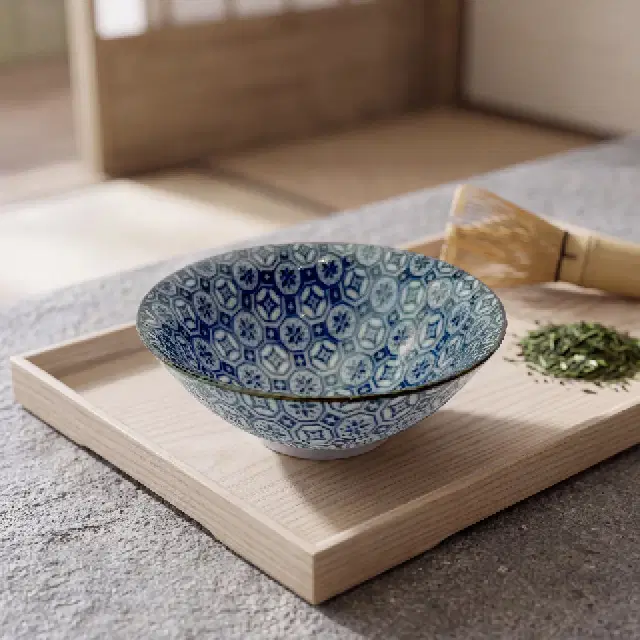
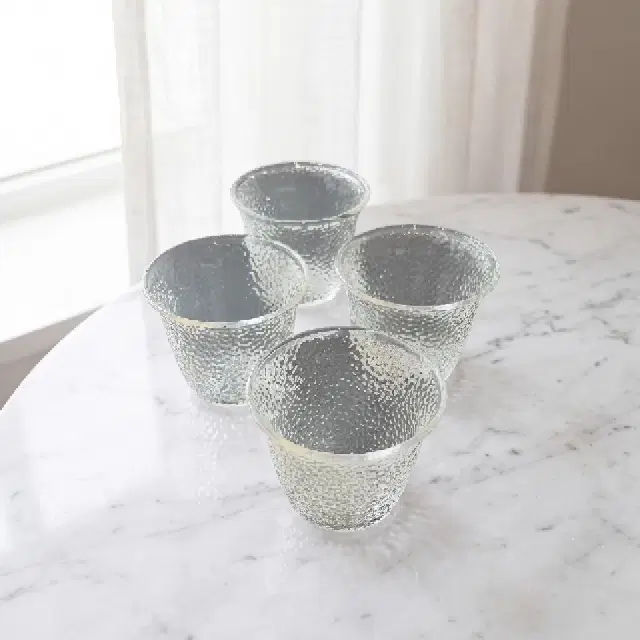
As for cups, small is the rule, since you serve a little at a time. The 80 ml Ahri porcelain tea cups, handleless, in a set of four assorted patterns, match the gaiwan of the same name. The 4 Oriental 50 ml glass cups show the hue of each steeping, from the gold of an oolong to the reddish brown of a Pu-Erh. A kettle and a tray or large bowl for the rinsing water complete the set.
How to use a gaiwan, step by step
Using a gaiwan comes down to seven gestures: heat the water, warm the gaiwan, measure, rinse, steep, pour, repeat. With the 120 ml Ahri porcelain gaiwan, here is the order to follow.
- Heat the water to the temperature of the chosen tea, as given on its product page (from 85 °C for a white tea to 100 °C for a Pu-Erh).
- Pour a little hot water into the gaiwan and the cups to warm them, then empty them.
- Add the leaves: about 4 to 6 g, or two spoonfuls. The bottom of the gaiwan should be well covered; for a teapot, our Academy speaks of one third dry leaves.
- Rinse: pour the water over the leaves, cover, and empty at once. This first pass awakens the leaf and is not for drinking.
- Pour the water again, place the lid and count about ten seconds.
- To serve, hold the bowl in one hand, the lid slightly offset to leave a gap that holds back the leaves, and pour the whole infusion into the cups, down to the last drop.
- Repeat with the same leaves, lengthening the time a little each time.
Emptying the gaiwan completely each time is the gesture that matters most: water left on the leaves keeps steeping, and the next cup would be too strong.
How do you hold a gaiwan without burning yourself?
To pour, hold the bowl in one hand by its rim, keeping the lid in place, offset just enough to let the infusion through while the leaves stay inside. To drink straight from the gaiwan, pick it up with its saucer, which acts as a support, and push the leaves aside with the lid. The gesture takes a little practice, as the liquor is very hot: practise first with water alone, without leaves.
How long, and how many times to re-steep?
In gong fu cha, the first steeping lasts about ten seconds, the second about twenty, the third about thirty, then you keep lengthening. A good-quality whole leaf can thus take several steepings; stop when the liquor turns pale and tasteless. These times are a starting point: if the cup seems too light, leave it a few seconds longer; too strong, pour sooner.
The table compares, for the teas in our selection, the teapot setting given on their product page and the starting point in a gaiwan. The water temperature stays the same in both methods; only the quantity of leaves and the time change. For the settings of all other teas, our guide to steeping time and temperature gives them type by type.
| Tea | In a teapot (product page) | In a 120 ml gaiwan |
|---|---|---|
| Grand Oolong Fancy | 2.5 g per 200 ml, 95 °C, 7 min | 4 to 6 g, 95 °C, rinse, then 10 s, 20 s, 30 s… |
| Oriental Beauty | 2.5 g per 200 ml, 95 °C, 7 min | 4 to 6 g, 95 °C, rinse, then 10 s, 20 s, 30 s… |
| Pai Mu Tan Impérial | 5 g per 200 ml, 85 °C, 7 min | 4 to 6 g, 85 °C, rinse, then 10 s, 20 s, 30 s… |
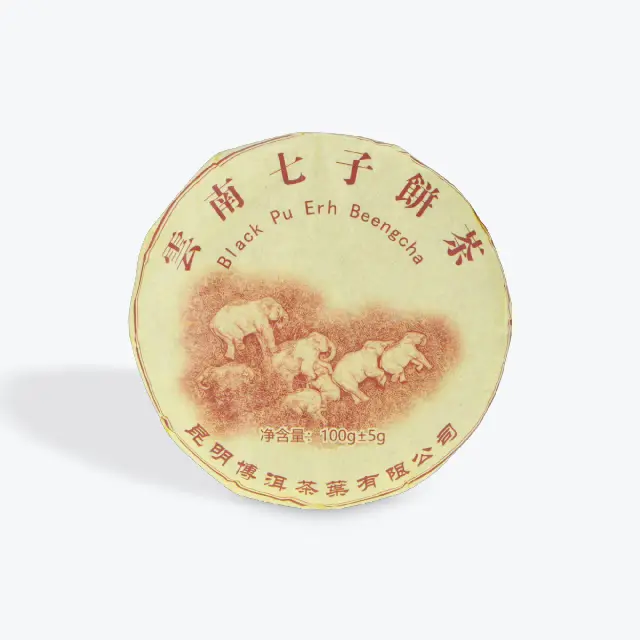
| Chine Pu-Erh Black Elephant Beeng Cha -Shu | 14 g per litre, 100 °C, rinse, 2 to 4 min in successive steepings | 4 to 6 g, 100 °C, rinse, then 10 s, 20 s, 30 s… |
Which teas to choose to start gong fu cha?
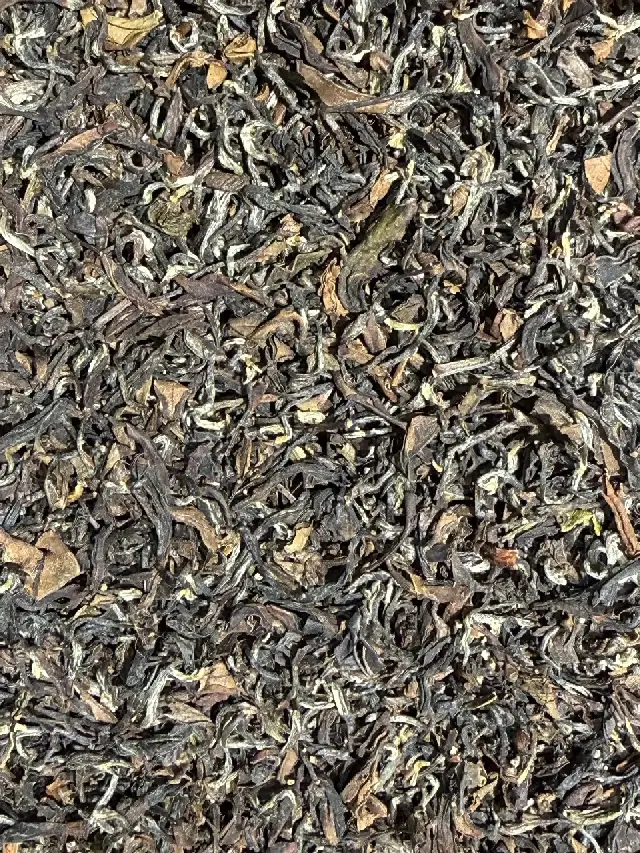
Oolongs are the gong fu cha teas par excellence: their rolled leaves open gradually and change from one steeping to the next. The product page of Grand Oolong Fancy says so itself: this oolong from Formosa can be prepared the Chinese way, in a small teapot, with short repeated steepings, as well as the Western way. Its golden, floral and fruity liquor, free of bitterness, lends itself well to a first session.
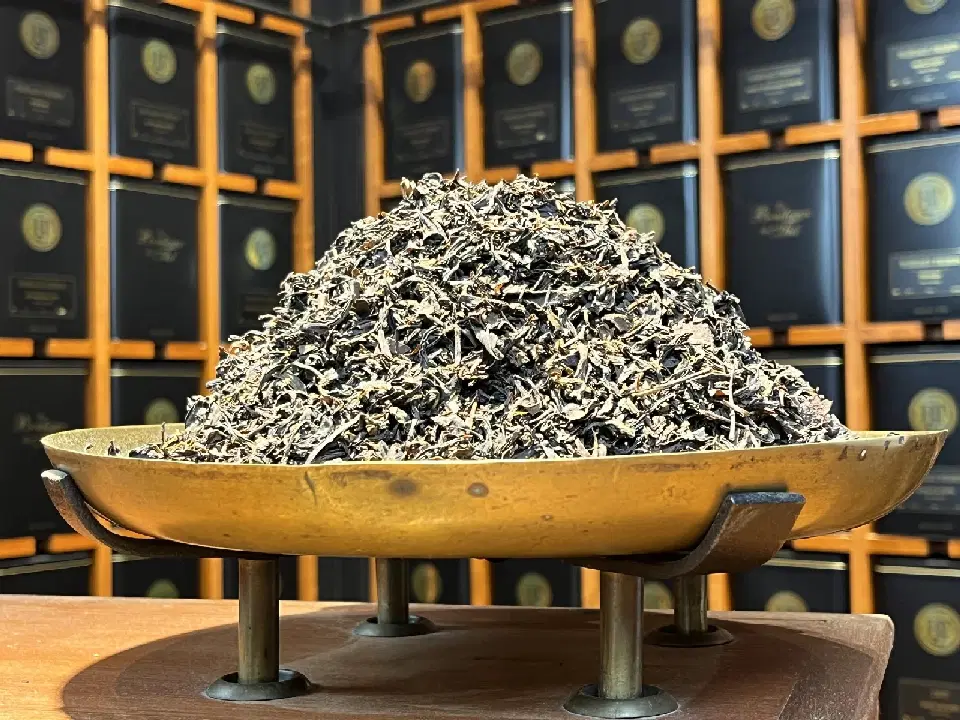
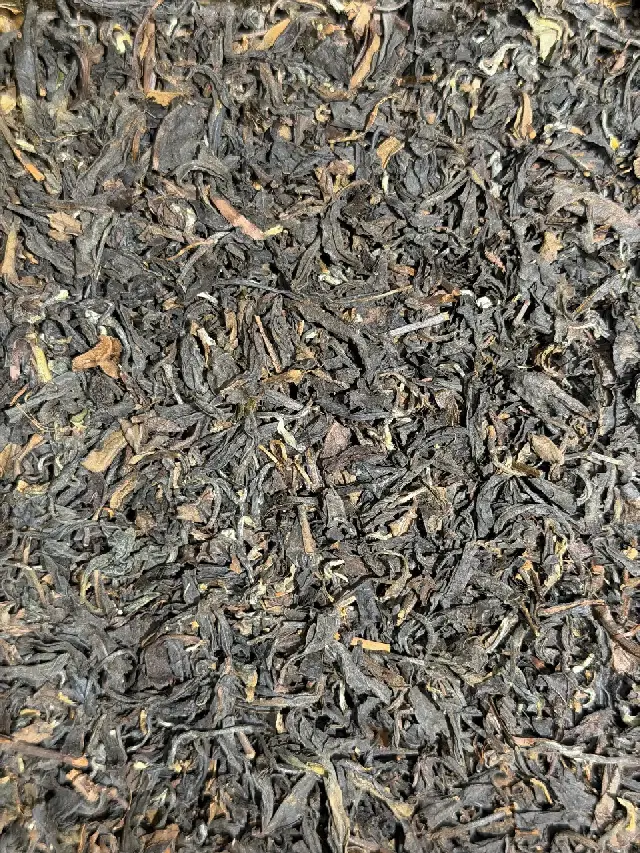
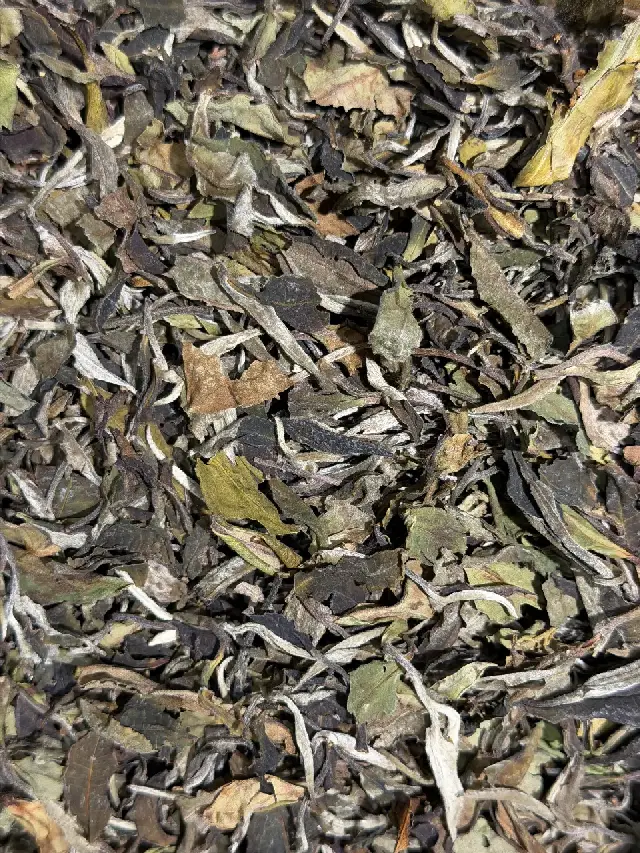
Oriental Beauty, a more oxidised oolong from Formosa, hand-picked in June, gives an amber liquor with notes of honey, ripe fruit and muscat: it is the tea for seeing how many nuances successive steepings reveal. Pai Mu Tan Impérial, a white tea from Fujian, calls for gentler water, at 85 °C; its leaves happily take re-steeping, and the porcelain gaiwan suits delicate teas well. All our oolongs are in the oolong teas section.
And Pu-Erh cakes?
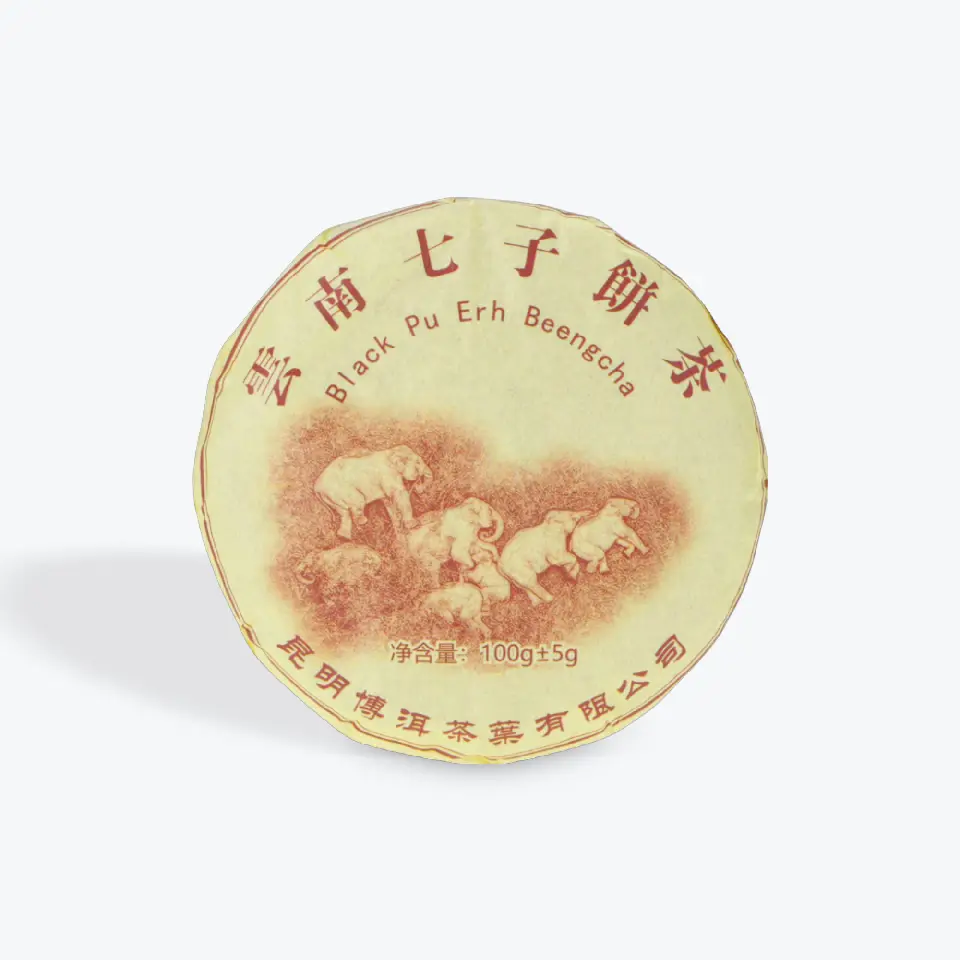
Pu-Erh is the other great tea for successive steepings. Chine Pu-Erh Black Elephant Beeng Cha -Shu, a ripe Pu-Erh from Yunnan in a cake of about 100 g, with a soft, smooth and sweet taste, is rinsed and then steeped at 100 °C; its product page gives, in a teapot, 14 g per litre and 2 to 4 minutes per steeping. To break off a piece without crushing the leaves, slide the tip of the Naru Pu-Erh knife into the thickness of the disc. Our Pu-Erh guide explains the difference between sheng and shu.
When to prefer a Western teapot?
The Western teapot remains the most practical choice when you want to serve several large cups at once, at breakfast or for an afternoon tea with friends. It also suits black teas better: the wide lid of a gaiwan lets heat escape quickly, whereas a black tea likes water that stays hot for several minutes. Flavoured teas and blends, for their part, follow the setting on their product page.
Gong fu cha comes into its own with a pure whole-leaf tea that you want to discover slowly. Nothing stops you alternating: the same Grand Oolong Fancy leaf can be prepared in a gaiwan at the weekend and in a teapot during the week. To choose the model and capacity that suit you, our guide to choosing your teapot reviews the materials.
The sommelier's selection

Frequently asked questions
How to use a gaiwan as a beginner?
Warm the gaiwan with hot water, add 4 to 6 g of leaves, pour in the water and empty it straight away to rinse. Pour again, cover, wait about ten seconds, then pour all the infusion into the cups, holding back the leaves with the lid slightly offset. Repeat with the same leaves, lengthening the time. The gesture takes a little practice: try it first with water alone, without leaves.
Porcelain, glass or Yixing clay gaiwan: which one to choose?
Glazed porcelain retains no flavour: it is the gaiwan that suits every tea, and the one to choose as a first purchase. Glass is just as neutral and lets you see the colour of the liquor. Yixing clay, unglazed and porous, takes on a patina with each infusion: it is kept for a single type of tea, oolongs for example, and rinsed with hot water, without soap.
Can you make gong fu cha with a teapot?
Yes, provided it is small. Gong fu cha is also traditionally practised with a small-capacity teapot, often made of Yixing clay, which is filled with leaves far more generously than a Western teapot. The principle remains the same: a rinse, infusions of a few seconds, and the teapot emptied completely each time. A large teapot is better suited to the classic timing in minutes given on the tea's product page.
What is the difference between gong fu cha and the Japanese tea ceremony?
The Japanese tea ceremony, or chanoyu, is a highly codified ritual centred on matcha, a powdered green tea that is whisked. Chinese gong fu cha is a method of infusing whole leaves, convivial above all, whose aim is to bring out the flavour and aroma of the tea over successive infusions. The former is experienced as a ceremony; the latter is easily practised at home.
To go further
Sources
How we write our guides
Our guides are prepared by La Boutique du Thé, Mariage Frères stockist in Bordeaux and Nice since 1999, drawing on our product sheets, the experience of our shops and the sources cited. Each text is checked and approved by the team before publication. The teas and accessories featured are on sale at the time you read the page. The LBDT Sommelier · A question? Write to us
More guides from the house
- Tea and Christmas dinner: pairings from aperitif to Yule logSmoked salmon, foie gras, capon, cheeses, Yule log: which tea to serve with each course of the Christmas meal, and how to prepare it for a large table.Read the guide →
- Choosing your teapot, and the kettle to go with itJapanese cast iron, porcelain, glass, clay: which teapot for which tea, what capacity, care, and why a temperature-controlled kettle matters just as much.Read the guide →
- Which tea to choose? The guide to finding the one that suits youTea types, moments of the day, tastes, loose leaf or cotton muslin: our professional advice since 1999 to help you choose the tea that suits you.Read the guide →