
Tea mugs and teacups: choosing the capacity, material and shape

By the LBDT Sommelier · published on · 7 min read
Reviewed and approved by the La Boutique du Thé team
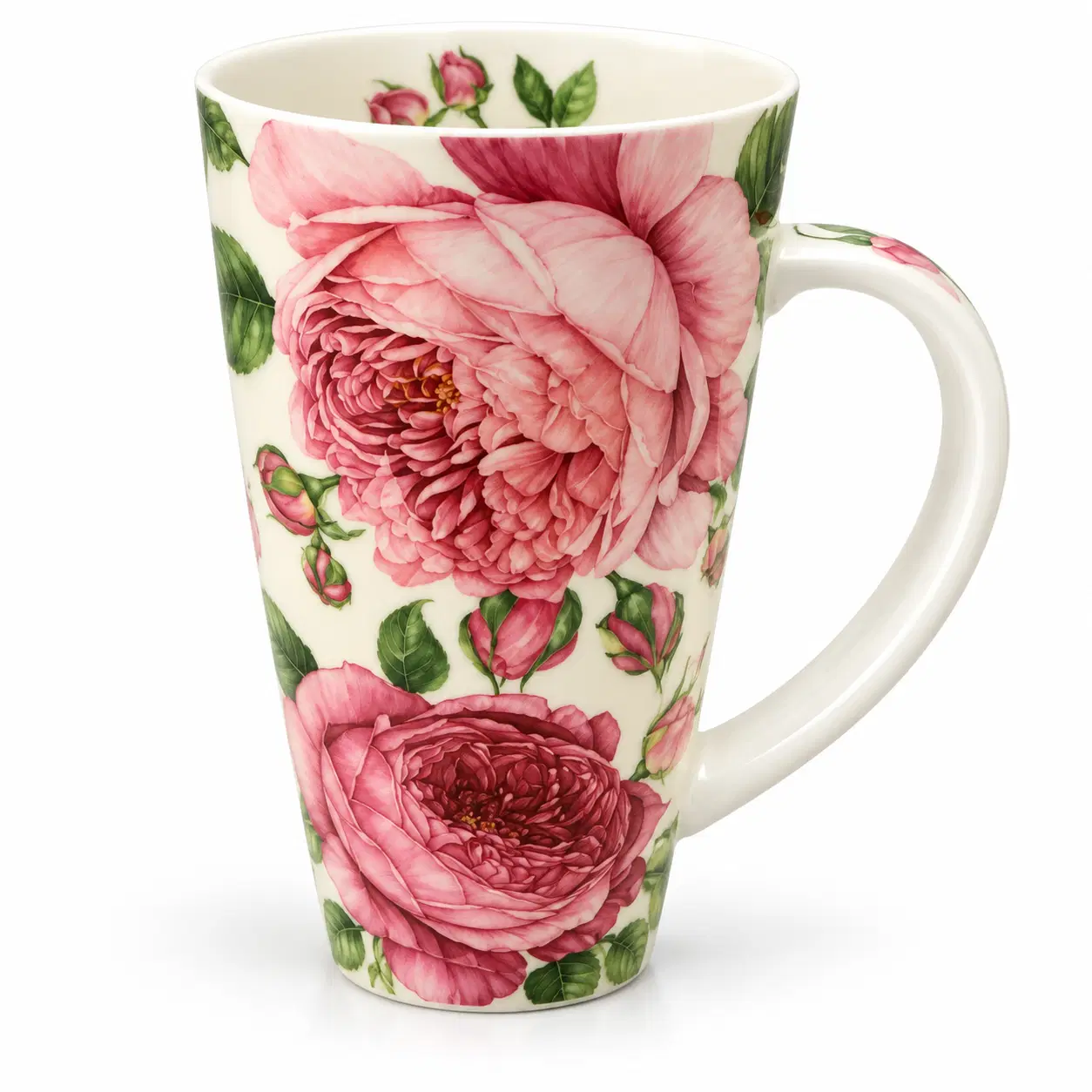
A tea mug is chosen first by its capacity, from 0.2 l for a short cup to 0.6 l for a long break, then by its material: porcelain or bone china for a fine rim, stoneware for a sturdy cup, double-walled glass to see the liquor and keep it hot. Here are the differences between a mug and a teacup, a table of our models with the matching measure of tea, and gift ideas.
Mug or teacup: what is the difference?
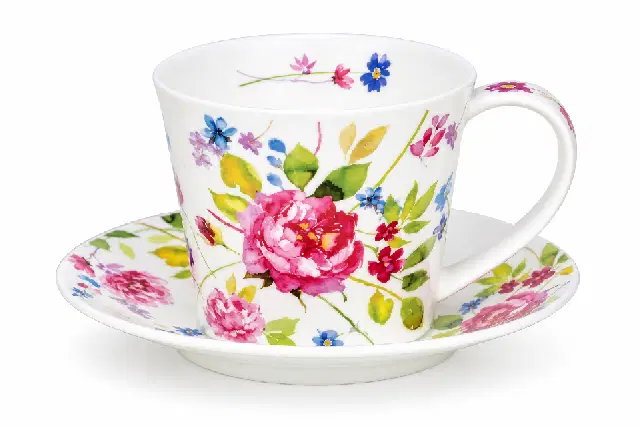
A mug is a large cylindrical cup, without a saucer, filled in one go for a long break; a teacup is smaller, often set on its saucer, and is refilled several times from the teapot. At Dunoon, the Mug Lomond holds 0.32 l, while the Tasse & Sous-Tasse Islay holds 0.35 l: the difference lies as much in shape and use as in volume.
At the other end of the scale, small cups are for tasting. The Tasse à Thé en Porcelaine Ahri, 80 ml is made, according to its product page, for fine teas, green and white, sipped slowly and steeped again. A mug is better suited to morning tea, black teas and herbal infusions you keep close at hand. Nothing stops you having both: a mug for every day, a few small cups for the great teas.
What capacity should you choose for a tea mug?
Choose the capacity according to the tea and the moment: 0.2 to 0.35 l for a cup you drink hot to the last drop, 0.45 to 0.6 l for a long break or an evening infusion. Capacity also matters for the measure. Our product pages give the settings per 200 ml of water, often 2.5 g for a black tea: a large mug therefore needs proportionally more leaves.
| Model | Capacity | Material | Tea needed | Designs on sale |
|---|---|---|---|---|
| Tasse à Thé en Porcelaine Ahri | 80 ml | Porcelain | 1 g | Ornament, Bleu Blanc, Fleurs |
| Tasse à Thé Sven, 4 Assorties | 200 ml | Stoneware | 2.5 g | 4 assorted cups |
| Mug Jura · 0.21 l | 0.21 l | Fine bone china | 2.5 g | Juliet, Romeo |
| Tasse Arvid Double Paroi en Verre | 220 ml | Double-walled glass | 2.5 to 3 g | Clear glass |
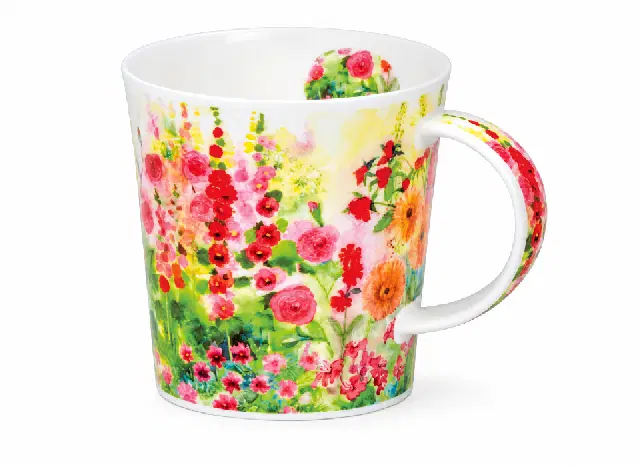
| Mug Lomond · 0.32 l | 0.32 l | Fine bone china | 4 g | Cottage Garden, Flower Garden, Exotic Beauty Hoopoe, Exotic Beauty Turaco, Indienne Bleu |
| Mug Lomond · 0.32 l · Gold | 0.32 l | Fine bone china, 22-carat gold | 4 g | Iona Fleur, Iona Croix, Iona Circle, Sheikh |
| Mug Orkney · 0.35 l | 0.35 l | Fine bone china | 4.5 g | Scottish Heather, Scottish Thistle |
| Mug Shetland · 0.44 l · Gold | 0.44 l | Fine bone china, 22-carat gold | 5.5 g | Satori |
| Mug Skye · 0.45 l · Gold | 0.45 l | Fine bone china, 22-carat gold | 5.5 g | Satori, Shangri-La, Kyoto, Delft Blue |
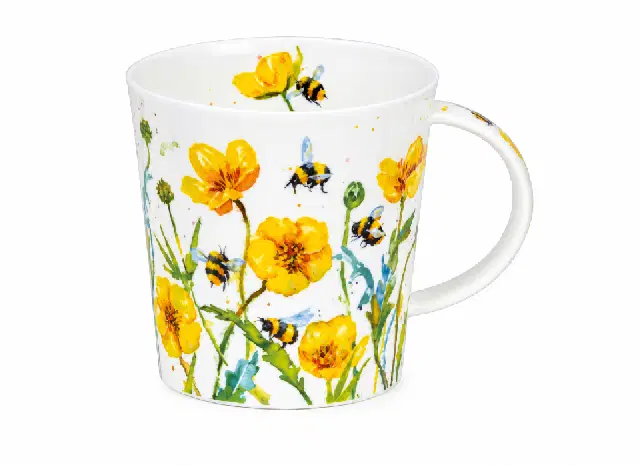
| Mug Cairngorm · 0.48 l | 0.48 l | Fine bone china | 6 g | Mishmash, Busy Bees, Coastal Retreat, Moonlight Cerf |
| Mug Cairngorm · 0.48 l · Gold | 0.48 l | Fine bone china, 22-carat gold | 6 g | Belle Epoque Ages, Belle Epoque Kiss, Belle Epoque Desire, Year of the Horse |
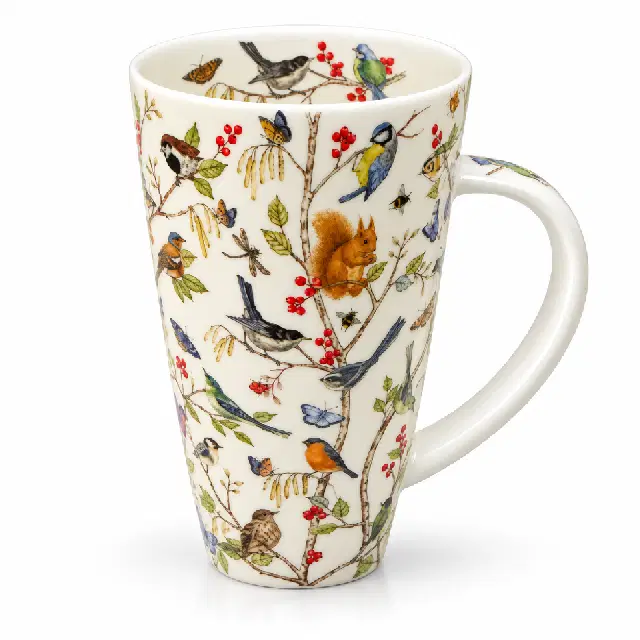
| Mug Henley · 0.6 l | 0.6 l | Fine bone china | 7.5 g | Sweet Peas |
These measures are a simple proportion based on 2.5 g per 200 ml, for the nominal capacity, that is, the mug filled to the brim: if you fill it less, reduce accordingly. For a green tea, a white tea or a herbal infusion, start from the settings on its product page, which vary from one type to another; our guide to steeping times and temperatures summarises them by type.
Porcelain, bone china, stoneware or glass: what the material changes
The material changes the feel in the mouth, the weight in the hand and the way the tea holds its heat; it should not change the taste. According to our product pages, porcelain and glass are neutral in taste, and stoneware, vitrified during firing, is not porous. What sets them apart is the fineness of the rim, the thickness of the wall and how much of the liquor you can see.
Porcelain, the most versatile
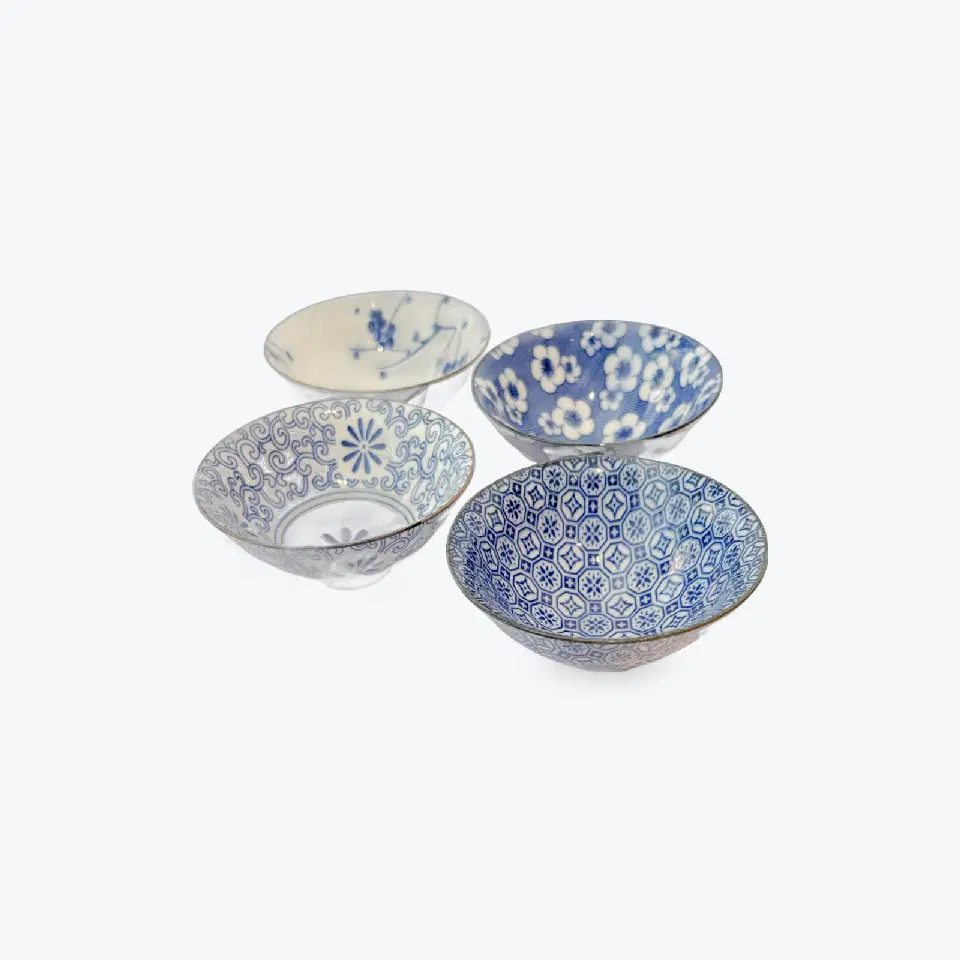
Porcelain, neutral in taste, suits every type of tea, as the product page for the set of Tasses à Thé en Porcelaine Pucheng, four cups presented in gift packaging, points out. Its whiteness lets you judge the colour of the liquor. The Tasse Mikasa Porcelaine Wilmax England, in a pure white, and the small Ahri cups are two further examples, the one for a classic cup, the others for tasting.
Bone china, a porcelain made with bone ash
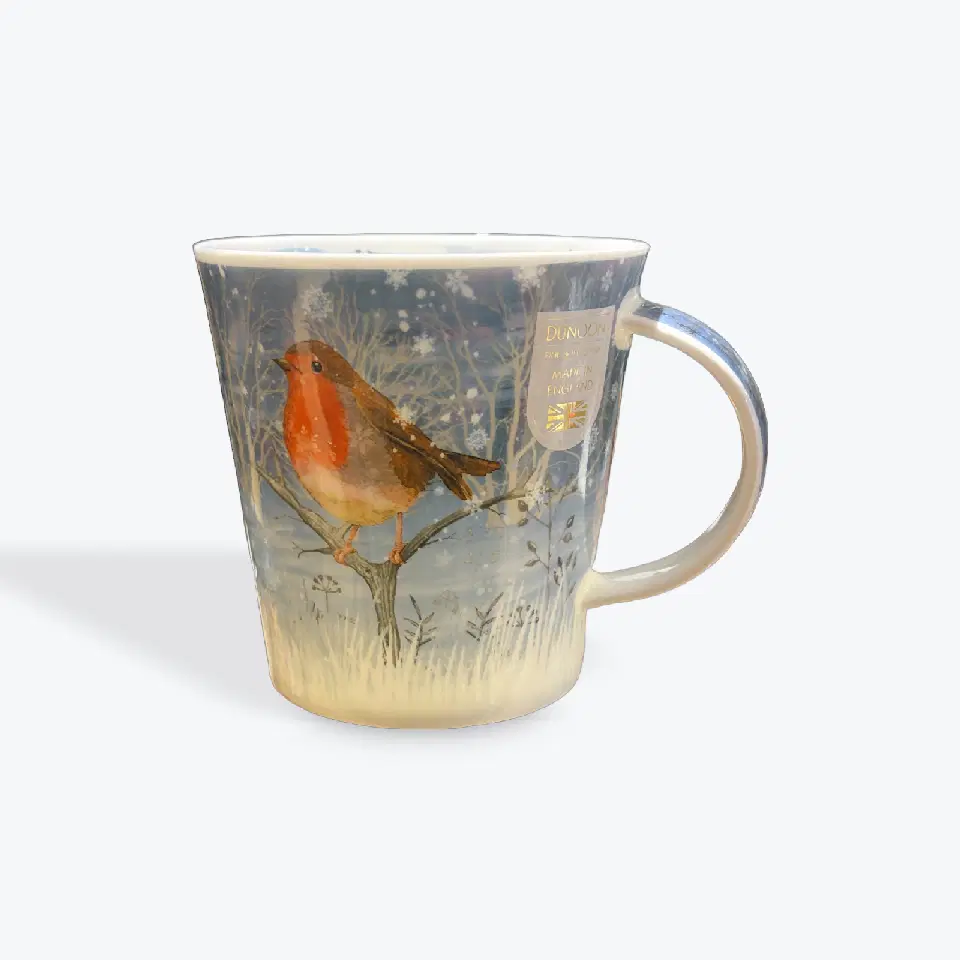
Bone china is a porcelain whose paste contains, in addition to kaolin, a significant proportion of bone ash; its development is attributed to the Englishman Josiah Spode. It is known for its whiteness, translucency and resistance to chipping; the product pages for our mugs also highlight its lightness and thin walls. All our Dunoon mugs are made of fine bone china, slip-cast at the factory in Stone, Staffordshire, England.
It is this fine rim that the Dunoon product pages highlight: the Mug Cairngorm is light despite its 0.48 l. Designs enhanced with 22-carat gold, such as those of the Mug Skye · Gold or the Mug Cairngorm · Gold, should be washed by hand to preserve the gilding, according to their product pages.
Stoneware, thicker and more rustic
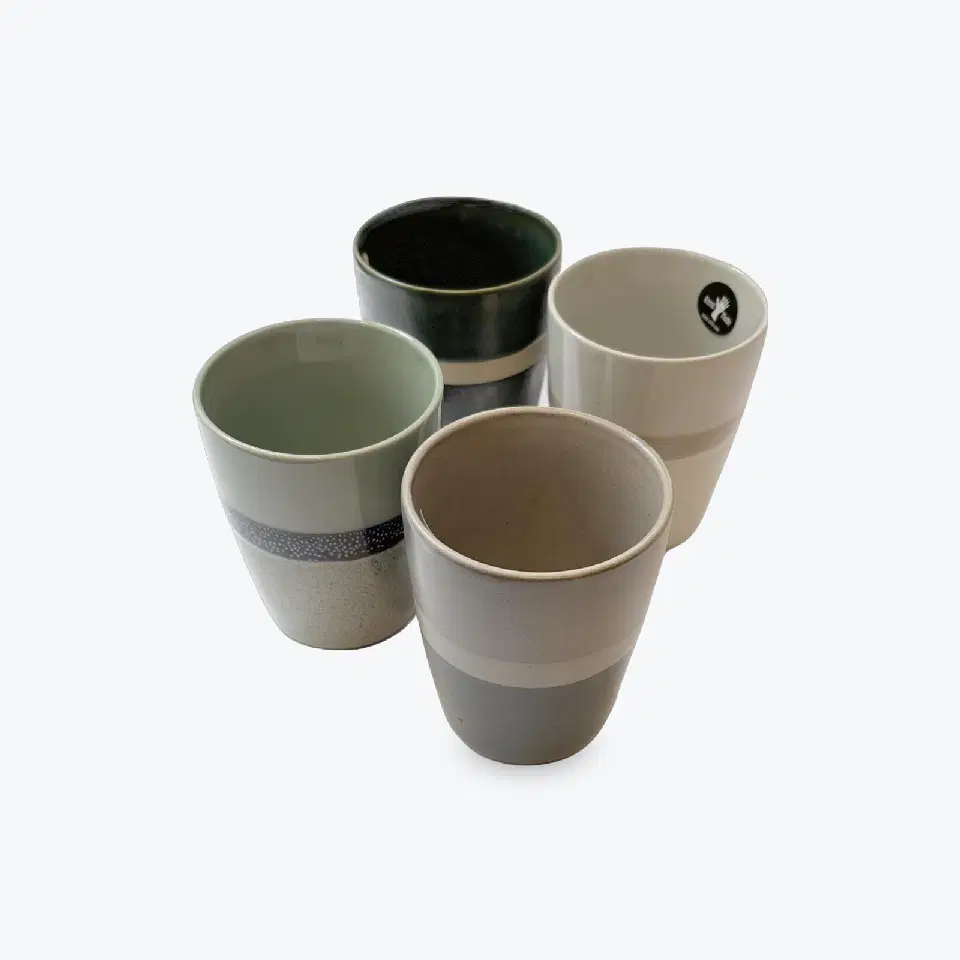
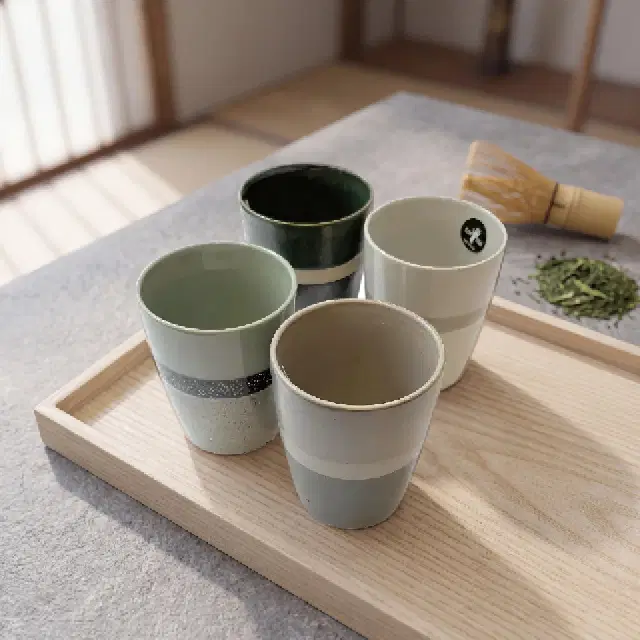
Stoneware is a ceramic fired at over 1,200 °C, vitrified and non-porous, renowned for its great hardness. The four Sven cups are made of stoneware, 200 ml each, and assorted: each differs slightly from its neighbour, while the set keeps its unity. Their product page allows about 0.8 l of tea to fill all four at once.
Double-walled glass, to keep tea hot and see it
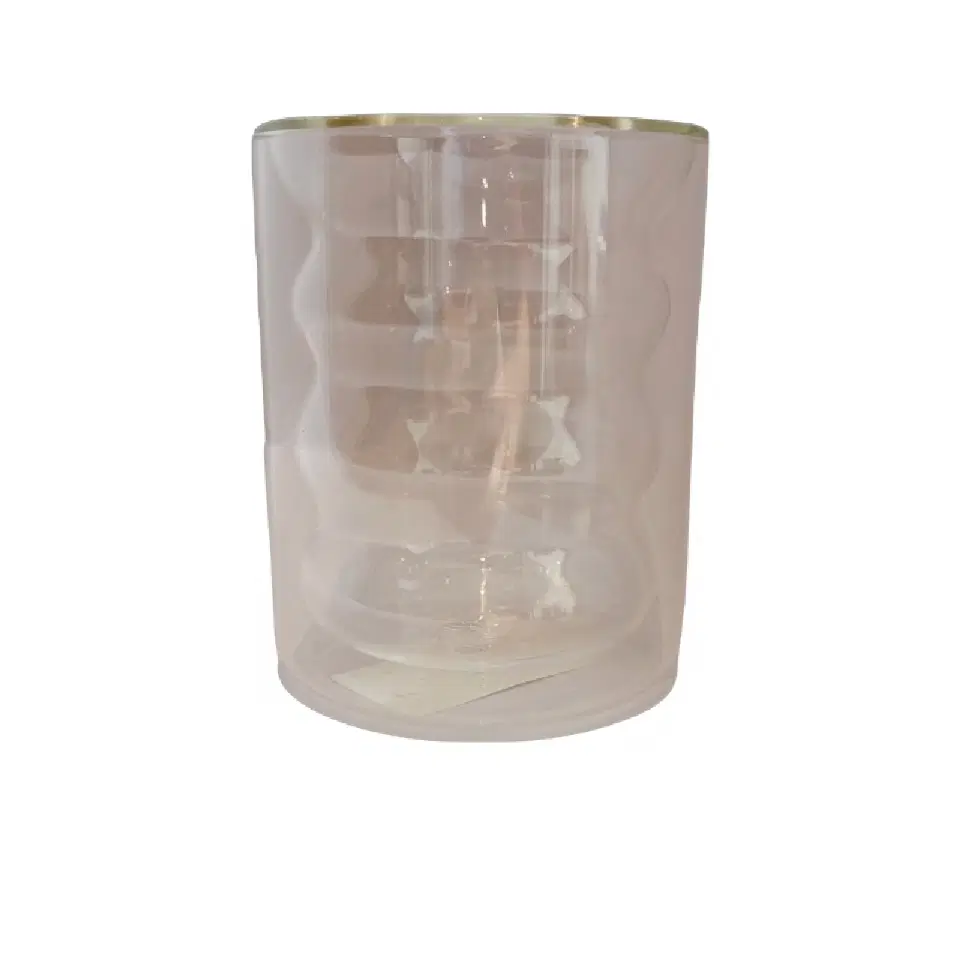
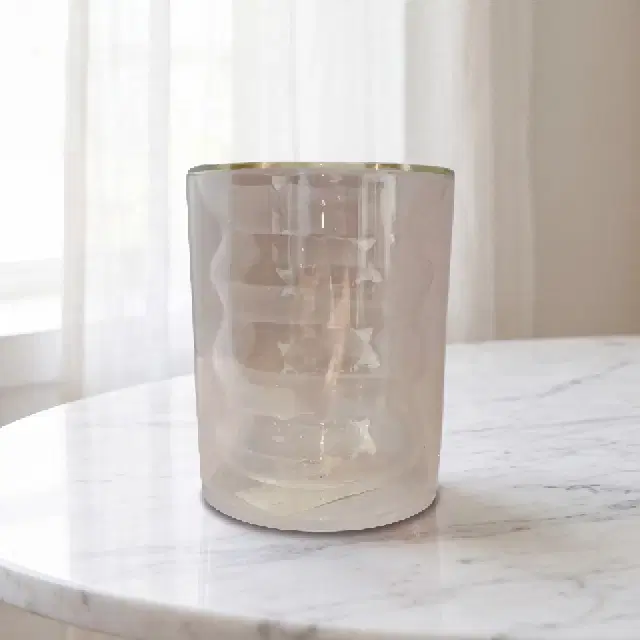
A double-walled glass cup keeps tea hot for longer, while the outer wall stays pleasant to the touch, explains the product page for the 220 ml Arvid cup. Glass reveals the colour of the liquor, from the palest to the deepest, and the tea seems to float between the two walls.
The Verre à Double Paroi Lyn, in Eucalyptus or Ginkgo designs, is made of borosilicate glass, a glass that copes well with changes in temperature: it takes hot and cold drinks alike. Its product page states about 250 ml and hand washing, no dishwasher and no microwave, to preserve the double wall and the inner print.
How do you steep loose leaf tea directly in a mug?
A mug without a filter is enough: simply add an infuser, which you remove at the end of the steeping time to stop the tea. The Tube à Thé Pisa avec Micro-filtre 0.6 mm fits tall mugs and holds back even finely cut teas. The Infuseur à Thé Rond Inox, in 50 or 65 mm, suits leaves that do not swell too much. The paper Filtres à Thé Teeli are thrown away with the leaves, with nothing to wash.
For whole leaves that unfurl a great deal, choose the paper filter, which according to its product page suits whole and broken leaves alike, over the ball, made for leaves that swell little. The other models are gathered in our filters and infusers section, and our guide to tea accessories presents them alongside the teapot.
Which cups and mugs make good gifts?
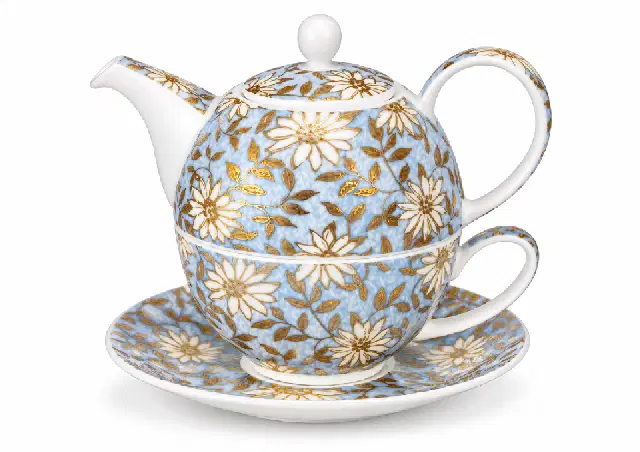
Several models are ready to give. The Tasse & Sous-Tasse Islay comes in an individual gift box, in Dovedale Strawberry, Wild Garden Rose or Busy Bees designs. The Set Tea for One, a 0.5 l teapot and its 0.25 l cup in fine bone china enhanced with 22-carat gold, also comes in a gift box, for tea on your own.
For a table of four, the sets of stoneware Sven cups and porcelain Pucheng cups arrive in gift packaging. The Mug Jura comes in two designs that answer each other, Juliet and Romeo, to give singly or as a pair. All the Dunoon mugs are in our cups and mugs section; to complete the service, see our guide to choosing your teapot.
The sommelier's selection
Frequently asked questions
How much does a teacup hold?
There is no standard capacity. In our range, the small tasting cups hold 80 ml, the cups 200 to 250 ml and the Dunoon mugs 0.21 to 0.6 l. Our tea pages give the settings for 200 ml of water, which corresponds to an average cup: for a mug, increase the measure of leaves in proportion.
What is the difference between a cup and a mug?
A mug is a large cylindrical cup, without a saucer, filled in one go. A cup is smaller, often served on its saucer, and is refilled from the teapot as you drink. The mug suits morning tea and long breaks, the cup suits teas you taste and re-infuse.
What is bone china?
Bone china is a porcelain whose body contains, in addition to kaolin, a large proportion of bone ash: it is also called bone ash porcelain or English porcelain. It stands out for its whiteness, translucency and resistance to knocks, which allow fine, light pieces, such as the mugs from the Dunoon manufactory, made in Staffordshire.
Can a double-walled glass cup go in the microwave?
It depends on the model: always follow its product page or instructions. For the Lyn Double-Walled Glass, the page is clear: neither microwave nor dishwasher, as washing by hand preserves the double wall and the inner print.
Can you steep tea directly in a mug?
Yes, with an infuser that you remove at the end of the steeping time: a micro-filter tea tube for tall mugs, a stainless steel ball for leaves that swell little, or a disposable paper filter. The key step is to remove the leaves in time: as long as they stay in the water, the tea keeps on steeping.
To go further
Sources
How we write our guides
Our guides are prepared by La Boutique du Thé, Mariage Frères stockist in Bordeaux and Nice since 1999, drawing on our product sheets, the experience of our shops and the sources cited. Each text is checked and approved by the team before publication. The teas and accessories featured are on sale at the time you read the page. The LBDT Sommelier · A question? Write to us
More guides from the house
- Tea service: putting one together for entertaining, from 4 to 50 guestsTea service for entertaining: teapot capacity for 4 to 12 people, the tea to allow for 50 guests, and how to keep it hot.Read the guide →
- Tea accessories: the essentials, and the ones that bring pleasureWhich tea accessory to buy first: adjustable kettle, infuser, measuring spoon, tea timer, caddy. The role of each and the pleasure items to add.Read the guide →
- Glass teapots: which to choose, how to use and care for themGlass teapots: microfilter, strainer or tea strainer, our 5 models compared, the teas that suit them, heat, warmers and caring for the glass.Read the guide →