
The Mariage Frères journey · Nature Route · Stopover 6 out of 10
White teas, delicacy
Pai Mu Tan · Yin Zhen
First movement
Boarding
The essentials at a glance
Pai Mu Tan · Yin Zhen
The house selection: White Himalaya · Pai Mu Tan Impérial · Yin Zhen · Thé de la Longévité Suprême
These two families to taste, and a gold stamp to collect by rating your tastings.
Second movement
The port of call lesson
This stopover opens with these two families: you already know how to brew them from the tea school; now meet the house's great names.
Pai Mu Tan, White Peony
Pai Mu Tan, “White Peony”, is the most approachable white tea, and the most generous. It is picked according to the rule of “one bud, two leaves”: the silvery tip is joined by two young leaves, which give the tea more body and roundness than the needles alone. Like all white teas, it is only withered and dried, with neither heating nor rolling; the slight oxidation that occurs during this long drying brings scents of flowers, ripe fruit and honey, over a creamy texture. Born in Fujian, it is enjoyed barely hot, in a long, gentle infusion, so the leaf can slowly release all its tenderness. The ideal gateway into the world of white teas.
Yin Zhen, Silver Needles
Yin Zhen, “Silver Needles”, is the jewel of white teas, and one of the rarest in the world. It is made solely from buds, picked one by one at the very start of spring, before they open: each needle, covered in a fine silvery-white down, concentrates all the plant's energy. Thousands are needed for a single packet, hence its preciousness. From the Da Bai cultivar, “Big White”, discovered in the Fuding mountains in the 19th century, it undergoes only withering and drying. In the cup, its liquor is pale and crystalline, with a silky sweetness, fresh flowers, honey, almond, and a velvety, almost sweet finish. The quintessence of delicacy.
Third movement
Tasting at home
The Stopover Discovery Trunk 6
Pai Mu Tan, White Peony
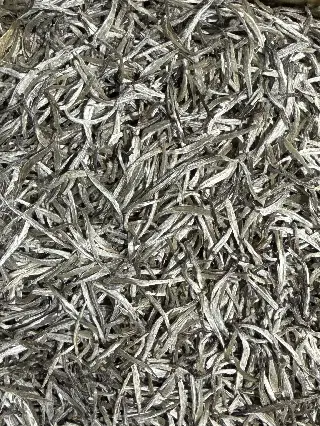
White Himalaya
A white tea from the foothills of the Nepalese Himalaya: floral, fruity, velvety.
White Himalaya is a white tea born in the foothills of the Himalaya, in Nepal, far from Fujian where the family originated. Yet it follows the same path, with neither firing nor rolling, simply withered then dried, and owes its taste solely to its plucking and its altitude. The liquor, pale and velvety, unfolds a light sweetness with delicate floral and fruity notes. Taste it alongside Pai Mu Tan Impérial to hear what Himalayan altitude changes in a white tea.
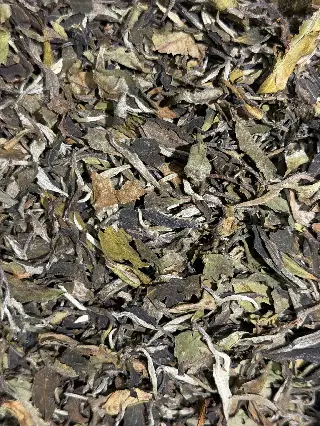
Pai Mu Tan Impérial
The white peony of Fujian, floral and woody, an everyday white tea.
Pai Mu Tan means “white peony”: as the leaf opens in the water, it recalls the flower in full bloom. Unlike Yin Zhen, made from buds alone, it combines the downy bud with the first two leaves, hence its fuller, woodier liquor. This Pai Mu Tan Impérial comes from Fujian, the cradle of white tea, and undergoes only withering then drying, nothing more. Its cup, floral and woody, is approachable: this is the white tea you drink freely, all afternoon long. Taste it alongside White Himalaya: from Fujian to the Himalaya, two terroirs, two faces of white tea.
Yin Zhen, Silver Needles
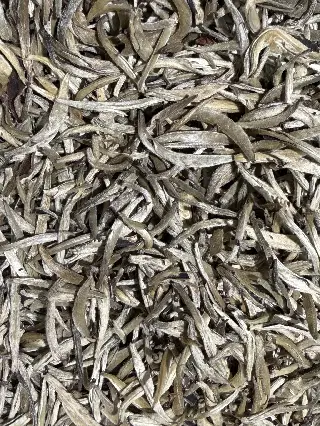
Yin Zhen
“Silver Needles”, nothing but downy buds, the summit of white tea.
Yin Zhen takes only the bud, plucked before it opens, still covered in the silvery down that gives it the name Silver Needles. Tens of thousands of these tips are needed for a few hundred grams, and the spring harvest window lasts only a few days, which explains its price. The liquor is crystalline, almost colourless, with a floral, delicately honeyed sweetness. Steep it for a long time in barely hot water: it never turns bitter.
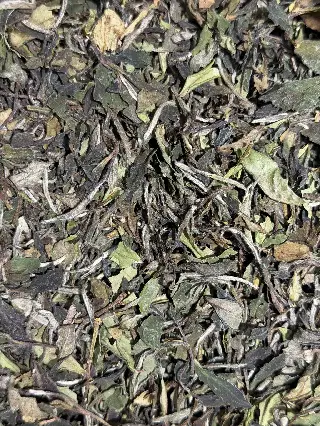
Thé de la Longévité Suprême
Yin Zhen buds taken further: apricot, mandarin, an aniseed finish.
This grand cru from Fujian begins with the same tender Yin Zhen buds, plucked before the leaves unfurl. But the selection goes further, and so does the cup: over a fluid, finely chiselled texture unfold a fruity hint of mandarin, touches of truffle and vanilla-woody notes, before a lingering aniseed finish that is the tea's signature. The liquor is golden yellow rather than crystalline. A white tea for meditation, to discover just after Yin Zhen to measure how far it has come.
The complete stopover trunk 6
These two families · 4 teas in the default format of each product page
€139.50 i.e. ≈ €1.74 the cup of excellence (based on the measure taught, 2 to 3 g of tea per cup)
The stopover protocol
Leaves and buds: White Himalaya & Pai Mu Tan Impérial
Water at 60-70 °C, 6 to 7 minutes. Barely hot water and plenty of patience: that is the rule of white tea. Look for the flower, ripe fruit and a creamy texture; no bitterness will come, even with a longer steep.
The buds: Yin Zhen & Longévité Suprême
Water at 60 °C, about 10 minutes, in a small quantity. These buds yield nothing in haste: it is time, not heat, that reveals the crystalline sweetness and the honey. A gentle extraction method specific to the Académie; Western standards prefer 4 to 5 minutes at 70-80 °C, and Gong Fu Cha lightning-fast 30-second infusions: three paths to the same bud.
The traveller's ritual
Taste in this order: Pai Mu Tan Impérial then White Himalaya first, to hear what a terroir changes, next Yin Zhen, and finally Thé de la Longévité Suprême. From the most generous to the most subtle: four degrees of one same purity.
The Grand Trunk of the Route
All ten stopovers at once: the entire selection Nature delivered in three instalments.
The “Le Voyageur” subscription
One stopover a month for ten months: the trunk, the story and the protocol arrive at your door.
Subscribe to the journey