
The Mariage Frères journey · Nature Route · Stopover 1 out of 10
At the origins, China
Green tea from China · Black tea from China
First movement
Boarding
The essentials at a glance
Green tea from China · Black tea from China
The house selection: Lung Ching · Gunpowder · Yunnan Impérial · Grand Keemun FOP
These two families to taste, and a gold stamp to collect by rating your tastings.
Second movement
The port of call lesson
This stopover opens with these two families: you already know how to brew them from the tea school; now meet the house's great names.
Chinese green tea
Green tea is the oldest face of the leaf: picked, then immediately seared in the heat of the wok to fix its freshness, the “kill-green” gesture that halts oxidation. It is then rolled and dried, and none of its greenness is lost. China is its absolute queen: the world's leading producer, it harvests nearly two million tonnes each year, almost three in ten cups of green tea drunk on the planet. From the hills of Zhejiang to those of Anhui, each terroir has its own signature style: chestnut, fresh grass, flowers or wet stone. Here, the leaf reveals itself unadorned.
Chinese black tea
It was in China, in the Wuyi Mountains of Fujian, that black tea was born some four centuries ago. Here it is called “red tea”, for the coppery colour of its liquor. Its making is the reverse of green tea: the withered leaf is rolled, then left to oxidise fully in contact with the air, until it browns and unfolds honey, cocoa and ripe fruit. Long reserved for export, as China itself drank green, it conquered the courts of Europe before returning to favour at home. It accounts for only half a million tonnes of the Chinese harvest: a rare and refined share. Elegance, depth, restrained sweetness: such is Chinese black tea.
Third movement
Tasting at home
The Stopover Discovery Trunk 1
Chinese green tea
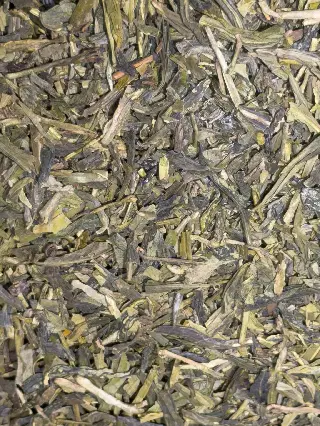
Lung Ching
“The Dragon Well”, China's most celebrated green tea: flat, chestnut-toned, with perfect clarity.
On the hills around West Lake, in Hangzhou, China's most celebrated green tea has been born for centuries. Its leaves, pressed one by one against the searing wall of the wok, take on their flat “sparrow's tongue” shape. Legend has it that Emperor Qianlong, enamoured of the tea picked at the foot of the Hugong temple, ennobled eighteen tea bushes still revered today. It is credited with four wonders: jade colour, fragrance, sweetness and shape. In the cup, its fresh chestnut and sweet finish make it the ideal first step for the traveller.
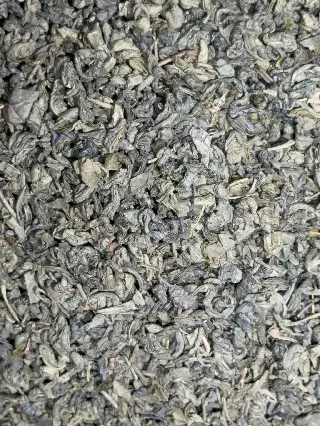
Gunpowder
The rolled pearls of Zhejiang, bold and invigorating, the base of mint tea.
Hand-rolled into tiny, tight pearls, each Gunpowder leaf recalls a grain of powder, hence the name Western merchants gave it. This green tea from Zhejiang owes its shape to a practical reason: compacted, the leaves kept their freshness and aroma during the long voyages to Europe and the Maghreb. Plunged into hot water, the pearls unfurl and release a bold, lively, lightly smoky liquor. This is the invigorating tea paired with mint and sugar, the ritual of hospitality throughout North Africa.
Chinese black tea
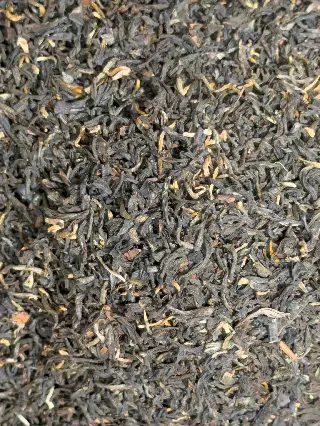
Yunnan Impérial
Golden buds from the great South-West: malty, peppery, with hints of gingerbread.
Yunnan is the cradle of the tea plant: it is here, on the borders of China and Burma, that the oldest known tea trees grow. This black tea is made only from young shoots, so rich in golden buds that the dry leaf seems dusted with gold. The liquor is amber, rounded, distinctly malty, lifted by a peppery touch and those hints of gingerbread that are the hallmark of great Yunnans. Softness and depth rather than power: a Chinese black tea to be drunk plain, with nothing added.
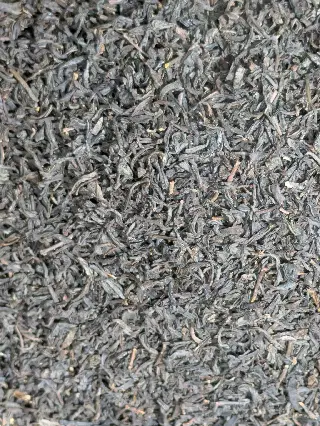
Grand Keemun FOP
The great black tea of Anhui: woody, cocoa-toned, with an amber roundness.
In the Anhui mountains, Qimen county, Keemun to Westerners, has produced one of China's most refined black teas since the late 19th century. Here the initials FOP denote the quality of the plucking: fine whole leaves accompanied by their bud. The liquor is amber and rounded, carried by woody notes and a hint of cocoa of great softness. Nothing harsh, no astringency: this is a black tea of finesse, the one served to show that China also masters dark tea.
The complete stopover trunk 1
These two families · 4 teas in the default format of each product page
€24.50 i.e. ≈ €0.31 the cup of excellence (based on the measure taught, 2 to 3 g of tea per cup)
The stopover protocol
The greens: Lung Ching & Gunpowder
Water at 75 °C, 3 minutes, 12 g/L. Look for the fresh chestnut of the Lung Ching and the vegetal boldness of the Gunpowder.
The blacks: Yunnan Impérial & Grand Keemun
Water at 95 °C, 5 minutes. Look for the malt and gingerbread of the Yunnan Impérial and the cocoa roundness of the Grand Keemun.
The traveller's ritual
Taste all four in this order: first the Lung Ching, then the Gunpowder to complete the greens; move on to the Yunnan Impérial and finish with the Grand Keemun. From the most delicate to the deepest: this path fixes the green → black contrast.
The Grand Trunk of the Route
All ten stopovers at once: the entire selection Nature delivered in three instalments.
The “Le Voyageur” subscription
One stopover a month for ten months: the trunk, the story and the protocol arrive at your door.
Subscribe to the journey